Jewellery
Pakistani bridal jewellery checklist by ceremony
A ceremony-by-ceremony bridal jewellery plan centred on comfort, attachment, security and deliberate reuse.
By Zainab Noor
Fashion writer
2 min read
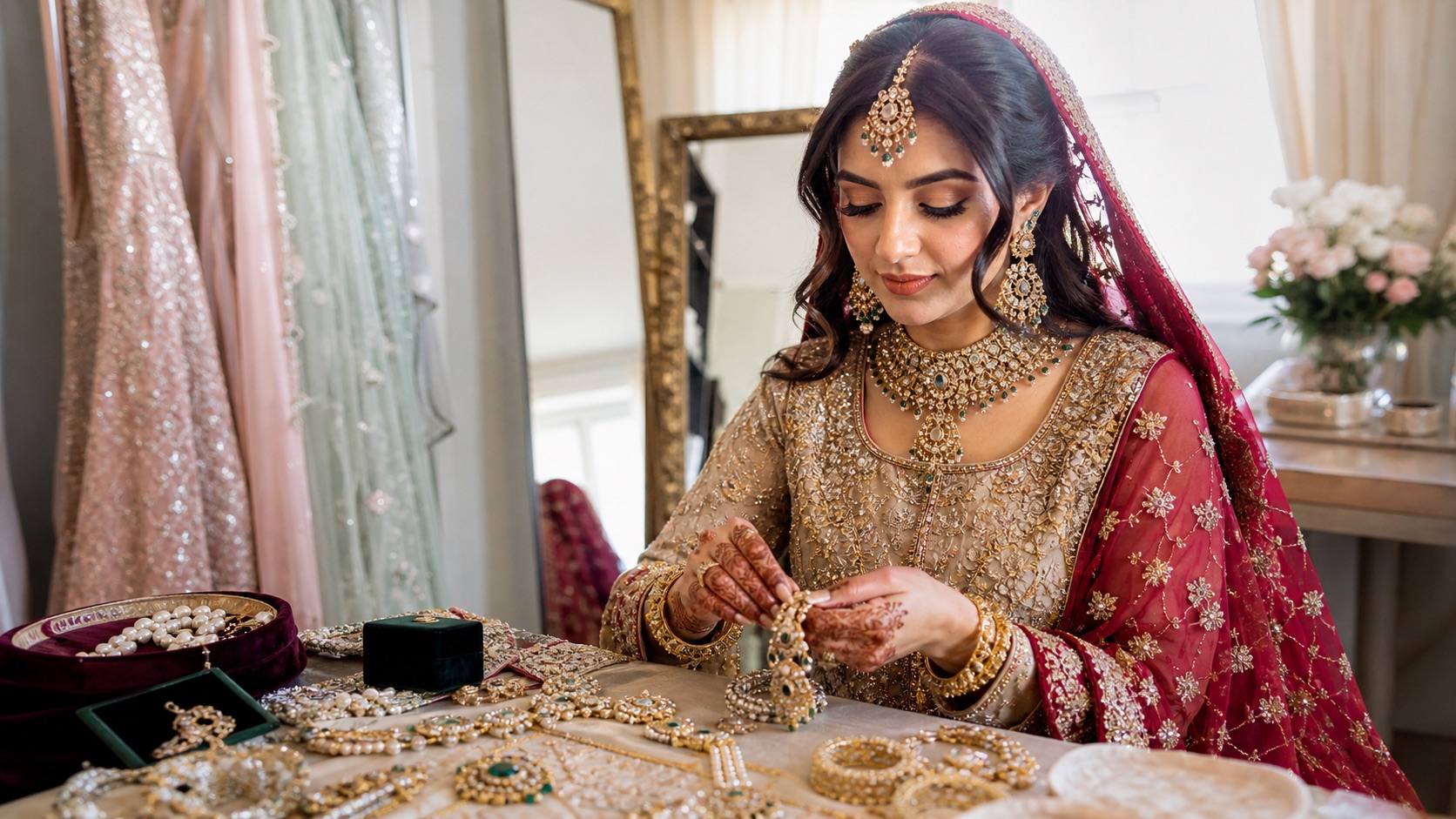
A bridal jewellery checklist should prevent collisions, not encourage you to wear every named object. A tikka, jhoomar, nath, earrings, necklace, bangles and rings all compete for attachment points, visual space and physical tolerance. Build each ceremony around one lead idea, then test the complete arrangement on the body.
Nikah: hands and face are working
Signing, prayer and greetings make hand movement important. Choose rings that do not obstruct a pen and bangles that remain quiet during recitation. If head coverage is planned, test the tikka or jhoomar beneath the exact scarf so pins support jewellery without pulling hair.
Mehndi: movement changes the brief
Fresh henna and dancing make hand jewellery, hath phool and heavy bangles harder to manage. Decide when pieces go on and who handles them. Lightweight earrings and a secure necklace often survive the evening better than a stack that strikes neighbouring wrists.
Baraat and walima: distribute weight
A heavier baraat set needs support from hair, blouse and dupatta working together. For the walima, change the visual architecture rather than merely choosing another matching set: perhaps statement earrings without a collar, or a longer necklace against a cleaner neckline.
| Piece | Test before the event |
|---|---|
| Nath | Speech, smiling, chain length and safe release |
| Tikka/jhoomar | Head turn, pin direction and dupatta pressure |
| Necklace | Neckline contact, sitting and skin reaction |
| Bangles | Hand width, sharp edges and sleeve catching |
- Photograph every piece and fastening.
- Assign one trusted person to transport and count valuables.
- Keep invoices, material descriptions and insurance records appropriately.
- Pack spare backs, hooks and a safe removal tool.
After each ceremony, inspect clasps before repacking. Reusing jewellery is not a compromise: it can create continuity across events while clothes and hair change around it.
Write a handover card for each event: what is worn, who attaches it, where its case remains and who receives it after removal. Keep sentimental and high-value pieces away from an open dressing-room table. If an item is borrowed, photograph its condition and return it through the named owner rather than a chain of relatives.
Filed under
Keep reading
Related stories
More from this desk, this beat, and the tags on this piece.
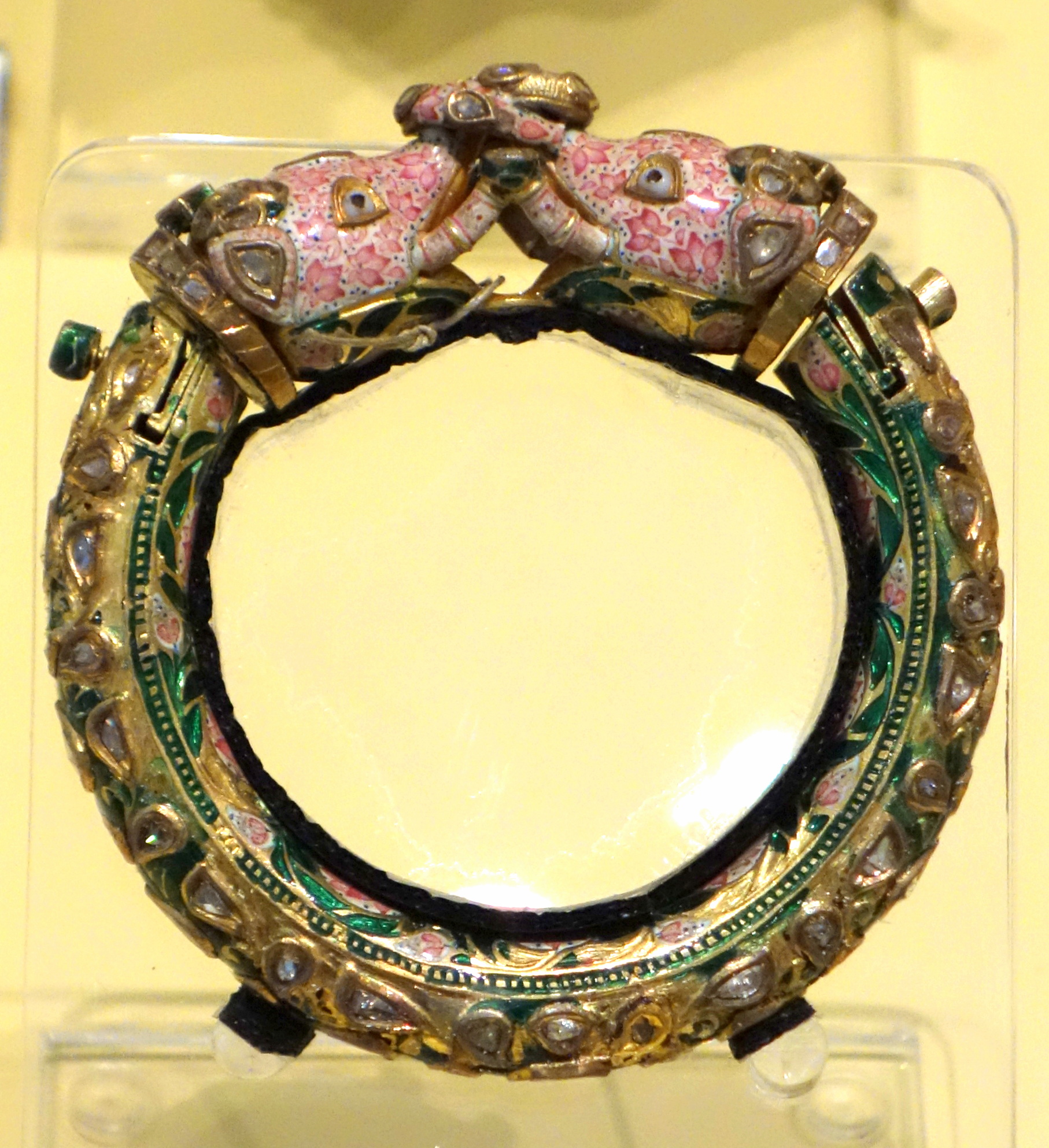
Pakistani bangle sizing without forcing them over the hand
Zainab Noor · 13 Sep 2026 · 15 min
Gold, vermeil and plated Pakistani jewellery: what you are paying for
Zainab Noor · 13 Sep 2026 · 17 min
Pakistani wedding-dress alterations: the final six-week timeline
Zainab Noor · 13 Sep 2026 · 17 min
Readers
The conversation
0 notes
Anyone can leave a note. Guests add a name and email — no account required, and the email is never published.
No notes yet. Yours would be the first.