Pakistani air-fryer snacks that still taste like the original idea
How to adapt samosas, pakoras, shami kebabs and reheated fried snacks to an air fryer without pretending hot air is a karahi.
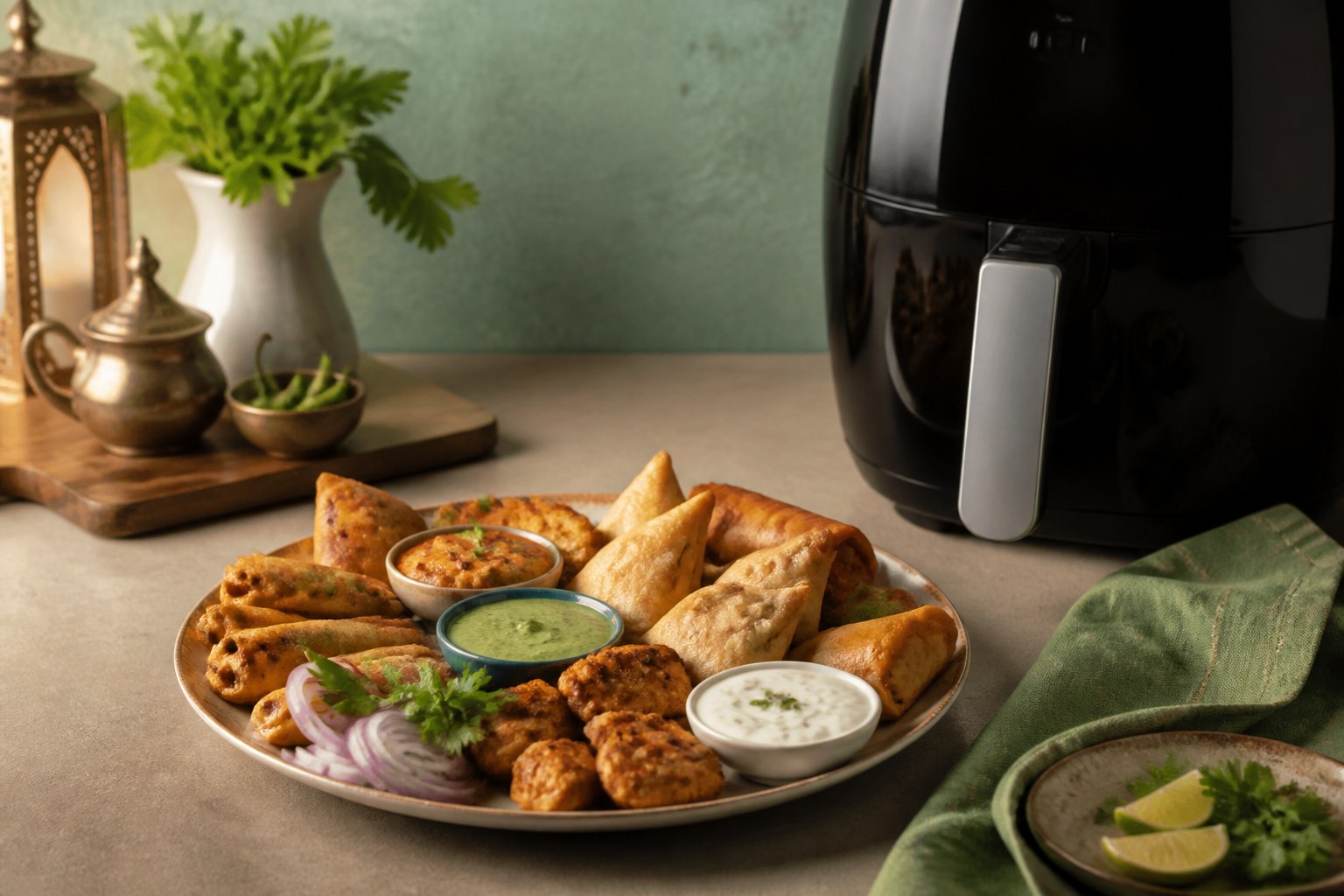
An air fryer can give a samosa a convincing shell, but it cannot fix wet filling or pastry brushed as though oil were an enemy. Hot moving air browns and crisps; it does not recreate the heat transfer of a karahi full of oil. The useful goal is a snack that still tastes like the original idea—spice, texture contrast, structural integrity—not a fake claim of identical deep-fry results.
Follow your machine’s manual for temperatures and basket loads. For hygiene, see UK FSA cooking guidance and chilling advice; US readers can consult USDA FSIS.
What the air fryer is good at
It excels at reheating previously fried samosas and spring rolls, finishing chilled kebabs, and cooking items with enough surface oil to brown. It struggles with wet batters that drip through baskets, overcrowded loads that steam instead of crisp, and fillings that weep moisture into pastry. Design the snack for the tool.
Keep the karahi for large guest batches, thin batters, and days when you specifically want that flavour. The air fryer is a weekday tool and a reheat specialist. Pakistani snack culture survives adaptation when spice, structure and contrast survive.
Samosas: dry filling is the real recipe
Cool potato or qeema filling completely before wrapping. Evaporate visible moisture in the pan. Seal with flour paste and press edges firmly. Lightly brush or spray both sides with oil—enough to gloss, not enough to puddle. Leave space between pieces so air can reach folds. Frozen commercial samosas often work better than rushed homemade wet ones because factories already solved moisture—still check ingredient lists and cook safely.
Pakoras: change the geometry
A loose deep-fry batter drops through a basket. For air frying, use sliced onion with gram flour and just enough water to bind, then form small rough clusters. The cluster is the unit. Oil the surfaces lightly. Salt sliced onions briefly and squeeze, or accept a softer result. Serve immediately. Chat masala and dried mint are finishing tools, not excuses for a steamed centre.
Shami kebabs and seekh-style shapes
Chilled patties hold edges and brown with a thin oil brush. If the mixture cracks, add beaten egg sparingly rather than turning it into paste. Flatten evenly so centres cook at the same rate as edges. Cook until piping hot in the centre. Leftover cooked kebabs reheat well; raw mixtures need the same chill and hygiene habits you would use before pan-frying. Wet marinades drip and steam—pat kebabs lightly before oiling.
Reheat what frying already made well
Day-old samosas are where many households should start. Moderate heat warms the centre before a final hotter minute re-crisps the exterior. Cool leftovers promptly; reheat until steaming hot; discard if they sat warm too long at a party. Hold finished pieces on a rack, not in a sealed pile. Sauce belongs on the side until serving.
A working sequence for a mixed snack tray
- Shape and chill kebabs; keep samosa filling cool and dry.
- Oil surfaces; preheat as your manual suggests.
- Cook in batches by thickness.
- Hold finished pieces on a rack, not in a sealed pile.
- Serve with chutney that has acidity.
| Snack | Air-fryer key | Failure mode |
|---|---|---|
| Samosa | Dry cool filling; sealed edges; light oil | Steam splits; pale tough pastry |
| Pakora | Bound clusters, not drip batter | Batter through basket; greasy soft centres |
| Shami | Chill; even thickness; hot centre | Cracking; dry exterior, cool middle |
| Reheat fry-ups | Warm then crisp; rack holding | Microwave rubber; stacked sogginess |
Oil, spices, marinades, and guest timing
Less oil than deep frying is often true; oil-free Pakistani fried snacks are usually a texture failure. Cook in waves for guests. Freeze shaped uncooked kebabs or sealed samosas on a tray before bagging. Label meat versus vegetable bags in shared kitchens. Write your air-fryer version of a family recipe as a separate card: oil amount, load size, time, turn, and resting. That card is the difference between “we tried once” and a snack that returns every other Friday.
Shared kitchens, allergens, and teaching the method
Flat kitchens with weak ventilation benefit from lower smoke than a vigorous deep-fry session, but onions and spices still smell. Warn housemates. Shared student air fryers need basket hygiene between meat and vegetable loads. Label allergen risks for guests: gram flour, wheat pastry, egg binders and nut chutneys.
Teach teenagers moisture and oil rules rather than handing them a frozen bag and a prayer. Skill transfer matters more than appliance brands. A household that can explain why filling must be dry will outcook a household that only owns the newest basket design.
Basket liners can reduce sticking but also reduce airflow. Use them when needed, then remove for a final crisp if safe. Never block vents. Never use ordinary plastic. If oil drips and smokes, stop, cool, and clean rather than pushing through a bitter batch.
Batch cooking works when you freeze for structure, not for sogginess: chill fillings, seal well, freeze flat, then air-fry from frozen only when your manual and food-safety guidance support the path. Reheat cooked leftovers until steaming hot. Keep expectations honest and the snacks stay welcome. The original idea survives when spice, structure, and contrast survive—even if wedding-fryer perfume remains a different pleasure for a different day.
Batch cooking snacks without losing texture
Freezer strategy is where weekday air-fryer snacks become reliable. Shape kebabs or seal samosas on a tray until firm, then bag with labels for meat versus vegetable and the date shaped. Cook from frozen only when your manual and food-safety guidance support that path; otherwise thaw safely in the fridge and proceed with light oil and space in the basket.
Festival weeks still may need the karahi. Admit it. The air fryer shines when you need a second wave of snacks without another vat of oil, or when a flat’s ventilation cannot tolerate deep-frying. Guests care more about spice and contrast than about whether you used a basket or a kadhai—until the pastry is tough or the centre is cool. Those failures are technique, not destiny.
Write the family card: oil amount, load size, temperature if your model uses one, turn time, resting on a rack. Teach teenagers the moisture rule before the brand loyalty. Shared kitchens need basket hygiene between loads and allergen labels for gram flour, wheat, egg and nut chutneys.
Keep expectations honest. Hot air is not a karahi. It is still enough to keep Pakistani snack ideas alive on a Tuesday—crisp enough, spiced enough, structured enough—when dry fillings, cluster geometry, chilling and safe reheating do the quiet work marketing videos skip.
Troubleshooting without returning to myths about oil-free frying
Pale tough pastry usually means under-oiling or overcrowding. Split seams usually mean wet filling or weak seals. Soft pakora centres usually mean drip batter and steamed clusters. Cool kebab middles usually mean uneven thickness or rushed preheat. Name the failure; then change one variable. Myths about completely oil-free Pakistani fried snacks waste evenings and turn households against an appliance that can still be useful.
Reheat strategy deserves its own respect. Day-old samosas warmed then crisped on a rack often beat rushed homemade wet ones. Party leftovers that sat warm too long should be discarded regardless of nostalgia. FSA and FSIS guidance exist so you do not have to invent safety rules from auntie confidence alone.
Guest timing favours waves: kebabs first while samosas finish, chutney acidic and on the side, finished pieces never sealed in a steaming pile. The original idea—spice, contrast, structure—survives that discipline. Wedding-fryer perfume can remain a different pleasure for a different day without making Tuesday’s basket feel like failure.
Chutneys, spice finishes, and serving without undoing the crisp
Air-fried snacks die in sauce puddles. Keep imli, green chutney and yoghurt dips on the side. Finish with chaat masala or dried mint at the table so the basket’s dry heat is not fighting wet garnish in the kitchen. Guests who want drowned samosas can drown their own plate; the rack can stay crisp for everyone else.
Spice pastes inside fillings must be cooked dry enough that they will not steam pastry open. That rule matters more in air fryers than in deep oil, where vigorous frying can sometimes forgive moisture the basket will not. Taste the filling cool. If it weeps on a plate, it will weep in pastry. Reduce further. Then wrap.
Appliance manuals differ; food-safety principles do not. Cook centres hot, chill leftovers promptly, reheat thoroughly, discard abused party food. Pakistani snack ideas survive the air fryer when geometry, moisture and oil are redesigned for hot air—and when you stop asking a basket to be a karahi.
When not to use the air fryer
Skip it for large wedding batches, for batter that must ripple through hot oil, and for days when the flavour of deep frying is the point of the gathering. Tools have lanes. Using the wrong lane produces bitterness toward useful appliances. Keep the karahi in its lane and the basket in its lane; Pakistani snack culture is large enough for both.
Also skip the air fryer when you cannot supervise centre temperatures for meat fillings or when a shared machine’s hygiene is unknown. Convenience is not a hygiene plan. Clean baskets between meat and vegetable loads. Label allergens. Teach the moisture rule. Then the Tuesday snack tray can taste like the original idea without pretending to be a mehndi-night fryer.
Sources and official profiles
Was this helpful?
Keep reading
Related stories
More from this desk, this beat, and the tags on this piece.
Pakistani grocery shopping in the UK: pantry, freezer, and fresh food
Hassan Raza · 15 Feb 2026
Pakistani groceries online in the USA: shipping, frozen food, and pantry planning
Hassan Raza · 9 Feb 2026
Readers
The conversation
0 notes
Anyone can leave a note. Guests add a name and email — no account required, and the email is never published.
No notes yet. Yours would be the first.