Pakistani freezer cooking: 12 components that save a weeknight
A modular Pakistani freezer system—twelve components, safe cooling, labels a tired person can read, and assemblies that still taste fresh.
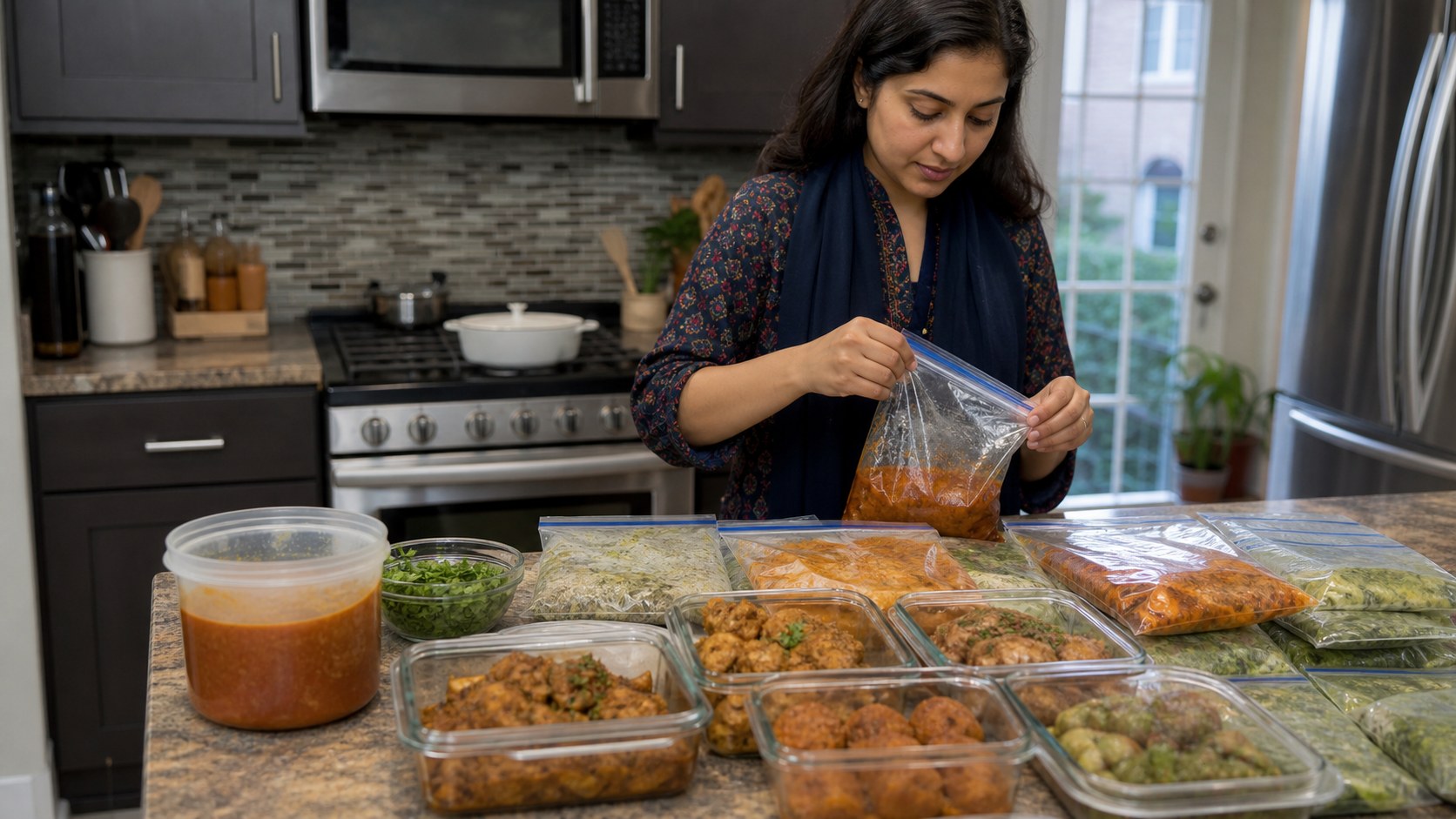
Freeze components, not seven identical finished curries. A concentrated onion-tomato masala can become chana, keema or chicken; cooked daal can take a fresh tarka; yakhni can become pulao or soup. The freezer succeeds when Tuesday dinner gains freshness from coriander, lemon or a new tempering—not when it becomes an archive of unloved experiments.
This is a system for households that already cook Pakistani food and want fewer weeknight collapses. It is not a challenge to meal-prep twenty identical boxes. Start with three components you already make well. Expand only after those rotate out of the freezer instead of lingering as anonymous ice bricks.
The twelve-piece freezer
These twelve earn their space because each one finishes differently on different nights:
- Browned onion base — deep colour without starting every salan from raw onions.
- Cooked tomato masala — concentrated; add water, stock or yoghurt later.
- Ginger-garlic portions — frozen flat in teaspoons or ice-cube trays.
- Chicken or meat yakhni — clear stock for pulao, soups and sauces.
- Plain cooked daal — underseasoned slightly; tarka later.
- Chana — chickpeas cooked to a spoonable texture.
- Seekh kebabs — shaped and cooked or raw according to your tested method and local minced-meat rules.
- Shami kebabs — cooked, cooled, separated by paper.
- Parathas — layered with baking paper; reheat on a tawa.
- Cooked keema — versatile filling and salan starter.
- Blanched spinach — squeezed dry for saag-style finishes.
- Herb-chilli chutney — portioned small; brighten after thawing with lemon.
You do not need all twelve at once. A realistic starter set is onion base, daal, keema, parathas and one kebab. Add yakhni when you next bone a chicken.
| Component | Freeze like this | Finish like this |
|---|---|---|
| Onion / tomato bases | Flat bags; label water amount | Loosen, taste salt, add protein or pulses |
| Daal | Portion for one meal | Fresh garlic-chilli tarka, lemon, coriander |
| Yakhni | Leave headspace in tubs | Pulao, soup, or gravy lengthening |
| Kebabs | Single layer, then bag | Reheat thoroughly; serve with fresh salad |
| Parathas | Paper between each | Dry tawa; avoid microwaving into rubber |
| Chutney | Small jars or cubes | Refresh acid and salt after thaw |
Label for a tired person at 8:40 pm
Write the dish, freeze date, portions, allergens and the next instruction. “Masala” is not a label. “Onion-tomato base — add chickpeas and 200 ml water — contains mustard seeds” is a label. Keep a door inventory on paper or a phone note and use the oldest compatible component first.
- Reserve one shelf for ready-to-eat cooked food and another for raw components so labels are not the only barrier.
- Leave space between new containers until they freeze solid, then file them upright.
- Do not refill a tub over old stock; empty and wash so age stays honest.
- Review before shopping. A component unused for weeks is feedback: freeze less next time.
Rice, potatoes and other texture traps
Cooked rice can be frozen if cooled quickly in small portions and reheated until steaming hot, but UK FSA rice guidance is stricter than general leftovers: chill fast, use promptly, reheat once. Prefer freezing components that will meet freshly cooked rice on the night, unless your household has a tested rice-freezing routine that matches official advice.
Potatoes in salan can turn mealy after freezing. Undercook them only when a tested recipe expects later cooking. Cream, yoghurt finishes and raw salad toppings are usually better added fresh. Seekh and shami textures survive freezing more gracefully than a fully assembled biryani.
Plan four assemblies before you freeze anything
Write four dinners beside the inventory so the system is proven on paper:
- Chana from tomato masala, with fresh ginger and green chilli.
- Pulao or soup from yakhni, with a salad that did not live in the freezer.
- Daal with a new tarka and roti or rice cooked that night.
- Kebabs with chutney, onion and something crisp.
Portion for the household you have. One enormous frozen block forces unnecessary thawing and reheating. Thaw in the fridge when you can; if you use a microwave thaw, cook immediately afterward. Never judge safety by smell alone after a power cut—follow official outage guidance and discard food whose temperature history is unknown.
The system is working when the freezer reduces decision fatigue without removing cooking entirely. You should still fry a tarka, chop herbs and taste salt. Those five minutes are what stop component cooking from tasting like airline food.
Batch day without destroying the weekend
Pick one longer cook—onions, daal, stock—and one shaping task—kebabs or parathas. Do not attempt all twelve on a single Sunday unless you enjoy misery. Cool in waves: what finishes first goes into shallow containers first. Keep raw meat tools separate. Wash hands. Label before you sit down, because memory decays faster than food cools.
For minced products and meat reheating in US kitchens, FSIS leftover pages are the reference—not a relative’s assurance that kebabs are fine from frozen. For UK kitchens, lean on FSA chilling and FSA cooking pages, plus the rice entries in the fact checker when pulao leftovers appear. The FSIS danger zone explanation remains useful wherever your kitchen sits: perishable food should not linger between fridge-cold and steaming-hot without a plan.
Allergens and shared freezers
Shared student or family freezers need allergen labels that survive frost: peanuts in chutney, gluten in keema binders, mustard in pickles. If someone in the household has a serious allergy, dedicated utensils and sealed packaging matter more than polite intentions. Consumer allergen explainers from the FSA (allergen information) and FDA (food allergies) help households talk about risk without improvising medical advice.
When to stop freezing and just cook
If every dinner is a thaw, flavours dull and the hob skills that make Pakistani food sing—bhunai, tarka, fresh chapati—atrophy. Keep at least two weeknight meals that start from fresh onions. Use the freezer to protect energy for those meals, not to replace them.
A quarterly freezer audit helps: discard mystery tubs, rewrite smudged labels, and cook the oldest three components before buying more meat. If your freezer smells of onions through every dessert, packaging is failing—double-bag aromatic bases. Component cooking is hospitality to your future self. It should leave Tuesday tasting like food someone still cared about, with a tarka that was fried tonight and herbs that never saw the ice.
A month of proof, not a freezer museum
Give the system thirty days before judging it. In week one, freeze only onion base, daal and keema. In week two, add parathas. In week three, add one kebab style. In week four, add yakhni if you have bones and time. At each step, cook the assemblies you wrote down. If a component never leaves the shelf, stop making it—do not keep producing it out of stubbornness.
Teach whoever shares the kitchen how to read labels and how to finish a component. A system only one person understands will fail the first week that person works late. Post the four assemblies on the freezer door. Keep chilli flakes, lemons and fresh herbs on a visible shelf so finishing does not require a second shop.
When guests arrive unexpectedly, component cooking is how you still offer hospitality without a three-hour panic: daal with a new tarka, parathas from frozen, salad from the fridge, chutney refreshed with lemon. That meal is more Pakistani in spirit than a delivery order eaten from plastic while apologising. The freezer is not meant to erase cooking. It is meant to put cooking back within reach on ordinary nights.
Shopping and money notes for component cooks
Buy meat and pulses for the components you will freeze this week, not for an imaginary complete system. Whole spices for tarka should stay in the cupboard; they are finishing tools. Frozen ginger-garlic is a convenience, not a flavour tax—fresh still wins when you have five minutes. Compare unit prices on chickpeas and lentils; the freezer does not care whether they came from a giant sack or a small bag if the cooked texture is right.
Track waste for one month: portions thrown away, ice-burned breads, mystery tubs discarded. That list tells you whether your portions are too large, your labels too vague, or your assemblies unrealistic. Adjust the next batch day using that evidence rather than a motivational speech about meal prep. Pakistani freezer cooking is a craft of leftovers made intentional. Treat it with the same seriousness you give a fresh karahi, and Tuesday will taste like someone planned for your tiredness without surrendering to it.
If you share a chest freezer with relatives, assign zones with masking tape and names. Political fights over whose keema is whose are real. Clear ownership prevents both food waste and family conflict. Reheat only what you will eat; repeated chill-reheat cycles are how texture and safety both degrade. When in doubt after a long power cut, discard perishable cooked foods rather than gambling on dinner.
Sources and official profiles
Filed under
Was this helpful?
Keep reading
Related stories
More from this desk, this beat, and the tags on this piece.
Should you rinse and soak basmati rice? What the food science actually says
Hassan Raza · 18 Oct 2026
Readers
The conversation
0 notes
Anyone can leave a note. Guests add a name and email — no account required, and the email is never published.
No notes yet. Yours would be the first.