Namak Mandi and the Peshawar table
Karahi without cream, chapli as a patty, dry-fruit shops as shops, and Lahore paye as a cousin in collagen—not a provincial ranking.
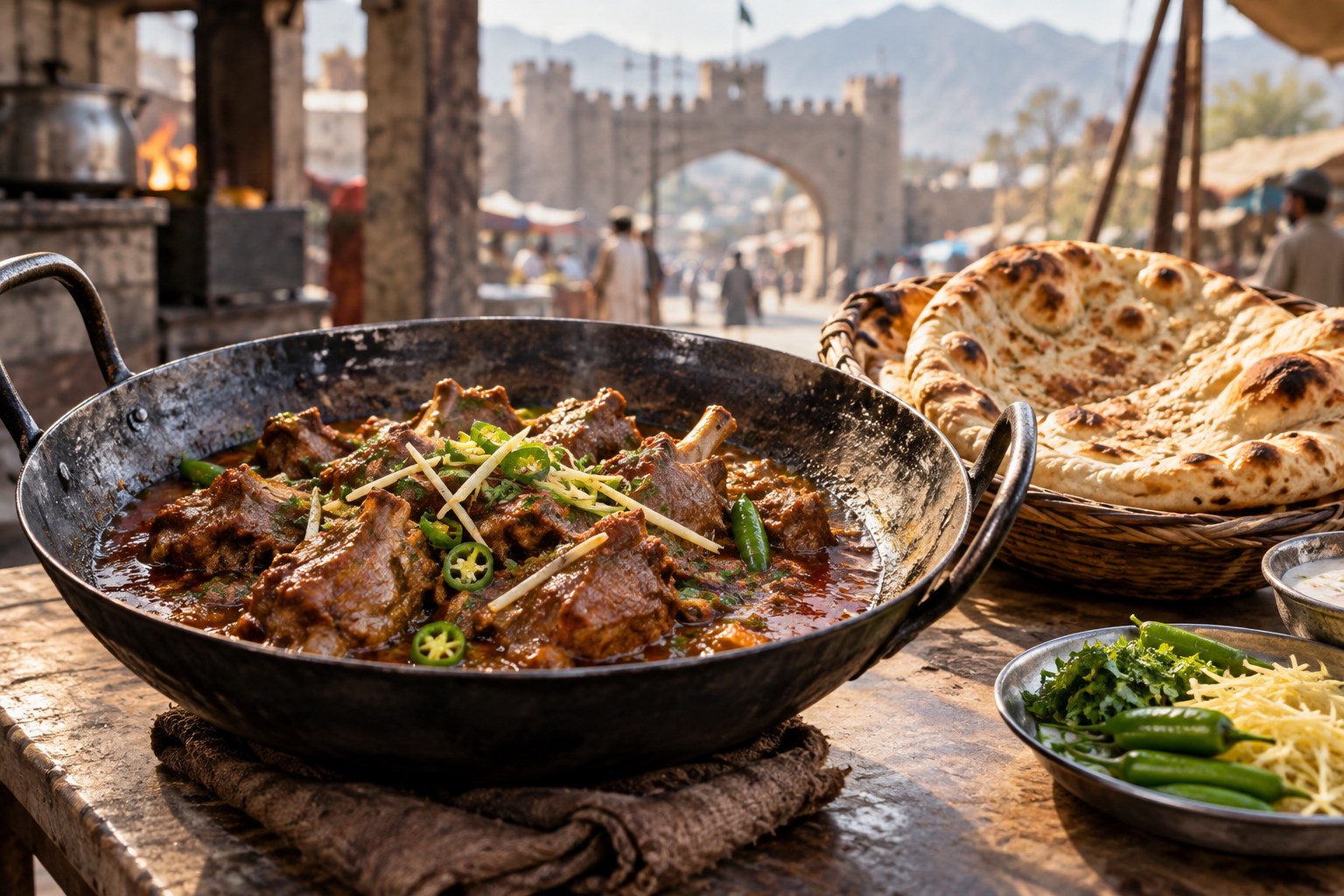
Namak Mandi is a working food street in Peshawar’s old city, not a festival booth labelled “frontier flavours.” The useful comparison with Lahore is not a provincial ranking. It is a comparison of method: karahi as a tomato-and-fat fry in a pan you can see, chapli as a wide thin patty, dry-fruit counters as shops, and Lahore paye as hours of bone and gelatin. Those are different tools. They are not mascots.
Early orientation: order karahi without cream if you want the Peshawar restaurant grammar many cooks still defend; eat chapli as a patty with bread and onion rather than as a burger cosplay; buy dry fruit by weight for eating, not for an antioxidant caption; and treat Lahore paye as a cousin in collagen, not as a scoreboard. International readers should know that UK FCDO advice currently advises against all travel to Peshawar city—this article explains a table, it does not replace travel advice.
Karahi as a pan method, not a cream costume
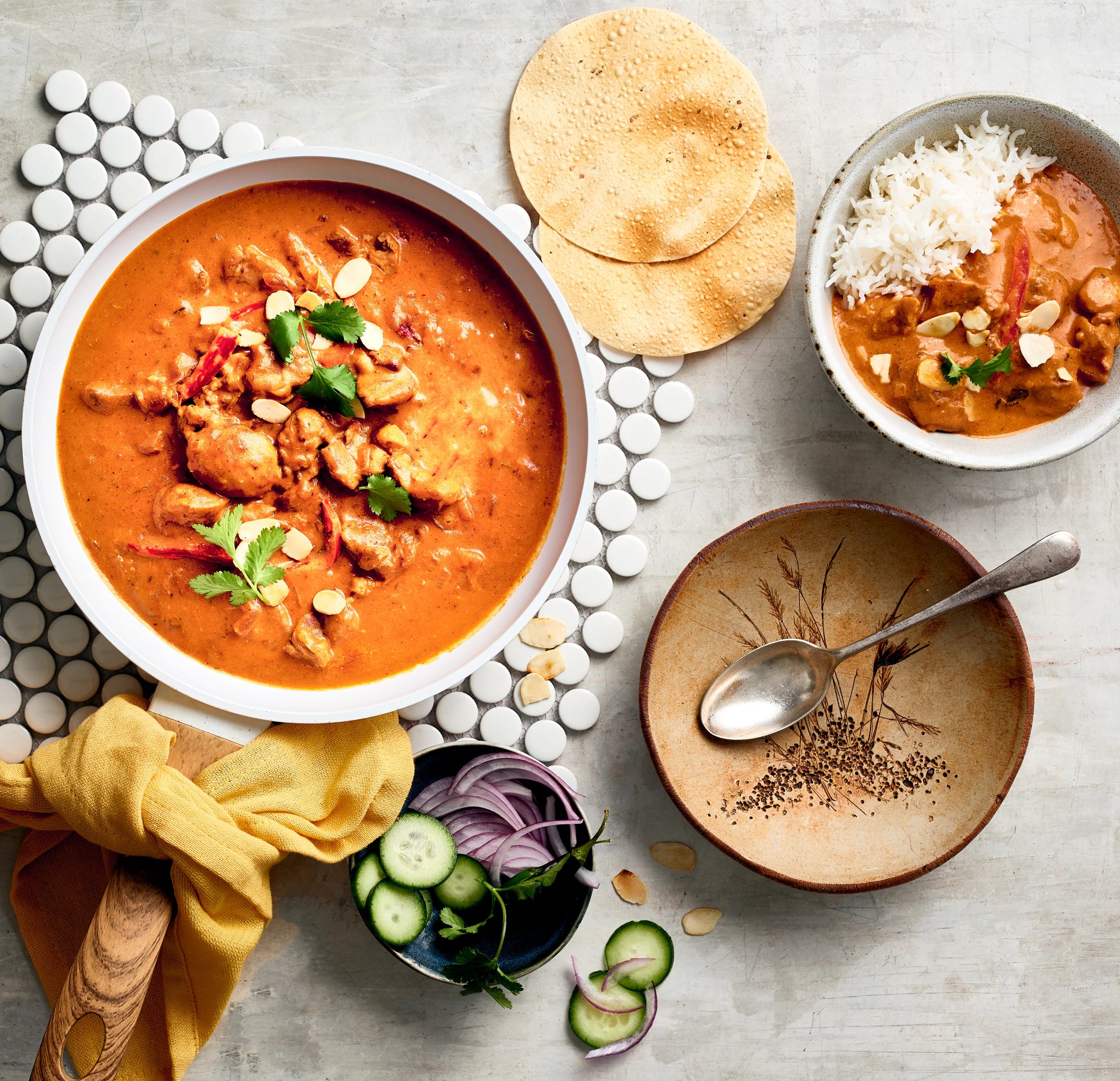
In Namak Mandi’s dinner rooms, karahi is commonly cooked in view: lamb or mutton, abundant tomato reduced until it has body, chilli, and fat from the meat rather than a finishing butter theatre. Cream belongs to other city grammars and hotel menus. Asking for cream as if it were a universal upgrade is how a guest announces they brought another city’s expectations. If a cook looks baffled, that is information.
The pan matters. Karahi that arrives in the vessel it cooked in stays hot and keeps reducing at the table. You eat with naan. Restaurant karahi in Peshawar can still sit closer to a house pot than a Karachi hotel “karahi” that behaves like a mild korma. Call the creamy version what it is—a different dish—rather than accusing Peshawar of failing to be polite. Respect is specific: tomato, tawa, chilli, fat. Exoticising language (“primal,” “rustic frontier”) is fog. Name the method.
Afternoon visits to Namak Mandi can skew toward dry fruit, walking, and tea. Night is when many karahi rooms make their argument. Tourist hours and dinner hours are not interchangeable if your goal is the meat pan. Domestic travellers who already know the street still benefit from not turning open cooking into a free photoshoot of labour.

Chapli is a patty with a job
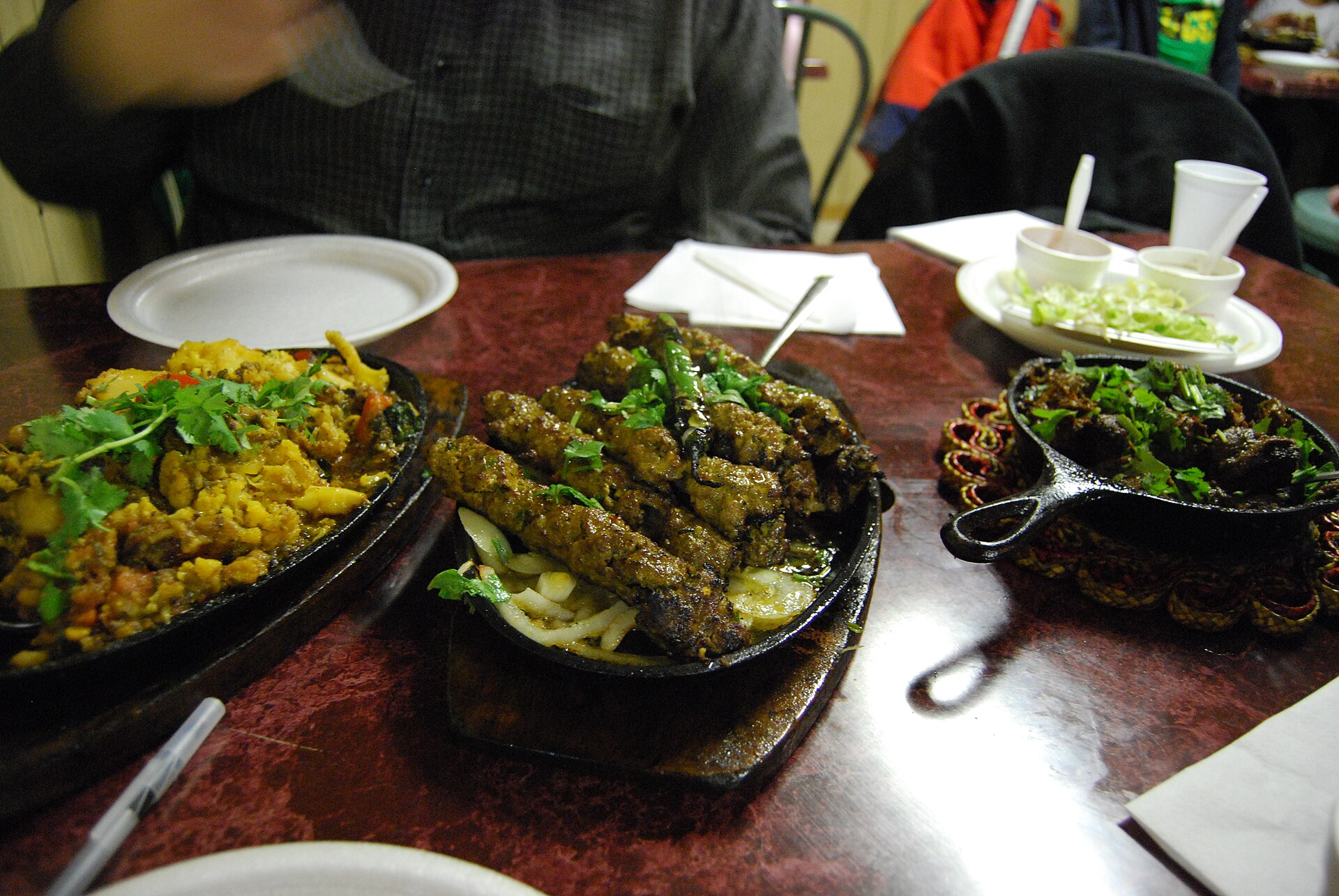
Chapli kebab, in the stall form associated with Peshawar, is typically a wide, relatively thin minced patty—often beef—carrying coriander, crushed pomegranate seed, chilli, and enough fat to fry through. It wants bread, onion, and chutney. It does not automatically want a bun, a hotel rump steak treatment, or a frozen chain product that borrowed a city’s name.
Home cooks outside Peshawar can approximate the idea if they control moisture: coarse mince, drained tomato and onion, spices that still have texture, a test fry before committing the batch. Overworked smooth mince becomes a burger. Too much unbound water becomes collapse. The regional plate becomes a joke when the only version people meet is a supermarket souvenir.
Dry fruit counters are shops
Between meat rooms, Namak Mandi’s dry-fruit trade is ordinary commerce: almonds, pistachios, dried mulberries, weighed without a wellness sermon. Hunza gets brochure language in tourism marketing; Peshawar’s counters are often just counters. Buy what you will eat—after karahi, with tea, or for a road pocket—not what you will stage. Hospitality you can carry is still hospitality. It is not a spa ingredient list.
Lahore paye: same skeleton, different clock
Lahore’s paye—whether in a famous Gawalmandi lane or a house pot—is trotters, time, and a spoon that meets gelatin. Comparing it to Peshawar karahi is useful when you are talking about unapologetic fat and bone. It is useless when you are ranking provinces like sports teams. Watery paye is often a failure of time. Creamy karahi is often a failure of nerve. Neither dish exists to defeat the other.
Karachi’s cream-forward hotel karahi sits in a third lane again. Cities borrow names. Methods do not automatically follow. If a menu says “Peshawari” and tastes like mild party qorma, believe your mouth.
| Plate | Primary craft | Common false friend |
|---|---|---|
| Peshawar karahi | Tomato reduction, meat fat, open pan | Creamy hotel “karahi” |
| Chapli | Wide thin patty, spice texture, fry | Burger bun cosplay; frozen souvenir |
| Dry fruit | Weight, freshness, ordinary shop | Wellness prop shopping |
| Lahore paye | Hours, collagen, hot bowl | Takeaway box fantasy |
How to sit without museum manners
Go for dinner if karahi is the point. Eat with bread. Do not open with “less spice” as your first sentence unless you have a medical reason—ask carefully, accept the house heat, or choose another dish. Pay the posted reality of a busy meat street. Do not bargain a tawa like a souvenir stall. In a private house, eat what is offered and thank the cook for the lamb or the patty; skip the word “authentic,” which mostly flatters the speaker.
Ask before photographing hands, faces, or children’s labour. Default to no. You are a guest with an appetite. Cash, thanks, and a refusal to treat the street as a spice museum will take you further than a ranking thread. Namak Mandi’s table is specific. Keep it that way.
Bread, tea, and the order of the meal
Naan timing matters more than tourists admit. Bread that arrives with the karahi is part of the dish’s temperature system; bread that arrives as an afterthought is how people invent complaints about “dryness” that were really about waiting. Order bread in waves if the table is large. Tea or qehwa after fat is a pause, not a dessert competition.
Sharing plates is normal; hovering phones over every toss of the pan is not. If you are documenting for memory, take one wide shot of your own table and stop. Continuous filming slows service and turns labour into unpaid performance.
Home versions without fake stamps of authenticity
Cooks outside Peshawar can make tomato-forward karahi and wide chapli patties without claiming a street’s name as a costume. Use lamb or mutton with enough fat, reduce tomato until the raw edge is gone, and finish without cream if that is the grammar you want. For chapli, chill the mixture, fry a test piece, and serve immediately. Call it karahi or chapli-style at home if you like—just do not bully a Peshawar cook with a diaspora recipe as correction.
Lahore paye at home needs time and a pot you trust. It is a weekend project, not a Tuesday flex. The comparison remains bone and patience, not provincial pride. When friends argue “which city has better food,” change the question to “which method are we cooking tonight?” Arguments shrink; dinners improve.
If you only remember one courtesy rule: you are eating in someone else’s working street. Cash ready, spice requests modest, photographs negotiated, cream left off the karahi unless the cook offers it. That is enough to keep the table a table.
What “regional” should mean in a national magazine
PakStyles covers Pakistani food without treating provinces as opposing teams. Regional specificity is the opposite of ranking: it is the discipline of describing tomato reduction in one city and gelatin time in another without declaring a winner. Readers who grew up between Lahore and Peshawar already know these tables can share a family week. Readers encountering them through travel shows need the methods, not the myth.
Restaurants in Islamabad and Karachi that advertise “Namak Mandi style” should be judged by the pan in front of you. Sometimes the borrowing is respectful and delicious. Sometimes it is cream and food colouring. Your mouth is the reviewer. The street name on the banner is marketing.
If security or advisories change what foreign readers can do, domestic readers continue to cook and host. Publishing a cultural explainer is not the same as publishing an itinerary. Keep those genres distinct and you will avoid the worst kind of food media: the kind that treats other people’s weekday dinner as a dare for outsiders.
Chapli at a family table versus a stall
At home, chapli often appears with salad, chutney, and a negotiation about chilli for children. At a stall, it appears with speed and a heat level aimed at regulars. Neither setting is fake. Problems begin when a traveller expects stall intensity from a auntie’s careful batch, or when a restaurant sells “family mild” under a Peshawar banner without saying so. Ask. Taste. Adjust. The patty can take honesty better than it can take myth.
Beef versus mutton versus chicken chapli changes fat and browning. Chicken dries faster; beef carries spice differently; mutton needs careful cooking through. Butchers who mince coarsely to order are part of the craft chain. Supermarket ultra-fine mince will push you toward binder. That is engineering, not moral failure—just know which road you are on.
Keep the methods distinct and the rankings at home. The street will feed you if you pay, ask modestly, and leave cream out of the story unless it was already in the pan.
Sources and official profiles
Was this helpful?
Keep reading
Related stories
More from this desk, this beat, and the tags on this piece.
Sarson ka saag for a British kitchen: use greens for flavour, not nostalgia
Hassan Raza · 17 Oct 2026
Readers
The conversation
0 notes
Anyone can leave a note. Guests add a name and email — no account required, and the email is never published.
No notes yet. Yours would be the first.