Regional
Pakistani regional breads: naan, roti, paratha, kulcha, and sheermal
Pakistani bread is a map of grain, heat, fat and occasion: the same flour behaves differently on a tawa, against a tandoor wall or under a baker’s enriched hand.
By Hassan Raza
Food editor
3 min read
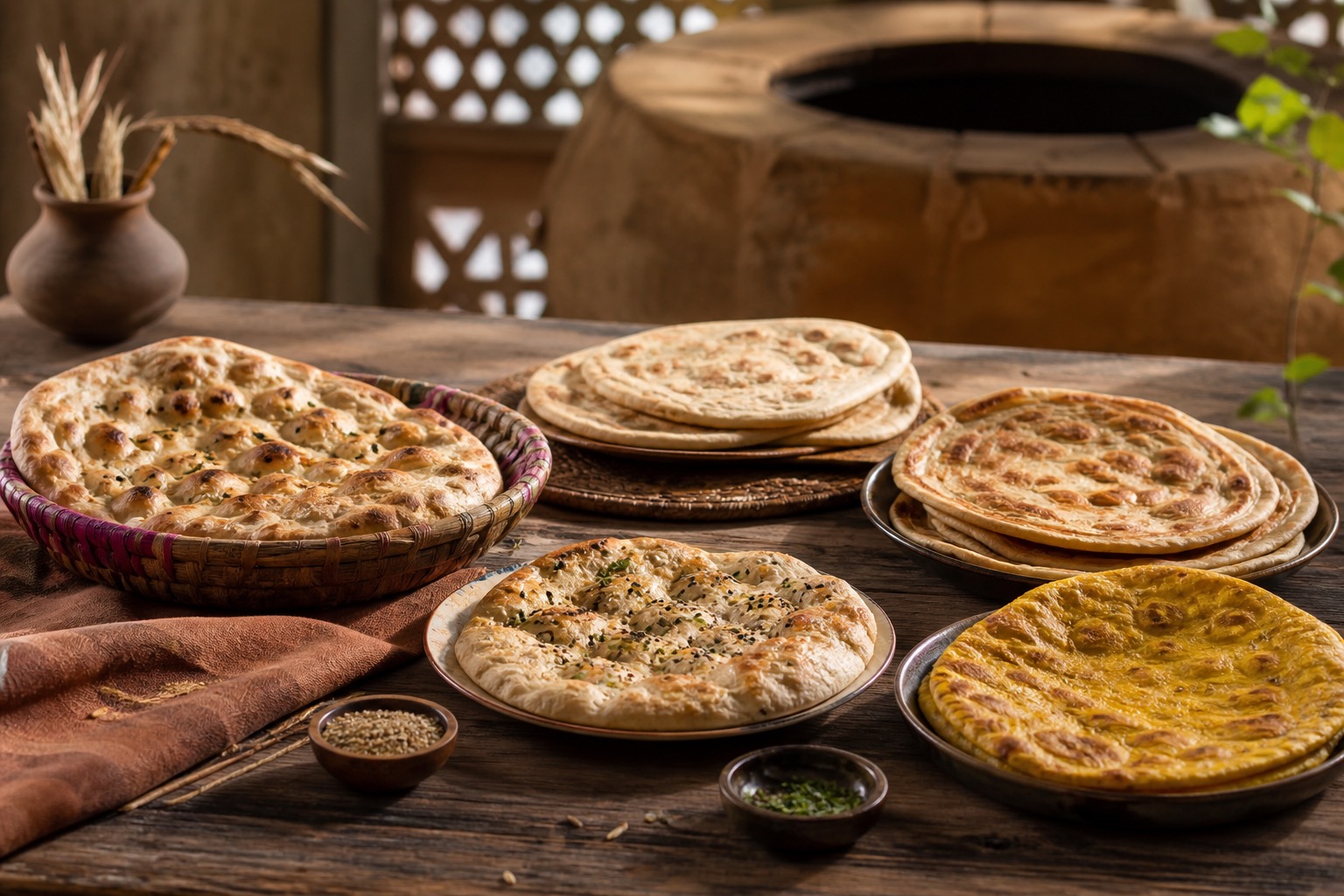
Pakistani bread is a map of grain, heat, fat and occasion: the same flour behaves differently on a tawa, against a tandoor wall or under a baker’s enriched hand.
Which bread tells you where—or when—you are eating?
— A question for PakStyles readers
Roti and chapati: everyday control
Soft dough, complete hydration, resting and even rolling matter more than dramatic kneading. Puff is useful feedback about heat and thickness, not a moral score.
Slow down at “Roti and chapati: everyday control” and identify the example doing the argumentative work. Name its date, maker, place or material where the public record allows. In Pakistani regional breads: naan, roti, paratha, kulcha, and sheermal, that precision gives readers something they can examine and challenge instead of asking them to accept a broad cultural claim on trust.
Naan and kulcha meet the tandoor
Leavening and high heat create a blistered surface and chewy crumb. Regional and bakery variations make “naan” a family rather than one universal formula.
Compare “Naan and kulcha meet the tandoor” with one genuinely different example. Similarities may reveal a pattern, while differences expose the limits of the category. Keep regional, linguistic, religious, class and diaspora variation visible rather than presenting one household or institution as the whole of Pakistan.
Paratha builds layers with fat
Folding, coiling and resting create separation. Stuffed paratha needs a dry, evenly distributed filling so steam does not split the dough.
Ask whose labour disappears when “Paratha builds layers with fat” is described too quickly. Credit makers, translators, technicians, organisers and communities where evidence supports it. Attribution improves the story and helps readers follow the subject beyond the best-known public name.
Sheermal belongs to the celebratory register
Milk, sugar, saffron or colour and enriched dough produce a tender, aromatic bread suited to rich gravies and formal tables rather than an everyday roti substitute.
Bring the argument back to something observable. For “Sheermal belongs to the celebratory register”, a reader should be able to visit, read, listen, inspect or verify the example. That makes disagreement productive: another person can add evidence, correct a date or show where Pakistani regional breads: naan, roti, paratha, kulcha, and sheermal needs a wider frame.
Where to continue after Pakistani regional breads
USDA Food Safety and Inspection Service is a starting point for the current record connected with Pakistani regional breads: naan, roti, paratha, kulcha, and sheermal. Check dates, credits and availability at the source; then follow the names, works and institutions mentioned above rather than relying on a search-result summary.
Which bread tells you where—or when—you are eating? If you have a strong answer, name the specific example or first-hand experience that shaped it.
What would you add—or challenge? Which bread tells you where—or when—you are eating? Keep the conversation attached to a named work, tested method, dated source, or first-hand observation so it improves the guide for the next reader. Before commenting on Pakistani regional breads: naan, roti, paratha, kulcha, and sheermal, revisit one complete example and note the detail that confirmed—or overturned—your first impression. Include enough context for somebody else to find or repeat it: the work or product name, city or venue where relevant, approximate date, and the particular choice you noticed. That is more valuable than a vote for “best”.
Sources and official profiles
Keep reading
Related stories
More from this desk, this beat, and the tags on this piece.
Halal butcher etiquette for a British Pakistani Eid table
Hassan Raza · 13 Sep 2026 · 4 min
Balochi sajji at home: adapting a fire-cooked dish responsibly
Hassan Raza · 13 Sep 2026 · 15 min
Kashmiri harissa: a winter dish built on texture and patience
Hassan Raza · 13 Sep 2026 · 15 min
Peshawari namkeen gosht: what simplicity demands from the meat
Hassan Raza · 13 Sep 2026 · 15 min
Multani sohan halwa: how to buy it fresh and store it well
Hassan Raza · 13 Sep 2026 · 16 min
Readers
The conversation
0 notes
Anyone can leave a note. Guests add a name and email — no account required, and the email is never published.
No notes yet. Yours would be the first.