Pakistan with children: a family travel survival guide
A family itinerary method for Pakistan that protects sleep, food, heat management, vehicle safety and downtime before adult sightseeing ambitions take over.
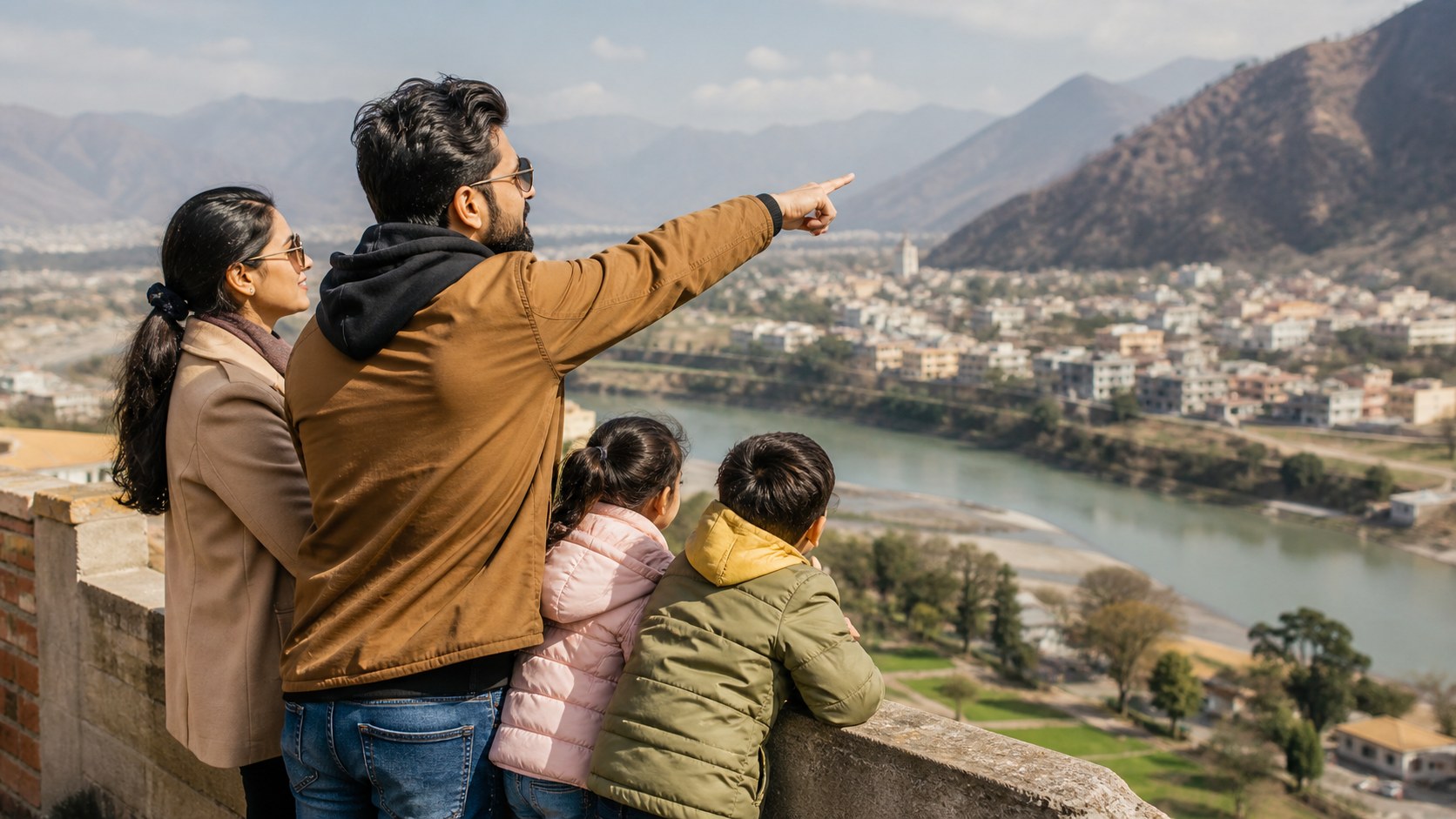
Children do not experience a country through an itinerary. They experience the third hour in a car without a working seatbelt, an unfamiliar bathroom, twelve relatives greeting them at once, and whether dinner appears before they unravel. Adults remember forts and mountain light. Children remember whether someone packed the snack they trust and whether the adults stayed calm when plans changed.
This guide is for families building a Pakistan trip around child capacity rather than adult ambition. It is not medical advice. Before travel, read current official advice for your nationality—UK families should use the FCDO Pakistan travel advice and entry requirements; also review the CDC Pakistan travellers’ health page with a clinician for vaccines, malaria risk by region, and medication planning. Advisories and health guidance change; check them close to departure.
Design each day around one anchor, not three trophies
Choose one main outing. Protect lunch and a rest window. A fort plus market plus late multi-house family dinner may look efficient to adults and feel endless to a six-year-old. Alternate adult-interest days with parks, cousins, crafts, or a hotel pool afternoon that asks nothing of anyone’s cultural literacy.
Build buffers into every transfer. A “two-hour drive” in Pakistan can become four with traffic, tea stops, checkpoints, or a child who needs the toilet twenty minutes after leaving. If you arrive somewhere late and tired, abandon the secondary stop without treating it as failure.
| Day type | Adult goal | Child-supporting structure |
|---|---|---|
| City heritage morning | One museum, mosque exterior, or old-city walk | Early start, shaded breaks, snack in the bag, return before heat peak |
| Relative day | Two households maximum | Named quiet room for meltdowns, exit time agreed in advance |
| Road day | Reach the next city | Daylight only if possible, planned food stops, entertainment that does not depend on perfect signal |
| Recovery day | Almost nothing | Laundry, naps, local playground, early night |
Vehicles, restraints, and the conversation before you land
Do not assume a driver supplies a correctly fitted child seat. Discuss restraints and vehicle condition before arrival. If you are bringing a seat, confirm it fits the vehicle you will actually use. For infants and toddlers, sudden braking, shared vans, and informal seating are a safety problem, not a cultural quirk to shrug off.
Ask who will drive long legs. A tired uncle who “knows the road” is not automatically safer than a professional driver with a rested schedule. Agree maximum daily driving hours. Keep water, bags, and a sick bag within adult reach without unpacking the boot at every stop.
If you will use ride-hailing in cities, practise buckling quickly and keep a compact seat or approved booster you can carry upstairs. Refusing an unsafe vehicle once teaches children that their body matters more than adult embarrassment.
Heat, altitude, and the body’s quieter emergencies
Summer lowland heat can end a day before noon. Plan outdoor movement for early morning, then shift indoors. Hats, shade, and frequent water matter more than heroic walking. Watch for listlessness, refusal to drink, or unusual irritability—those can be early heat-stress signs and deserve cooling and clinical advice, not a push to the next viewpoint.
Northern altitude affects children differently from adults. Ascend gradually when you can, keep the first day gentle, and know which symptoms require descent and medical help. Do not disguise a child’s headache or vomiting to protect a prepaid jeep booking. Cold nights at elevation also surprise families who packed only for daytime sun; bring layers that work for sleep as well as walking.
Food that children will actually eat
Pakistan offers abundant food children often love—fresh bread, mild yoghurt, rice, eggs, fruit, simple grilled chicken—and abundant spice that can surprise a child used to a different kitchen. Pack familiar snacks for the first forty-eight hours while sleep and clocks adjust. Introduce local flavours at lunch when patience is higher, not at a late dinner surrounded by new relatives.
Be careful with water and ice. Follow current travel-health guidance for drinking water rather than guessing from appearance. Carry oral rehydration supplies and know where the nearest clinic is relative to where you sleep. Street food can be wonderful for adults who accept digestive risk; for young children, choose busy kitchens with high turnover and food cooked to order when you experiment.
Allergies and religious dietary rules need a clearer script than a hopeful glance at a shared platter. Write key phrases for “no nuts,” “no seafood,” or “halal only” if your household needs them, and confirm with the cook rather than the most enthusiastic uncle at the table.
Bathrooms, naps, and the dignity of ordinary needs
Map bathrooms before you need them: hotels, large restaurants, major stations. Carry a small toilet kit—tissues, sanitiser, spare underwear—because public facilities vary. A child who is desperate cannot wait for the perfect clean cubicle.
Protect naps even when hosts want to show love through constant company. A short afternoon sleep can save the evening. Say the need plainly: “We are taking one hour upstairs, then we will come down for tea.” Families who love you can still misunderstand jet lag as rejection if you do not name it.
Jet lag itself deserves a plan. For the first two mornings, keep bright outdoor light early and resist heroic late nights. Children who are two days behind on sleep will not suddenly become charming tourists because a monument is important to the adults.
Relatives: joy with a guest-list limit
Visiting family is often the point of the trip. It can also overwhelm a child with noise, gifts, cheek-pinching, and disrupted routines. Limit the number of households in a day. Ask hosts to warn you before large surprise gatherings. Designate one adult as the child’s advocate—the person allowed to say “we are leaving now” without a committee vote.
Photography and social media deserve a family rule before arrival. Not every relative should post a child’s face to a large group chat. Agree what is allowed and who must ask first. The same rule applies to adults who want a child to perform a poem, a prayer, or a dance for the room; ask the child privately first.
Money gifts and sweets create their own logistics. Decide whether cash gifts will be held by parents, and whether sugary gifts will be paced. A child who receives ten boxes of mithai in one afternoon does not need to open all of them before bedtime.
Documents and the boring admin that prevents panic
Confirm passport validity, visas, and any consent letters required when one parent travels alone with children. Carry printed copies of bookings and emergency contacts. Teach older children the hotel name and a parent’s phone number. For younger children, keep a card in their pocket with the same information.
Insurance should cover the activities you actually plan, including road travel and any mountain destinations. Read exclusions that relate to travel against official advice. If you are visiting multiple cities, keep digital and paper copies of each hotel address in local script where helpful.
School-age children and the trip as a story they can own
Give older children a small job that is real: holding the snack bag, checking that everyone has water, choosing the afternoon recovery activity from two options. Let them keep a simple notebook of foods tried, words learned, or relatives met. Ownership reduces the sense that the trip is something being done to them.
Also prepare them for questions about where they “really” live, why their Urdu or English sounds different, and why they do not know every cousin. A short, kind answer practised at home prevents the airport-to-drawing-room interrogation from becoming a shame spiral.
Packing that survives three cities
Pack for laundry access rather than for a fashion week. Two or three child outfits that can be washed in a sink, a light jacket, closed shoes, and one nicer set for family photographs usually beat a suitcase of rarely worn clothes. Keep a change of clothes in the day bag after any long transfer; travel stomach upsets and spilled juice do not respect hotel laundry schedules.
What a successful family day looks like
Success is not the number of sites photographed. It is a child who slept enough to be kind, ate enough to stay steady, arrived in daylight, and still had energy to notice one interesting thing—a kite, a buffalo, a sweet shop window—without being marched past twelve more. Adults can return to Pakistan. Childhood patience is less renewable on a single trip.
Plan the country in child-sized units. Keep one empty afternoon in every three days. Let the trip be smaller than your ambition and larger than your fear. That is usually the version families remember with affection rather than exhaustion.
Sources and official profiles
Filed under
Was this helpful?
Keep reading
Related stories
More from this desk, this beat, and the tags on this piece.
Driving from Lahore to Islamabad on the M-2: plan the stops before the motorway
Mehreen Ali · 27 Oct 2026
Driving in Pakistan with a UK licence: get the 1968 IDP before you fly
Mehreen Ali · 24 Oct 2026
Two weeks in Pakistan: an itinerary that does not rush the country
Mehreen Ali · 6 Aug 2026

Readers
The conversation
0 notes
Anyone can leave a note. Guests add a name and email — no account required, and the email is never published.
No notes yet. Yours would be the first.