A programme that fits a room in Gulberg
A quiet home strength programme for Pakistani city flats: written sessions, neighbour-aware moves, heat and Ramadan adjustments, and a twelve-week patience rule.
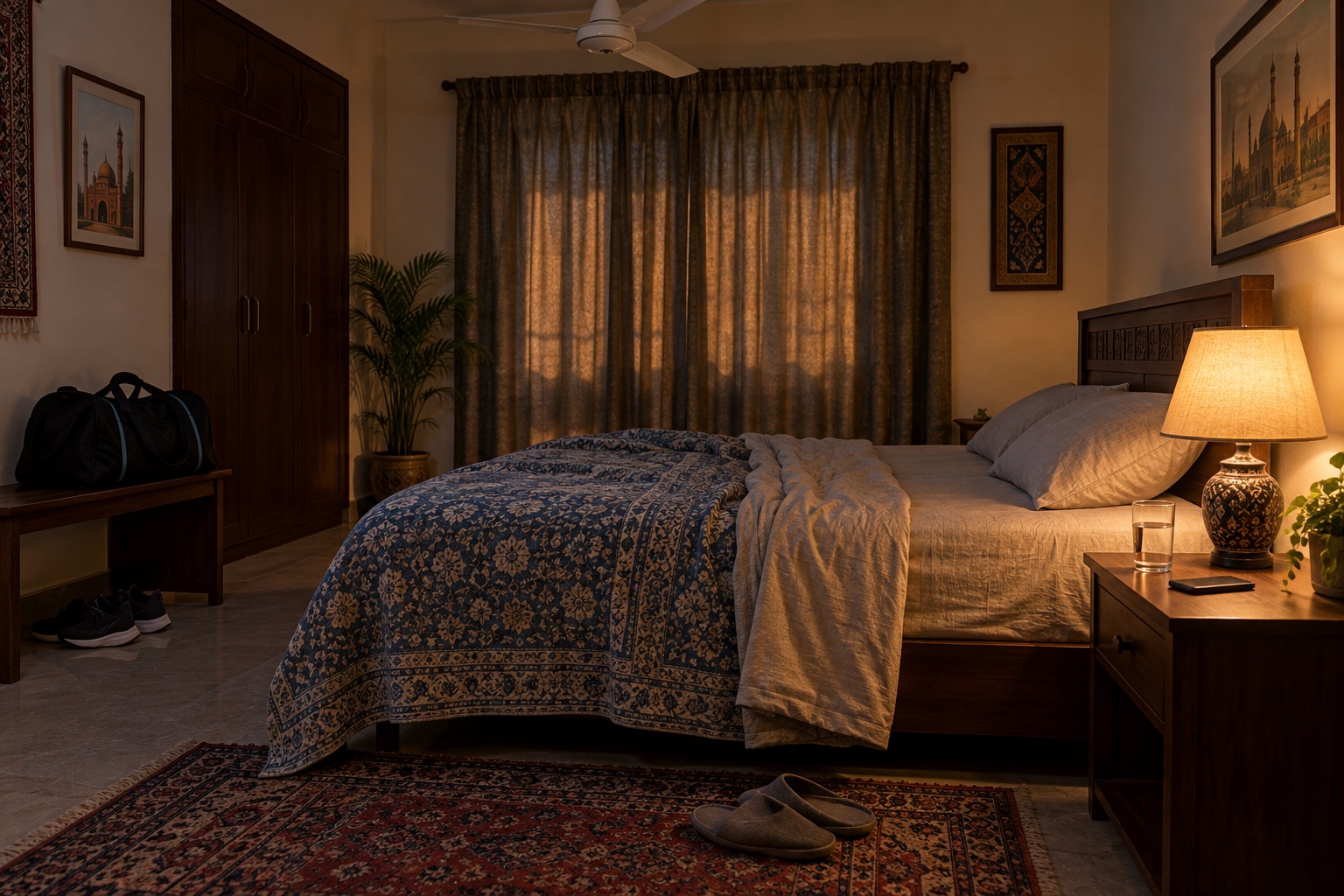
A Gulberg flat, or any Pakistani city room with limited floor, can hold a serious training programme if you stop pretending you need a warehouse of machines. The constraint is real: neighbours, heat, ceiling height, and storage. The opportunity is also real: no traffic, no membership theatre, sessions that fit between office and family. This is a room programme, not a garage-gym fantasy imported from another climate.
Early answer: pick six to eight movements you can do quietly, write three weekly sessions plus walks, respect heat and neighbours, and progress load only when form and recovery allow. NHS adult activity guidance supports regular strength and aerobic work; your room supplies the venue. WHO heat guidance still applies when the AC is off.
The minimum kit that earns its corner
A mat, two dumbbells or adjustable weights you can grow into, a resistance band, and a doorway or sturdy furniture plan for rows will cover most recreational goals. A kettlebell is excellent if you will learn hip-hinge safely. Pull-up bars that destroy doorframes are not mandatory. Fancy benches that become clothing racks are optional comedy.
Store kit where setup takes under two minutes. Friction kills home programmes faster than lack of cables. Buy load only after you have completed four weeks with what you have. A better mat, a second dumbbell pair, or a door anchor for bands usually beat a shopping spree. Marketplace used weights are fine if collars are safe and plates are not cracked.

A quiet movement menu
- Squat pattern: heel-elevated squat, split squat, or sit-to-stand from a chair.
- Hinge: Romanian deadlift with dumbbells, hip hinge drills, glute bridge.
- Push: push-ups and progressions, floor press.
- Pull: band rows, backpack rows, suitcase carries.
- Carry/core: farmer carries in a short hallway, dead bugs, side planks.
- Easy aerobic: walk outside at dawn or march in place when air quality or safety limits outdoors.
Avoid jump-heavy complexes after 10pm in apartments. Your downstairs neighbour is part of the programme whether you like it or not. Put rubber under weights if you must load. Replace drops with controlled eccentric lowers.
| Day | Focus | Time box | Noise risk |
|---|---|---|---|
| A | Squat + push + core | 35–45 minutes | Medium if heels stamp, use slower lowers |
| B | Hinge + pull + carry | 35–45 minutes | Low–medium; control plate contact |
| C | Full light mix or longer walk | 30–50 minutes | Low indoors; outdoor walk preferred |
| Optional | Mobility / easy spin | 15–20 minutes | Low, hips, ankles, thoracic |
Sample sessions you can copy tonight
Session A: two minutes of easy marching or stairwell walking; three rounds of split squats, push-ups, and dead bugs; two rounds of suitcase carry; stretch calves and hips. Rest as needed to keep form. Stop one set before form breaks if you are unsupervised.
Session B: warm-up; three rounds pairing a hip hinge with a row; glute bridges; band pull-aparts; farmer carry; finish with easy breathing work on the mat. Film one set monthly from the side for form, not for content.
Log sessions with ticks on a calendar hung on the fridge. Digital apps help some people and become guilt machines for others. Paper is enough. Progress by adding repetitions first, then load, then slower tempos, one variable at a time.
Heat, Ramadan, and family hours
Train in the coolest hour the household allows. A closed room in June can be unsafe; shorten sessions, open airflow, or move to walking. In Ramadan, post-maghrib short sessions beat heroic fasted circuits. Keep floor noise down when relatives sleep after sehri.
Exams, weddings, and travel months need a written maintenance plan before the month begins: two short sessions and walks. The room programme fails when it only exists in ideal weeks. Ideal weeks are rare in Pakistani family life. Design for the real ones.
Children in the room need clear “this is training time” boundaries without turning the flat into a drill sergeant movie. A mat that rolls away helps the space become a living room again. Women training at home may prefer closed doors and family agreements about interruptions; men sharing rooms with siblings need the same agreements. A programme that depends on perfect solitude in a joint family flat will fail, design interruptions into rest intervals.
Neighbours, building rules, and shared walls
Some buildings ban heavy weights or publish quiet hours. Read them. Early morning training is often kinder than late evening for shared walls, unless your household sleeps then, in which case lunch-hour sessions may be the compromise. Keep personal scent modest; fragrance storms in closed rooms are neighbour problems too.
If space is truly impossible, six people in one room, then a neighbourhood box becomes the honest primary door and home becomes mobility only. Honesty beats home-gym purity. If you need heavier loading than dumbbells allow, add one or two weekly gym visits for squats and pulls while keeping easy days at home. If motivation dies in solitude, the box may be the better primary door. Home is a tool, not a purity test.
Twelve-week patience and what to measure
Home programmes die in week three when novelty fades. Pre-commit to twelve weeks before judging. Change only one variable at a time, load or reps, not both plus a new exercise catalogue downloaded at midnight. Boredom is often the feeling of adaptation arriving.
Measure monthly: sessions completed, resting mood, whether stairs feel easier, and sleep hours. If nothing improves and sleep is poor, cut volume before adding peppermint-scented motivation. Progress photos, if you take them, should be monthly and private before they are social. Lighting lies. Sleep lies less.
Injuries that worsen across a week need professional assessment. Online form checks from strangers are entertainment. A physiotherapist who understands strength is worth more than another band colour. Pain literacy matters more in unsupervised rooms because no coach is watching.
Travel and hotel continuity
When weddings or work trips interrupt, switch to a three-move hotel plan: squat to chair, push-ups, backpack row. Continuity beats restart mythology. Pair the room plan with protein-forward meals you will cook and sleep you will defend. Online programmes that assume bumper plates and thirty metres of turf will humiliate a Gulberg room, choose limited-space plans or write your own from the menu above.
If you share the mat with a spouse or sibling, alternate load days so equipment fights do not become the session. Shared training can increase adherence when ego stays outside the room. Keep cues kind. Home is not a boot camp franchise.
A four-week progression you can write on paper
| Week | Session target | Progression rule |
|---|---|---|
| 1 | Three sessions, easy loads | Learn quiet landings; film nothing yet |
| 2 | Same three; add 1–2 reps | Only if speech and joints stay calm |
| 3 | Hold reps; slow the last set | Tempo before ego load |
| 4 | Smallest load bump or denser rests | One variable only |
After week four, repeat the cycle with slightly higher loads or a harder push-up progression. Insert a lighter “deload” week whenever sleep collapses, a wedding week arrives, or joints complain for more than three days. Deload is not failure. It is how unsupervised rooms stay usable.
Warm-up that fits a hallway
Two minutes of marching, ten bodyweight sit-to-stands, a few hip hinges with no weight, and arm circles beat a theatrical mobility flow that eats the session. If calves are chronically tight from desk work, add a wall stretch before hinges. If wrists complain in push-ups, elevate hands on a sturdy edge rather than forcing a floor angle you have not earned.
Finish sessions with two minutes of easy breathing on the mat before you re-enter family noise. That bridge reduces the “I still feel wired” complaint that makes households resent the programme.
Food beside the mat without powder theatre
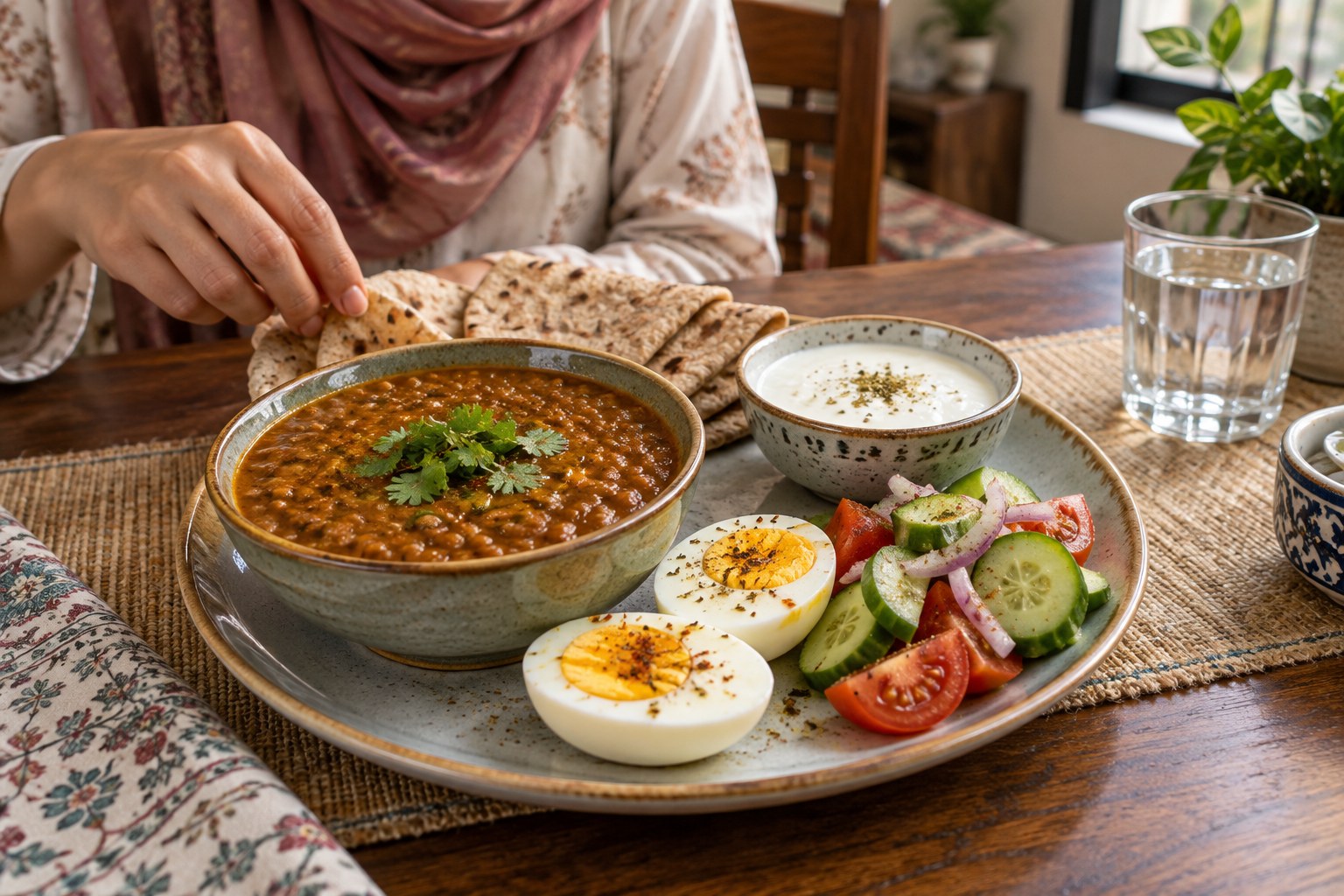
Eggs, daal, yoghurt, and leftover chicken already speak protein on Pakistani plates. Distribute them across the day rather than inventing a second cuisine. Train hard without them and people invent miracles in tubs. Train hard with them and the room programme quietly works. In heat, fluid and salted food matter as much as the third set of rows.
Women who cook for everyone and train last need protein that does not require a second kitchen shift: yoghurt bowls, boiled eggs cooked while tea boils, leftover daal reserved before it vanishes. Labour is part of nutrition. Ignore it and the plan fails even when the mat is perfect.
When the room is not enough, and when that is fine
Seek a coach or physiotherapist if pain migrates, if you cannot hinge without rounding into danger, or if you are returning from illness and guessing. Seek a gym visit if you need heavier axial loading than dumbbells safely allow. Seek a neighbourhood box if solitude kills adherence. None of those moves cancels the value of quiet home weeks; they complete them.
Keep a pair of shoes only for room sessions if street dust bothers your lungs. Ventilate. Wipe sweat off floors so the room can become a room again. The programme that fits a Gulberg flat is ordinary on purpose. Ordinary is how years happen.
Gulberg rooms, DHA rooms, Bahria rooms, PECHS rooms, all face the same physics: heat, neighbours, time. Write the three-day plan on paper. Prepare the mat space. Choose tomorrow’s hour. Keep sessions shorter than pride wants and more frequent than nostalgia remembers. Consistency in a small room beats occasional heroics in a large one.
Sources and official profiles
Was this helpful?
Keep reading
Related stories
More from this desk, this beat, and the tags on this piece.




Readers
The conversation
0 notes
Anyone can leave a note. Guests add a name and email — no account required, and the email is never published.
No notes yet. Yours would be the first.