Protein, roti, and real life
How to hit a practical protein target from a Pakistani kitchen—eggs, dal, dahi, meat when the budget allows—without treating roti as a moral failing.
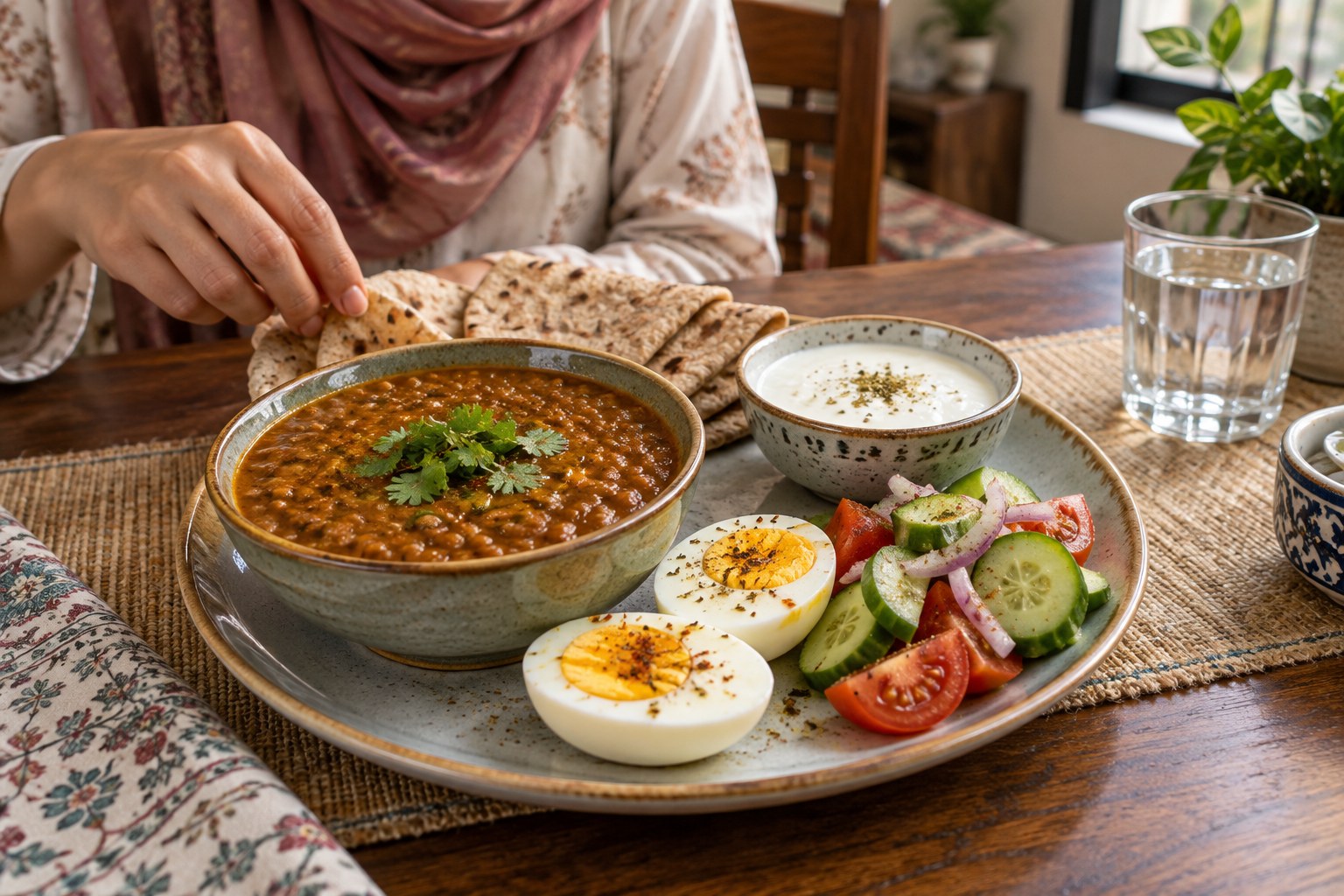
Fitness nutrition arrives in Pakistani cities like a shipment: chicken breast, broccoli, a powder with a flag on it. Meanwhile dinner is roti, a salan, yoghurt, maybe eggs. Those two sentences can describe the same week if you stop treating bread as the enemy and start counting what is on the bread.
This is not a meal plan that pretends your mother does not cook. It is a way to fortify the cuisine you already eat so training, work, and family tables stop arguing with each other.
What enough protein means without a marketing scoop
Needs vary by body size, age, pregnancy, illness, and training load. A clinician or registered dietitian should set targets if you have a medical condition. For general healthy eating patterns, the NHS Eatwell Guide places beans, pulses, fish, eggs, meat, and other proteins as one part of a balanced plate—not the entire plate, and not a reason to delete carbohydrates that already feed your household.
In a Pakistani kitchen, the practical question is rarely “how do I eat like a catalogue.” It is “how do I add eggs, dal, dahi, or meat to meals that will actually be eaten.” The plate that gets eaten beats the plate that photographs well in a gym story and dies in the fridge.
The plate that survives a Karachi or Lahore evening
Eggs at breakfast or sehri. Dahi. Dal—masoor, moong, chana, the pot that already exists. Chicken or fish when the budget allows. Roti as a vehicle, not a free-for-all. Fruit from the sabzi mandi. That is lunch and dinner for millions of people who train, work, and sit at family tables without an imported grocery basket.
The industry likes to pretend roti is the problem. Roti is a carbohydrate you already digest, cheap, and sitting on the table whether you meal-prep or not. Two roti with thick dal and yoghurt will outwork a soggy imported wrap that nobody in the house wanted. Count the dal. Count the eggs. Stop counting the bread as a sin.
Dal is not a consolation prize
A thick dal with yoghurt is a protein strategy that predates the scoop. Chana earns its keep. So do eggs, still among the most practical animal proteins many households can buy on a Tuesday. When meat is tight, build lunch around the pot already on the stove. Add an egg. Add dahi. The gram count will look like a person who trained and then ate—not like a person who performed restriction.
Karachi apartments and Lahore kitchens already know this. The gap is the gym WhatsApp group that treats anything without a barcode as incomplete. Powder can be a tool. It is not proof you were unfed before it arrived. Read labels. Halal certification is a documented claim where it matters to you, not a vibe. If the next meal is four hours after training, a scoop that checks out can bridge the gap. Then go home and eat.
| Kitchen staple | Why it helps | Practical move |
|---|---|---|
| Eggs | Fast, cheap, flexible | Sehri, breakfast, or onto leftover salan |
| Dal / chana | Already in the weekly pot | Thicken it; add dahi; pack for office |
| Dahi | Protein + cooling with spice | Side bowl, raita, or with fruit |
| Chicken / fish | Dense when budget allows | Cook once; use across roti meals |
| Roasted chana | Portable | Desk drawer instead of vending machine |
Sehri, iftar, and the training gut
Ramadan is not a reason to abandon protein. It is a reason to stop pretending a fried sehri is fuel. Eggs, yoghurt, a slower carbohydrate, water, and salt serve people who will train or work better than a heavy fryer session before dawn. After iftar, if you train, keep it honest: the gut just woke up. Easy strength can fit. A hero workout on a full stomach is how people meet the floor.
People with diabetes or other conditions who fast should take clinical advice specific to them. Do not copy a training influencer’s fasted protocol because it looked disciplined on a phone.
What the scoop is for—and what it is not
Powder is a tool for the hour after training if your next meal is late—a class, a shift, a commute that ate the evening. It is not a personality and it is not breakfast. People who live on shakes in this climate often live on headaches. Food has salt, water, chewing, and micronutrients that a single tub does not replace.
If you cannot afford the tub, you are not locked out of training. You are locked out of a marketing story. Eggs, dal, dahi, leftover chicken. Write the week on the fridge. The app can wait. The plate cannot.
Heat changes the maths
You lose salt here in a way temperate-climate plans do not budget for. Drink. Eat salty food you actually like. A lassi, a namkeen, a broth—these are not cheating. They are electrolyte management with better flavour. Cut the oil if the salan is a slick. Do not cut the meal because a forum told you carbohydrates were a colonial plot.
WHO guidance on heat and health emphasises regular fluids and care for people who are active in hot conditions. Training nutrition in June is inseparable from hydration and sodium. A “clean” meal that leaves you dizzy on a motorbike home is not clean. It is incomplete.
Family tables, office tiffins, and the week you will repeat
If you live with family, negotiate additions rather than separate menus when you can: an extra egg tray, a thicker dal, chicken twice a week instead of a lonely grilled breast ritual that isolates you at the table. If you pack lunch, build around leftovers that reheat safely. Cool cooked food promptly and reheat thoroughly; FSA guidance on chilling and cooking is a sensible hygiene baseline for any household fridge.
Office culture will still offer samosas at 5pm. You can eat one and still hit a protein target at dinner. Absolutism is how plans die. The country cooked protein before the scoop arrived. Your job is to be the person who still shows up to the session, fed, without turning roti into a morality play.
Eat the cuisine you already have. Fortify it. Then go home for dinner.
A sample day that still looks like a Pakistani kitchen
Breakfast or sehri: two eggs, yoghurt, one roti or paratha you actually want, tea with less theatre. Mid-morning if training later: roasted chana or leftover chicken. Lunch: thick dal, salad or cucumber, roti, optional egg. Training. Post-training if dinner is late: milk, yoghurt, or a checked powder. Dinner: chicken or fish salan when possible, vegetables, roti counted rather than stacked, fruit.
That day will not match a bodybuilder brochure. It will match a household. Adjust portions to your size and medical advice. The point is sequence and protein presence, not identical macros to a stranger on the internet.
Vegetarian and low-meat weeks need intention: combine dals, use eggs and dairy if you eat them, and do not pretend a salad of cucumber is a training meal. Chana chaat with yoghurt can be a serious lunch. Palak with paneer, where available and suitable, can help. The constraint is planning, not destiny.
Budget weeks are where the marketing story fails hardest. Eggs and masoor do not require an imported supermarket. Buy what your local market sells. Cook once for twice. Freeze portions if your electricity and freezer allow safe storage. The person who trains consistently on ordinary food will outlast the person who trains only when the special grocery bag arrives.
Reading labels without worshipping them
When you do buy powder, read the ingredient list and the protein per scoop as sold where you live—not as advertised in another country’s screenshot. Be wary of miracle claims. Food safety and labelling standards vary; buy from sellers you can return to if a batch smells wrong. Powder is not exempt from ordinary caution: keep it dry, use clean scoops, and do not treat a dusty tub found in a gym bag as immortal.
Supplements are not a substitute for medical care. Fatigue, hair loss, or stalled training may be iron deficiency, thyroid disease, under-eating, or depression—not a sign you need a more expensive tub. See a clinician when symptoms persist. Nutrition content can inform; it cannot diagnose.
Write three dinners you will actually cook this week and circle the protein in each. If a dinner has none, add an egg or a dal side before you open a shopping app for imported substitutes. The circle on paper is a more honest coach than a macro screenshot you will not follow by Thursday.
If relatives police your plate, answer with additions rather than arguments when possible: “I will eat the salan—and an egg.” Open conflict at every meal exhausts everyone and usually fails. Quiet repetition of a fortified plate teaches faster than nutrition lectures at dinner.
Sources and official profiles
Was this helpful?
Keep reading
Related stories
More from this desk, this beat, and the tags on this piece.
Ghee, butter and vegetable oils: the heart-health difference is mostly the fat profile
Sara Malik · 18 Oct 2026
Readers
The conversation
0 notes
Anyone can leave a note. Guests add a name and email — no account required, and the email is never published.
No notes yet. Yours would be the first.