Pakistani wedding guest outfits for every ceremony
A ceremony-aware guest wardrobe that changes function and energy without demanding a new outfit for every invitation.
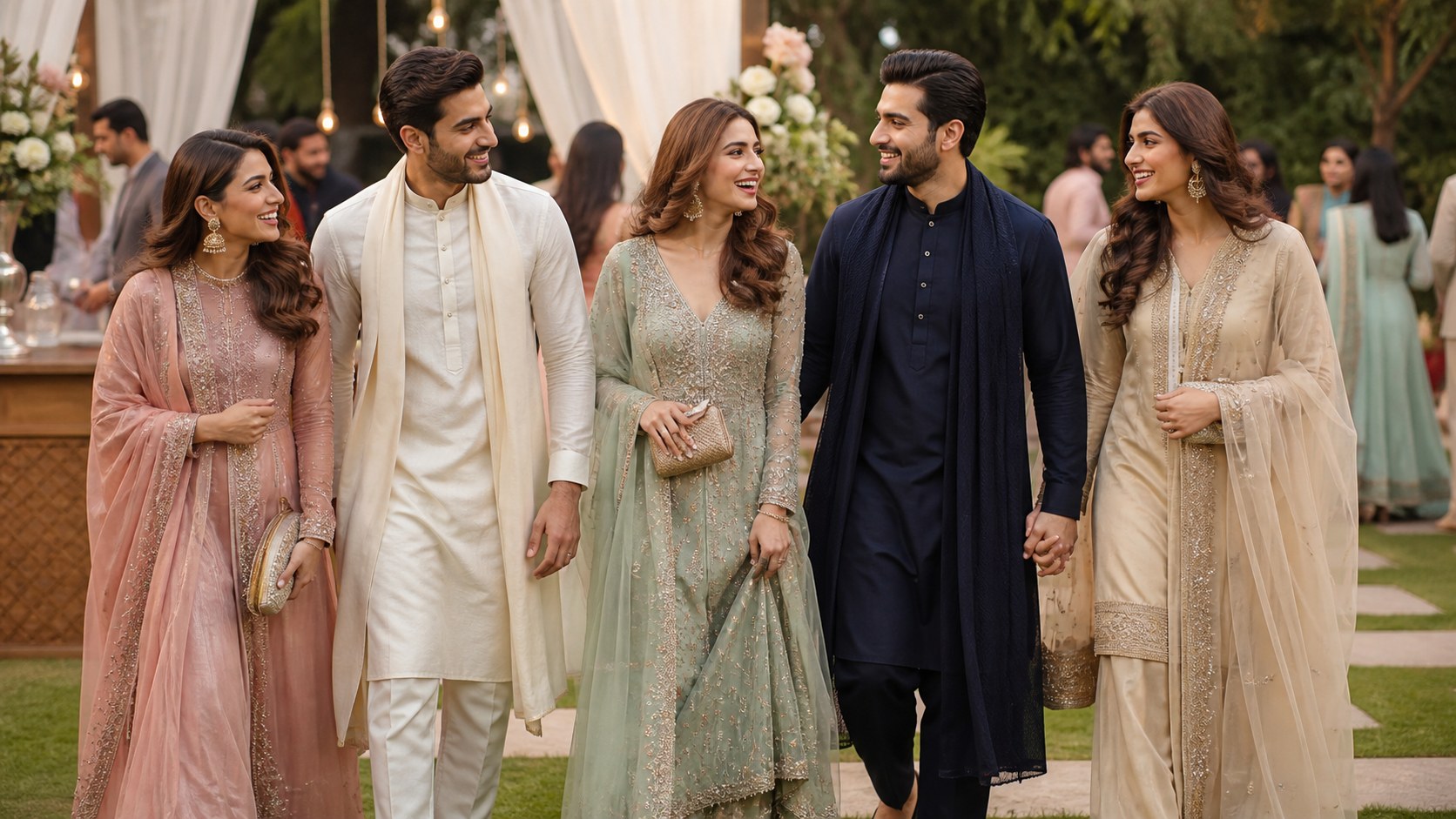
A multi-event Pakistani wedding invitation is not a shopping list for five unrelated outfits. It is a change in light, movement, seating and formality across several days. The practical question is how to look intentional at each ceremony without arriving with a suitcase of one-wear clothes that never leave the hanger again.
Start by naming the events you will actually attend: dholki, mehndi, nikah, baraat, walima, or a compressed weekend that folds two of those into one evening. Then ask three host questions before you buy anything: where each gathering happens, how much dancing or floor seating is expected, and whether any family palette or dress note is real rather than rumour. Colour “rules” circulating online are unreliable; family preference and venue etiquette matter more than a stranger’s prohibition list.
| Event | What the clothes must survive | Usual formality cue |
|---|---|---|
| Dholki | Crowded rooms, clapping, snacks, informal photographs | Comfortable festive, washable preferred |
| Mehndi | Dancing, floor seating, colour, practical shoes | Bright energy, movement-first silhouette |
| Nikah | Sitting through ceremony, respectful coverage, quiet jewellery | Polished restraint; room type decides volume |
| Baraat | Highest visual formality, outdoor or hall movement, greetings | Formal silhouette without copying bridal signals |
| Walima | Reception lighting, dinner table, long standing and queues | Reception-ready; one clear drama source |
Build three bases, not five costumes
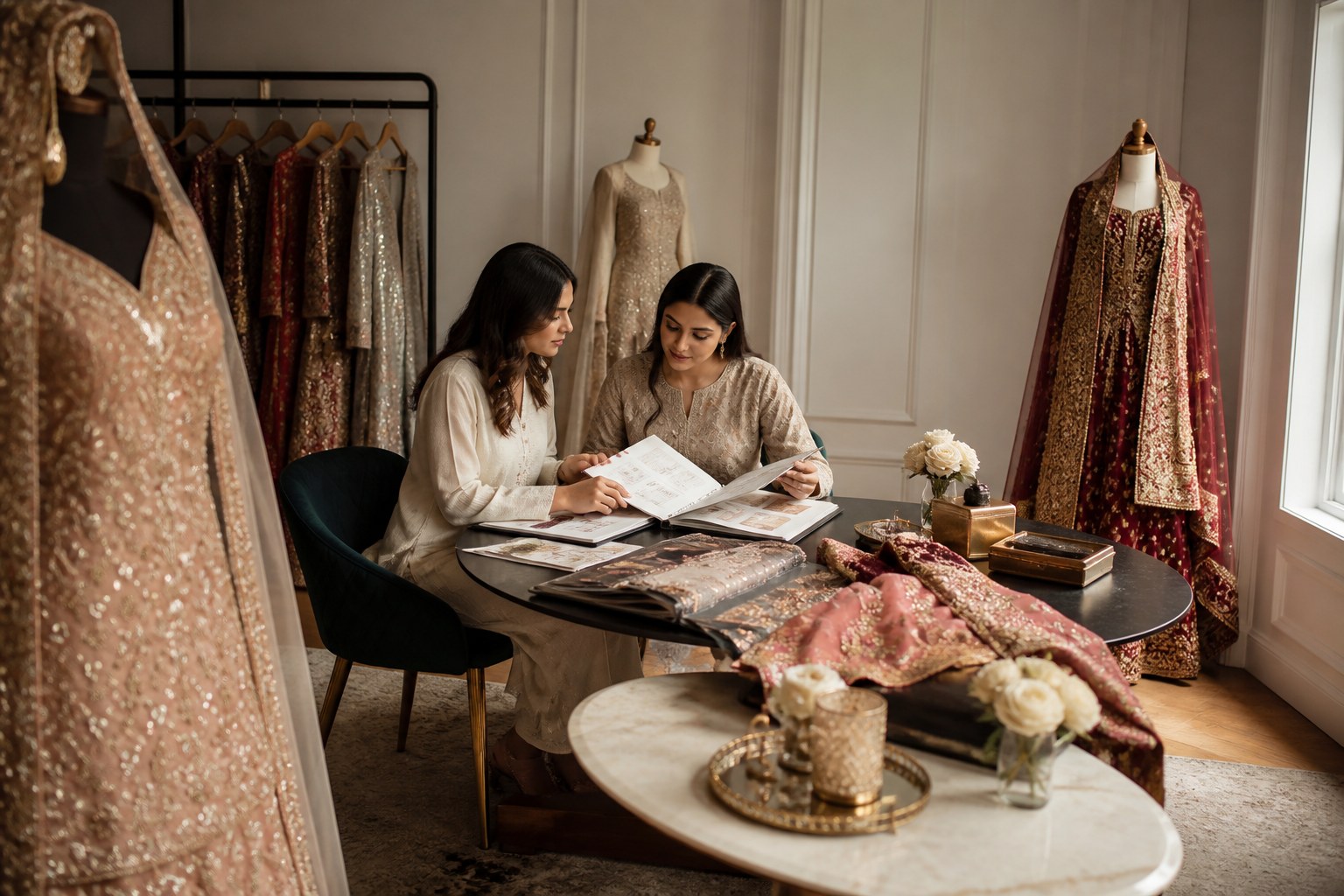
Most guests can cover a full wedding sequence with three strong bases and deliberate restyling:
- A polished kurta and trouser set that can serve nikah, dholki or daytime errands between events.
- A movement-friendly lower - gharara, sharara, soft lehenga or wide trouser - for mehndi and one other festive night.
- One formal silhouette for baraat or walima, restyled for the second event with a different dupatta, jewellery focus or hair placement.
Repeat wear reads as intentional when the first appearance is not overloaded. Change an embroidered dupatta for a plain drape, remove a collar necklace, swap footwear, or pair the same kurta with another lower. Guests notice the complete composition more than the reuse of one excellent piece.
Read the room before the catalogue
Home events reward washable fabric, secure shoes that can be removed, and hems that do not claim the walking path. Mosque or prayer-room nikahs need sleeves, necklines and hems that remain comfortable while sitting and covering the head if you choose or expect to. Hotel ballrooms can support more structure, but air-conditioning, long queues and polished floors change jewellery noise, shawl choice and sole grip.
Outdoor lawns and marquees in Britain or North America add weather as a fourth guest. Pale chiffon that looked perfect indoors can become translucent against daylight; a farshi hem that skimmed a rug can collect wet grass. Pack one warm or rain layer that belongs to the outfit story - a coordinating shawl, waistcoat or tailored coat - rather than apologising with a mismatched puffer at the door.
Daylight and evening lighting change fabric behaviour as much as venue size does. Raw silk, textured cotton-silk and carefully printed lawn hold their own in afternoon windows. Tissue, metallic thread, velvet detail and deeper colour take artificial evening light without requiring every surface to sparkle. If one outfit must cover afternoon nikah and evening dinner, prioritise texture and cut over maximum shine, then intensify jewellery after the ceremony if the room invites it.
Colour, bridal signals and asking without panic
Ask whether the couple has assigned a family palette for mehndi or requested softer tones for nikah. Otherwise treat colour as invitation, not uniform. Avoid copying the bride’s announced look: matching her exact red, mirror work or bridal silhouette is the real social risk, not wearing cream or black by default. If an invitation is ambiguous, a direct question to the host is clearer than treating a social-media thread as etiquette law.
Men’s guest dressing follows the same ceremony logic. A clean kurta and waistcoat can cover dholki and nikah; a more formal sherwani or structured waistcoat may suit baraat; walima often allows a refined kurta set or suit hybrid depending on the couple’s stated tone. Fit through the shoulder and sleeve still matters more than embroidery density. For mixed-culture guest lists, clarity beats assumption: if a non-Pakistani friend asks what to wear, translate the ceremony into function - dance floor, mosque seating, black-tie adjacent reception - rather than handing them an unexplained colour chart.
Silhouette choices that survive real hours
A gharara’s knee join must meet your knee, not a campaign model’s. A sharara’s volume needs a rise and waist finish you can sit in for an hour. A lehenga’s skirt weight should be supported at the waistband with length set to the actual shoes. A long Anarkali or peshwas-style frock can be kinder for seated nikah photographs, while a shorter kurti over a flared lower often frees the legs for mehndi. None of these shapes is universally “more formal”; construction and fabric weight decide how they behave.
If you already own a formal set from a previous wedding, audit it before buying again. Does the hem still clear your current shoes? Has the lining become scratchy? Does the dupatta still have secure corners? Restyling an owned garment with a new dupatta and jewellery is often stronger guest etiquette than arriving in a brand-new look that fights the room.
Jewellery, bags and the neighbouring guest
Choose jewellery that does not fight the neckline or strike the person beside you during clapping and greetings. Heavy bangles that look glamorous in a mirror can become percussion during a quiet nikah or a crowded dance circle. Earrings should clear embroidered collars. Bags need a secure close and a place to sit during floor seating; a tiny clutch with no strap is a liability when both hands are needed for food or photographs.
Test every final combination seated and standing. Floor seating exposes waist gaps, short kurtis that ride up and trousers with an impossible rise. Dining chairs expose sleeves that enter plates and necklaces that strike table edges. A five-minute rehearsal at home prevents a wedding spent rearranging yourself.
A packing method for multi-day weddings
- Photograph each complete outfit with shoes and jewellery before packing.
- Carry one repair pin, blister cover, stain cloth and safety pin card - not an emergency department.
- Keep a second pair of secure shoes if outdoor ground is likely.
- Steam or hang garments on arrival; dense embroidery needs time to settle.
- Separate dry-clean pieces from washable bases so laundry panic does not hit mid-weekend.
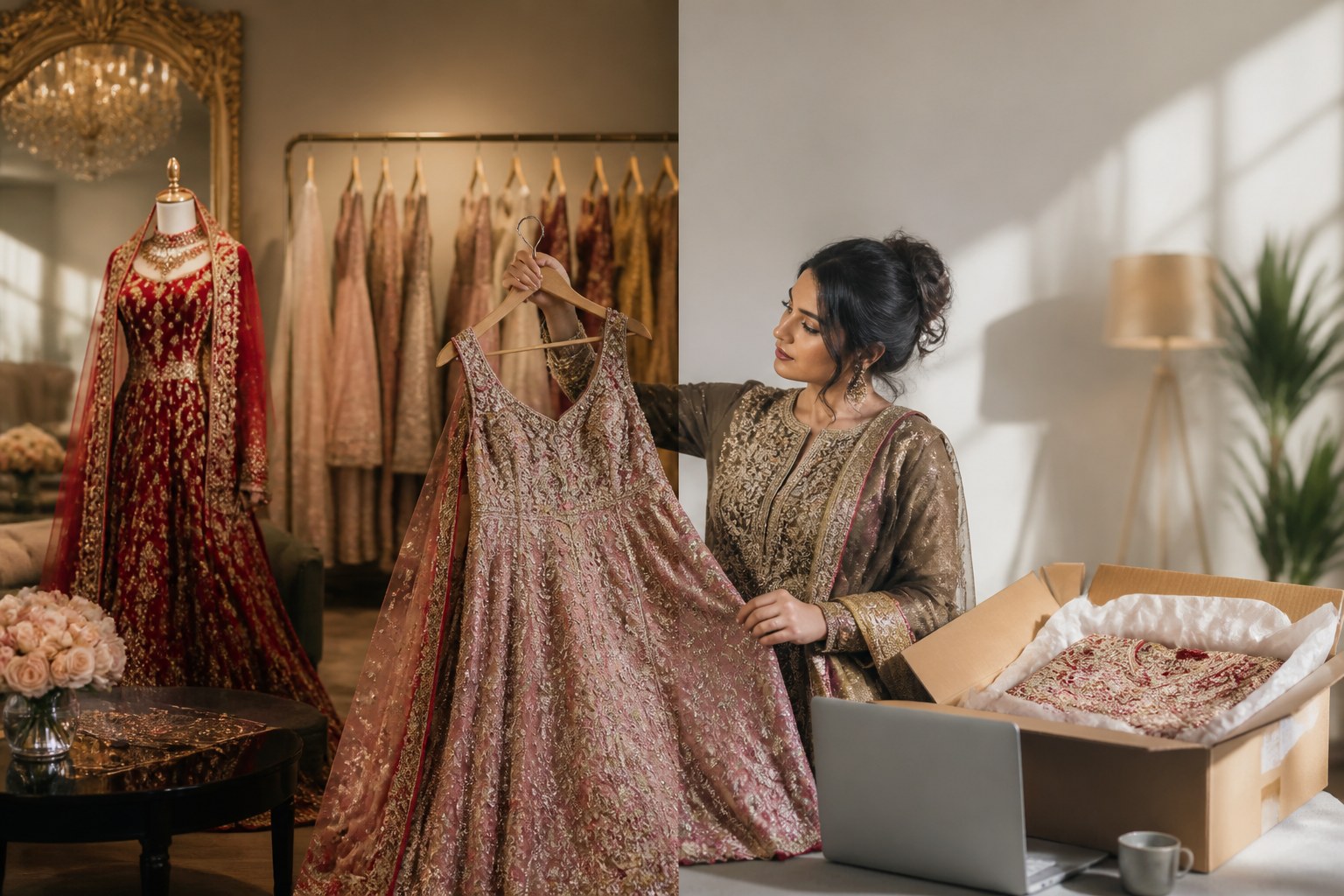
If you are travelling between cities, treat “wearable” as different from “dispatched.” Alterations, steaming and break-in for khussas need calendar space. Consumer purchase records matter when something arrives wrong: keep invoices, product descriptions and delivery promises, and know your local consumer guidance route before the wedding week begins. In the UK, Citizens Advice consumer pages explain ordinary purchase problems in plain language; in the US, the FTC’s online shopping guidance is a useful checklist for receipts, shipping claims and return terms.
When the wedding is compressed into one weekend
Many diaspora weddings collapse ceremonies into Friday–Sunday. In that case, restyling becomes more important than acquisition. Use the polished base for nikah, the movement lower for mehndi, and the formal silhouette for the highest-formality evening, then reverse accessories for any daytime leftover event. Sleep and blister prevention matter as much as fabric choice: an outfit that only works for twenty standing minutes will fail a three-ceremony Saturday.
Budget also belongs in the plan. Guests are not obligated to match bridal spend. Mid-weight luxury pret, a well-cut printed suit, or a tailored classic set restyled twice often serves better than a heavy formal worn once. Price the route to wearable - delivery, duties, tailoring, specialist cleaning - before congratulating yourself on a campaign-price bargain.
Children and elders change the guest equation too. If you are helping with childcare, choose clothes you can kneel in. If you are accompanying someone who needs a slower pace, avoid trains and stiff skirts that make every doorway a negotiation. Hospitality as a guest sometimes means being useful, not only decorative.
A one-page guest brief you can actually use
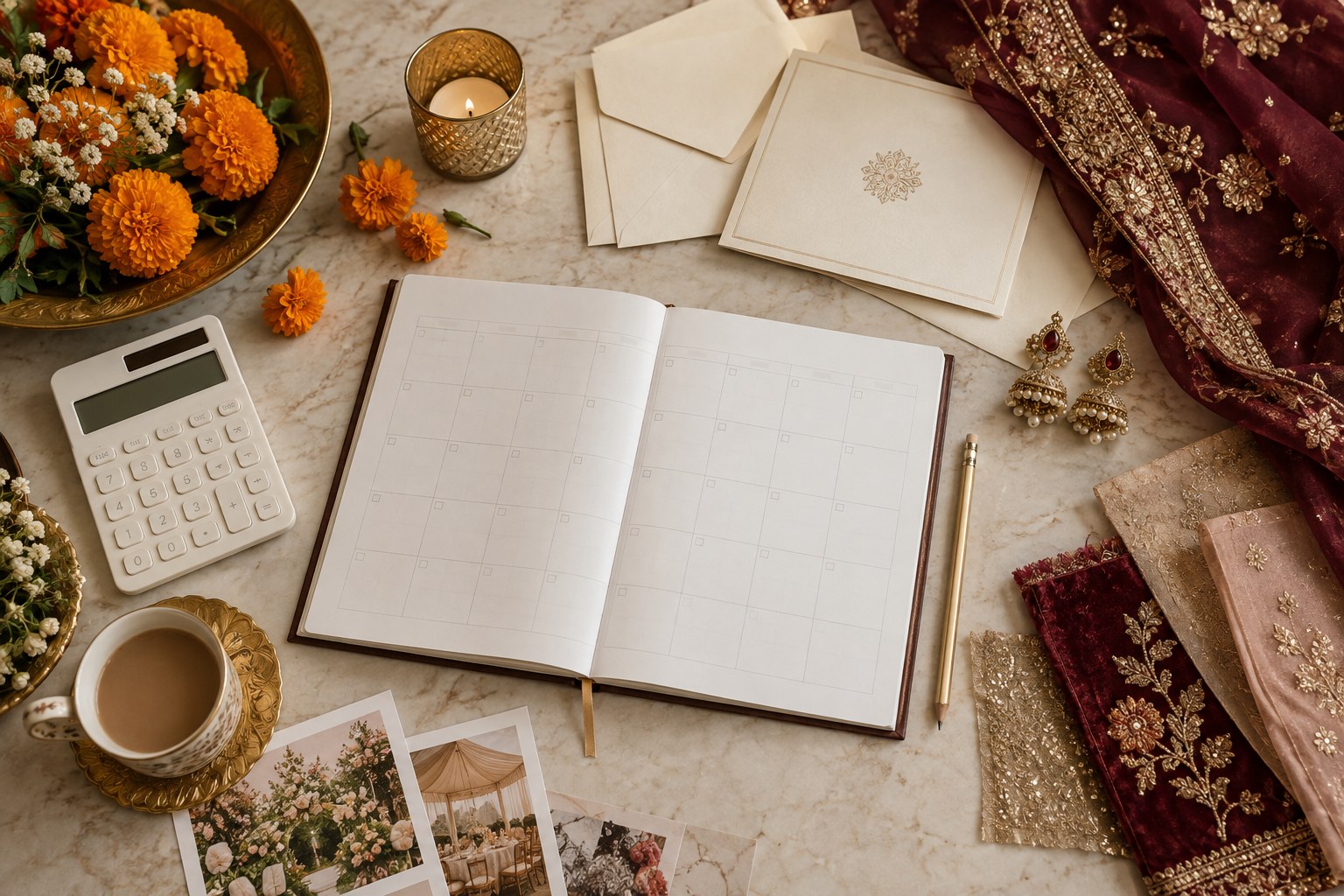
Write four lines before you shop: events attended; movement and seating for each; three bases you will use; one restyle plan for the formal piece. Add shoe height, expected weather and whether a head covering is likely. That brief is more useful than another saved reel. Then try the clothes the way the day will happen - sit, turn, climb a step, raise your arms, hold a plate - and only then decide the outfit is finished.
A guest wardrobe succeeds when you can participate fully and return home with fewer emergency pins than you brought. The wedding will remember your presence; your clothes should make presence easy.
After multi-day weddings, clean and store before fatigue decides. Note which base worked, which shoes failed and which restyle actually happened.
Keep a short written brief before the next purchase: setting, movement, garments already owned, and the single addition that unlocks the most combinations. Test sitting and walking, then stop adjusting at the door.
Sources and official profiles
Filed under
Was this helpful?
Keep reading
Related stories
More from this desk, this beat, and the tags on this piece.
Readers
The conversation
0 notes
Anyone can leave a note. Guests add a name and email — no account required, and the email is never published.
No notes yet. Yours would be the first.