What to wear to a Pakistani mehndi as a guest
A joyful, practical mehndi guest guide for colour, dancing, floor seating, weather and clothes that can survive the celebration.
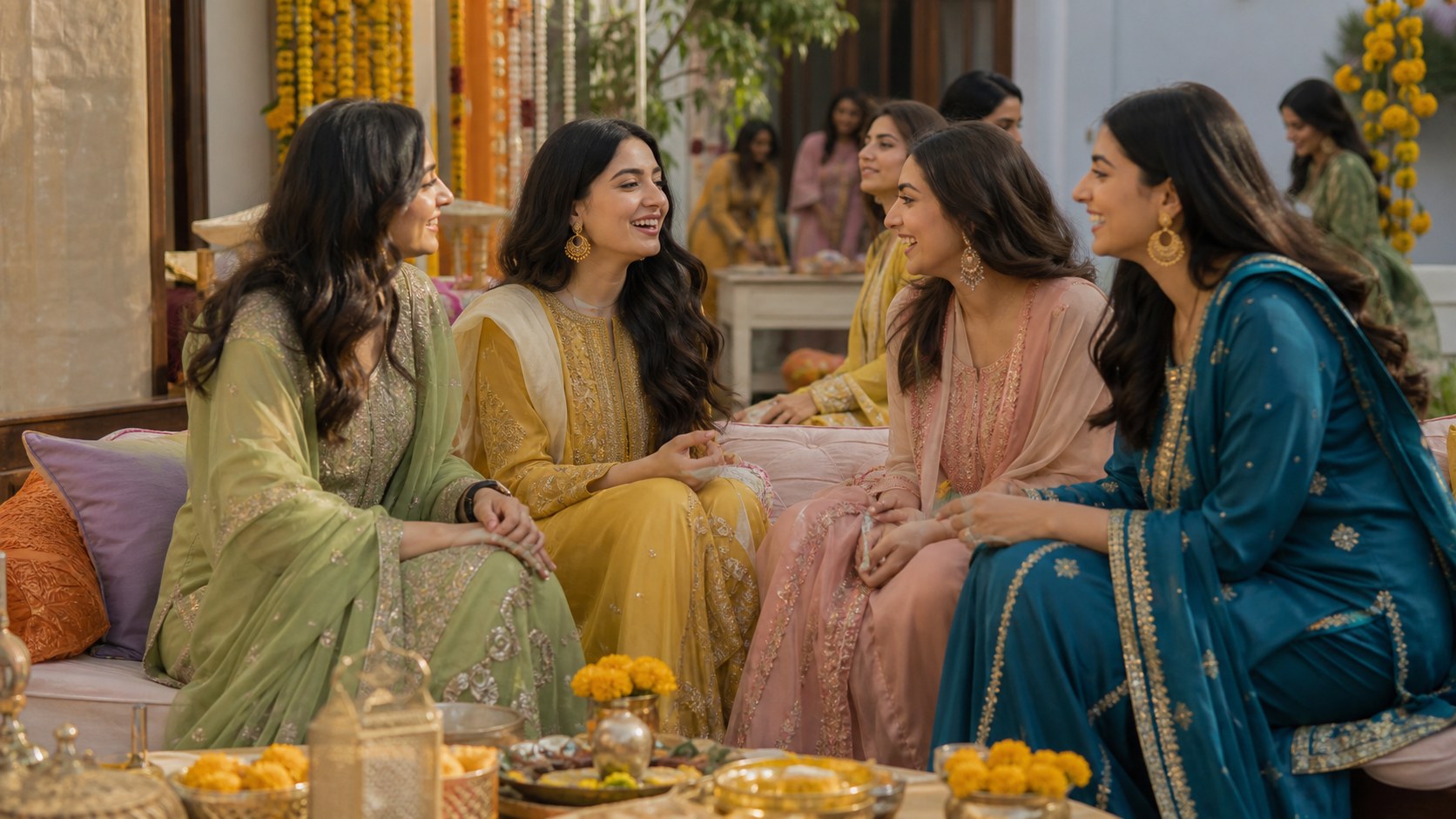
A mehndi outfit should look better after the first song than it did while standing perfectly still at home. This is the ceremony most likely to involve dancing, crowded seating, children carrying sweets, outdoor heaters or garden chill, and somebody pulling you into a photograph before you have put down your glass. Dress for participation first; polish second.
Before choosing colour or silhouette, confirm three facts: indoor or outdoor, dancing expected or optional, and whether the couple has assigned a family palette. A hotel ballroom mehndi and a back-garden mehndi share a name and almost nothing else about sole grip, hem length or shawl need.
Colour by energy, not superstition
Marigold, lime, fuchsia, turquoise and hot pink belong easily in many mehndi rooms, but so can cobalt, aubergine, emerald or a white base covered in print. Ask about a real family palette. Otherwise treat colour as invitation, not uniform. The social risk is copying the bride’s announced look - exact shade, bridal silhouette or mirrored jewellery story - not wearing cream, yellow or black by internet decree.
If you are unsure, choose one vivid element and keep the rest controlled: a bright dupatta over a quieter suit, a printed sharara with a simpler kurti, or jewel-tone jewellery on a softer fabric. Photographs from phone flash and fairy lights exaggerate metallic thread; what looks restrained in daylight can read louder on camera.
Dress from the feet upward
If dancing is likely, secure shoes matter more than height. Break in khussas or juttis at home for several short sessions before the event. Check the sole on polished flooring; leather soles that are lovely on carpet can skate on hotel stone. A small sole grip or rubberised patch, applied carefully so it does not damage the shoe, is more useful than a taller heel you cannot trust.
Hem length must clear the chosen shoes when you step backwards. Ghararas and lehengas that skim perfectly while standing can trap under a reversing foot during a circle dance. For floor seating, test the waist, neckline and trouser rise while sitting cross-legged or on a low cushion. A beautiful outfit that requires constant yanking when you sit will not survive a two-hour mehndi.
Choose a silhouette that can move
A short or mid-length kurti over a flared lower often frees the legs. A soft sharara or lehenga can work if the waistband is stable and the fabric is not so stiff that every turn becomes a weather system. Farshi lengths and heavy borders demand more space and a free hand to guide cloth through crowds. Anarkali or long frock shapes can be graceful until the hem is asked to navigate chairs, heaters and children’s toys.
Let one element move: a light dupatta, a short flared kurti, a tasselled sleeve or a colourful skirt. When everything swings - heavy dupatta, dense bangles, embroidered collar and wide hem - the outfit becomes work. Keep earrings clear of embroidered collars. Choose bangles that will not strike neighbouring hands during clapping. If you love a stacked look, test it while clapping and raising your arms.
| Choice | Helps when | Watch for |
|---|---|---|
| Sharara / soft lehenga | You want volume and easier sitting than a fitted gharara knee | Waist bulk; hem momentum |
| Gharara | You want the classic knee-break sway | Knee join placement; sitting pull |
| Kurta + wide trouser | You need washability and quick movement | Looking under-dressed if the room is highly formal |
| Short kurti + flared lower | Dancing is central | Coverage when seated; underlayer length |
Jewellery, henna and handbags
Fresh henna changes what you can wear on the hands. Decide when bangles, rings or hath phool go on and who handles them if you are having henna done at the event. Lightweight earrings and a secure necklace often survive better than a stack that becomes percussion. Perfume and henna also interact with plated metal; keep receipts and material notes if a piece is valuable.
Bags should close securely and sit somewhere during floor seating. A crossbody that can be shortened, or a wristlet you can park, beats a strapless clutch when both hands are needed for food, photographs or a child. Phones and keys need a plan that does not involve balancing them on a tissue-covered plate.
Weather, layers and outdoor mehndis
Outdoor British or North American mehndis need an evening layer planned as part of the outfit, not a coat apologetically added at the end. A contrasting shawl, fitted waistcoat or embroidered jacket can preserve the colour story while handling wind. Heaters create local hot zones; chiffon near open flame is a hazard, not a vibe. If the forecast includes rain, protect embroidered shoes and decide in advance which hem you are willing to sacrifice to wet grass.
Indoor venues with strong air-conditioning create the opposite problem: damp skin under cold air after dancing. A light layer you can add between songs is more elegant than shivering through photographs.
Makeup, hair and the photograph ambush
Mehndi lighting is often mixed: fairy lights, phone flash, daylight from a garden door. Makeup that only works in a bathroom mirror may disappear or glare. Secure hair away from food and away from a swinging dupatta border. If you cover your head for parts of the evening, practise the arrangement with the same dupatta and earrings you will wear.
Expect to be photographed while holding a plate, dancing or sitting on the floor. Run that rehearsal once. If the neckline collapses, the kurti rides up or the dupatta becomes a rope, fix the engineering at home with better anchors rather than more visible pins on the night.
What “not competing with the bride” actually means
It does not mean disappearing. It means avoiding bridal silhouette language when you know the bride’s look: identical heavy lehenga language, bridal-red copycatting, or a full bridal jewellery set when you are a guest. Joyful colour and good tailoring are welcome. Turning the mehndi into a second bridal entrance is not.
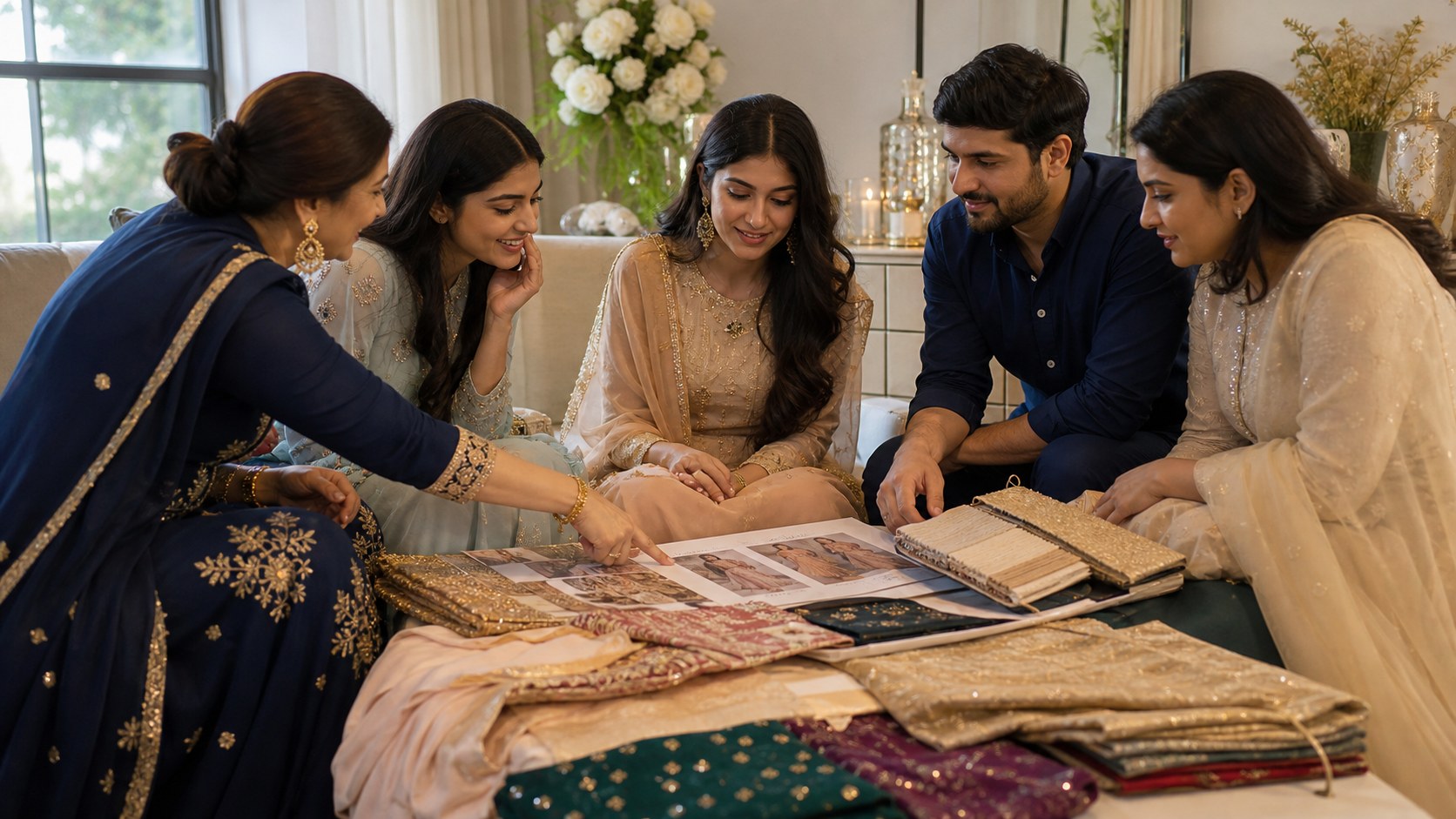
If you are a close family member asked to wear coordinated colours, ask for fabric swatches or a photo of the intended palette rather than guessing from a text message saying “yellow vibes.” Coordination fails most often at undertone: mustard versus lemon, fuchsia versus magenta.
A mehndi packing card
- Broken-in shoes plus a foldable flat backup if outdoor ground is uncertain.
- One planned warm or rain layer that matches the outfit.
- Safety pins, blister covers, stain cloth, spare earring backs.
- A bag that closes and can be worn or parked.
- Hair anchors already tested with the dupatta.
The result should invite participation. If you can dance, eat, help an aunt find her seat and survive an unexpected photograph without rearranging yourself, you chose well. A mehndi guest outfit earns its place by still looking alive at the end of the night.
Fabric choices that survive colour and crowd
Mehndi rooms are hard on pale chiffon, trailing gota and anything marketed as “don’t sit.” Prefer fabrics that can take a warm room and a brief spill: cotton-silk, good georgette with a stable lining, washable lawn for daytime garden events, or a sturdy silk blend that recovers after sitting. Dense mirror work on a sleeve looks festive until it catches a neighbour’s dupatta; place fragile embellishment where arms and chairs will not grind it.
If you are wearing henna, avoid white sleeves that will meet damp hands during hugs. Carry a dark or printed backup scarf if you are likely to be pulled into the henna corner. Stain cloths help, but prevention is kinder to embroidery than emergency dabbing under fairy lights.
Family roles change the brief
A cousin who will help serve drinks needs pockets or a secure bag and a hem that clears kitchen thresholds. A sibling dancing in every circle needs shoes and a dupatta system already proven. A guest flying in for one night should prioritise one excellent movement outfit over two unfinished looks. Role beats catalogue category.
If children will be with you, choose clothes you can kneel in and fabrics that forgive sticky fingers. A mehndi is often the most child-dense ceremony; dressing as if the room will remain a still photograph is how outfits fail early.
Closing the decision
Write a three-line mehndi brief before you spend: venue and weather; dancing or seated emphasis; one silhouette plus one restyle accessory. Then rehearse sitting, clapping and a short dance turn. Keep the receipt and delivery promise if the garment is new; consumer guidance such as the FTC’s online shopping checklist is dull and useful when a colour arrives wrong two days before travel. Arrive ready to join the room. That is the whole assignment.
Host palette and coordinated guest groups
When a couple asks one side of the family for yellow and the other for green, bring a fabric swatch photo on your phone. Undertones diverge quickly under mixed lighting. If you are shopping late, choose a print that contains the requested colour rather than a flat block that may clash with everyone else’s flat block. Coordination is a chord, not a uniform.
For friends attending their first Pakistani mehndi, translate needs into function: secure shoes, sit-on-floor test, one bright colour, jewellery that can survive clapping. Loan a spare shawl if the venue is outdoors. Hospitality includes helping people dress for the room they are about to enter.
Sources and official profiles
Filed under
Was this helpful?
Keep reading
Related stories
More from this desk, this beat, and the tags on this piece.
Readers
The conversation
0 notes
Anyone can leave a note. Guests add a name and email — no account required, and the email is never published.
No notes yet. Yours would be the first.