UK Pakistani bridal boutiques to visit before ordering abroad
Six UK bridal studios and retailers where a bride can inspect weight and finishing, discuss alterations, and lock a written delivery plan before risking an overseas order.
A bridal order is too expensive and too time-sensitive to be managed through flattering photographs alone. The advantage of buying in Britain is not simply convenience: it is the chance to inspect weight and finishing, test how a neckline sits, discuss alteration responsibility, and place delivery promises into a UK transaction. The strongest appointment is a technical meeting with beautiful clothes in the room.
Ordering abroad can still make sense for a specific designer relationship, a family tailor you trust, or a price that survives freight and risk. This page is about building a UK inspection and specification habit before that decision—not about banning overseas work.
What a UK appointment can prove that a screen cannot
Fabric weight, embroidery reverse, lining, cancan attachment, fastenings and how a blouse sits while seated become facts in a fitting room. Colour under ordinary British daylight is a different fact from a campaign filter. A boutique that will turn a sample inside out and talk about seam allowance is doing bridal work; a boutique that only sells atmosphere is doing retail theatre.
Bring the shoes, the intended underlayers and a jewellery plan if you have one. A neckline that clears a mock chain may collide with the final haar. A cancan that looks balanced barefoot can fight a heel. Schedule fittings with the actual accessories whenever possible.
| Decision | UK visit helps when… | Abroad may still win when… |
|---|---|---|
| Silhouette and coverage | You need to sit, raise arms, and test dupatta weight | You already have a trusted sample and measurements |
| Colour and material | Daylight and fabric hand matter more than a flat-lay | Shade and cloth are locked with a known workshop |
| Timeline risk | You need a British collection date and alteration buffer | Lead times and freight are written and realistic |
| Dispute route | You want a UK transaction with clearer consumer framing | You accept cross-border remedy limits in writing |
Six studios and catalogues worth a first call
- Zoyaz London — dedicated bridal lounge; ask how colour, fabric and length adaptations are recorded on the order.
- AÏNN London — concentrated Pakistani bridal catalogue with hand-embroidered lehengas and formal event dressing.
- Shadi Dress — London-based bridal and wedding-guest operation; useful when the household is dressing across roles.
- Elanki — Birmingham appointments and made-to-measure across Pakistani and broader South Asian clothing.
- House of Faiza — multi-designer formal and wedding collections for comparing silhouettes before committing to a house.
- Libas e Khas — wide designer catalogue for research before locking a silhouette or label.
Some specialise in Pakistani work; others cover a wider South Asian market but remain relevant to a Pakistani wedding brief. No boutique is a substitute for checking the exact sample and contract offered to you.
Bring a technical brief, not only a moodboard
Carry event date, venue type, shoe height, jewellery plan, preferred coverage, and a realistic total budget that includes alterations. Ask to see the inside of a sample. Record colour and material choices under ordinary light. Do not accept “same as sample” without a written specification that lists neckline, sleeves, motif placement, borders, measurements, fitting dates and delivery window.
Put the final collection date well before travel or photography—British damp and last-minute family changes both need calendar room. Mark every custom departure from the sample on the invoice. If it is only in a WhatsApp chat, it is not yet part of the order.
If you still order abroad after the UK visit
Use the UK appointment as a measurement and silhouette laboratory. Photograph the sample details you liked from front, side and reverse. Send those references with measurements in one document. Ask the overseas maker which elements they can match and which they will reinterpret. Build freight, customs, and a local alteration buffer into the wearable date. A dress that arrives “finished” but cannot be sat in is not finished.
For general UK consumer framing on services and purchases that go wrong, start with Citizens Advice consumer guidance. Cross-border remedies are often weaker; that is a reason to write scope carefully, not a reason to skip writing it.
Multi-event bridal systems
Mehndi, nikah, baraat and walima may need different weights and coverage. A UK boutique can help you plan a system: one heavily worked piece, one lighter reception look, and a guest-facing outfit for family events where you are not the focal point. Ordering four near-identical bridal-weight outfits is how budgets and spines break.
Discuss dupatta volume, prayer practicality and car travel between venues. Bridal clothing that cannot survive a car seat without a dedicated handler is a logistics problem, not only a fashion triumph.
- Put the final collection date well before travel or photography.
- Record every custom change on the invoice.
- Schedule fittings with the actual shoes and underlayers.
- Inspect construction as closely as surface embroidery.
The best UK bridal visit may end in a UK order, an abroad order with better specifications, or a decision to wait. All three outcomes are useful if they are based on cloth you have handled and dates you have written down.
Leave the appointment with photographs of the agreed sample details, a written price breakdown, and a named contact for alterations. If you cannot leave with those three things, the appointment is incomplete—regardless of how beautiful the mirror looked.
Money, deposits and the British wedding calendar
Deposits should buy a defined scope: named silhouette, fabric references, embroidery density notes, fitting count and a collection window. Ask what happens if the boutique’s embroiderer is ill, if a colour dye lot shifts, or if you lose weight between fittings. Ambiguity here becomes conflict later.
British Pakistani weddings often span multiple cities and weekends. Build courier and alteration time between a London fitting and a Birmingham event, or the reverse. A dress that is “ready” in the wrong city is not ready. Name who transports it and how it is stored overnight.
Insurance for a high-value outfit during travel is a boring question that saves ugly mornings. So is a pressing appointment the day before photography. British damp will show every crease that a dry Lahore winter might hide. Put pressing on the run sheet.
If family members join the appointment, decide in advance who has veto power. Too many voices in a bridal lounge produce a compromised outfit that satisfies nobody. One decision-maker with a written brief outperforms a committee with twenty screenshots.
After the visit, sleep on the decision for one night if the calendar allows. Bridal urgency is often social rather than logistical. A calm reorder of priorities—date, budget, coverage, movement—beats an impulsive deposit made to end an awkward silence in the boutique.
Keep swatches or thread cards if provided. Photograph them next to a colour checker card on your phone in daylight. That record helps if a later dye lot needs comparison. It also helps a UK alterer match lining or buttons when the original atelier is abroad.
Sample inspections that prevent expensive surprises
Turn the sample inside out. Look at seam allowances, lining attachment, zipper quality and whether embellishment is knotted securely on the reverse. Ask how heavy the finished piece will be relative to the sample if cancan or extra borders are added. Weight changes how you walk, sit and climb car steps.
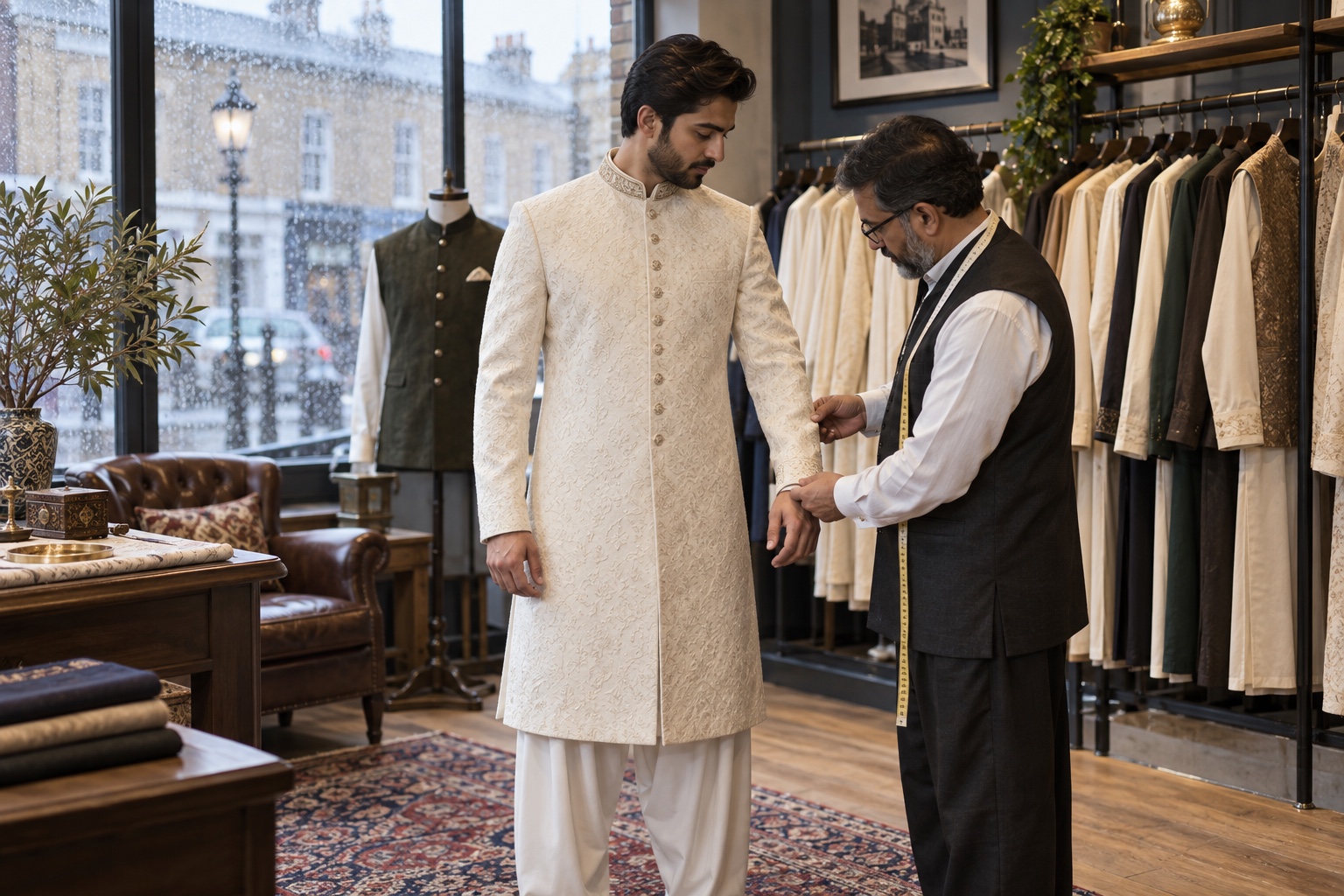
Check blouse fastenings while raising both arms. Ask whether hooks can be moved and how many alteration rounds are included. Confirm whether the dupatta’s fall and borders are part of the quoted embroidery hours or an optional extra that appears later as a “suggestion”.
If the boutique offers a muslin or toile stage for a custom piece, take it. A cheap fitting fabric that proves silhouette is worth more than another moodboard meeting. Refuse to skip fittings because the embroidery calendar is “tight”; that tightness is exactly why fittings matter.
Aftercare, storage and the week of the wedding
Agree who presses the outfit, who transports it, and where it sleeps the night before. Humidity in British venues can relax structure; arrive early enough for a final check. Pack a small emergency kit: thread close to the blouse colour, clear safety pins, double-sided tape, and the boutique’s day-of contact if offered.
Photograph the completed outfit on the bride in daylight after the final fitting. That record stops last-minute embroidery upgrades that disturb a shoulder already fixed. Share the photograph with the hair and makeup team so tikka and dupatta plans match the neckline that actually exists.
Keep a dated note of what you verified and what remains uncertain; that note is part of the purchase.
When the appointment ends, leave with photographs of the agreed sample details, a written price breakdown, and a named contact for alterations. If you cannot leave with those three things, the appointment is incomplete—regardless of how beautiful the mirror looked.
That closing discipline is how UK bridal shopping becomes safer than ordering from photographs alone.
Leave with sample photographs, a written price breakdown and a named alterations contact. Without those three, the appointment is incomplete no matter how beautiful the mirror looked.
Sources and official profiles
Filed under
Was this helpful?
Keep reading
Related stories
More from this desk, this beat, and the tags on this piece.
Pakistani clothes alterations in the UK: what a tailor can usually fix
Zainab Noor · 8 Oct 2026

Readers
The conversation
0 notes
Anyone can leave a note. Guests add a name and email — no account required, and the email is never published.
No notes yet. Yours would be the first.