Heritage
How to care for embroidered Pakistani clothes
A fabric-first care guide for cleaning, drying and storing embroidered Pakistani clothes without sacrificing colour, shape or handwork.
By Mehreen Ali
Travel editor
3 min read
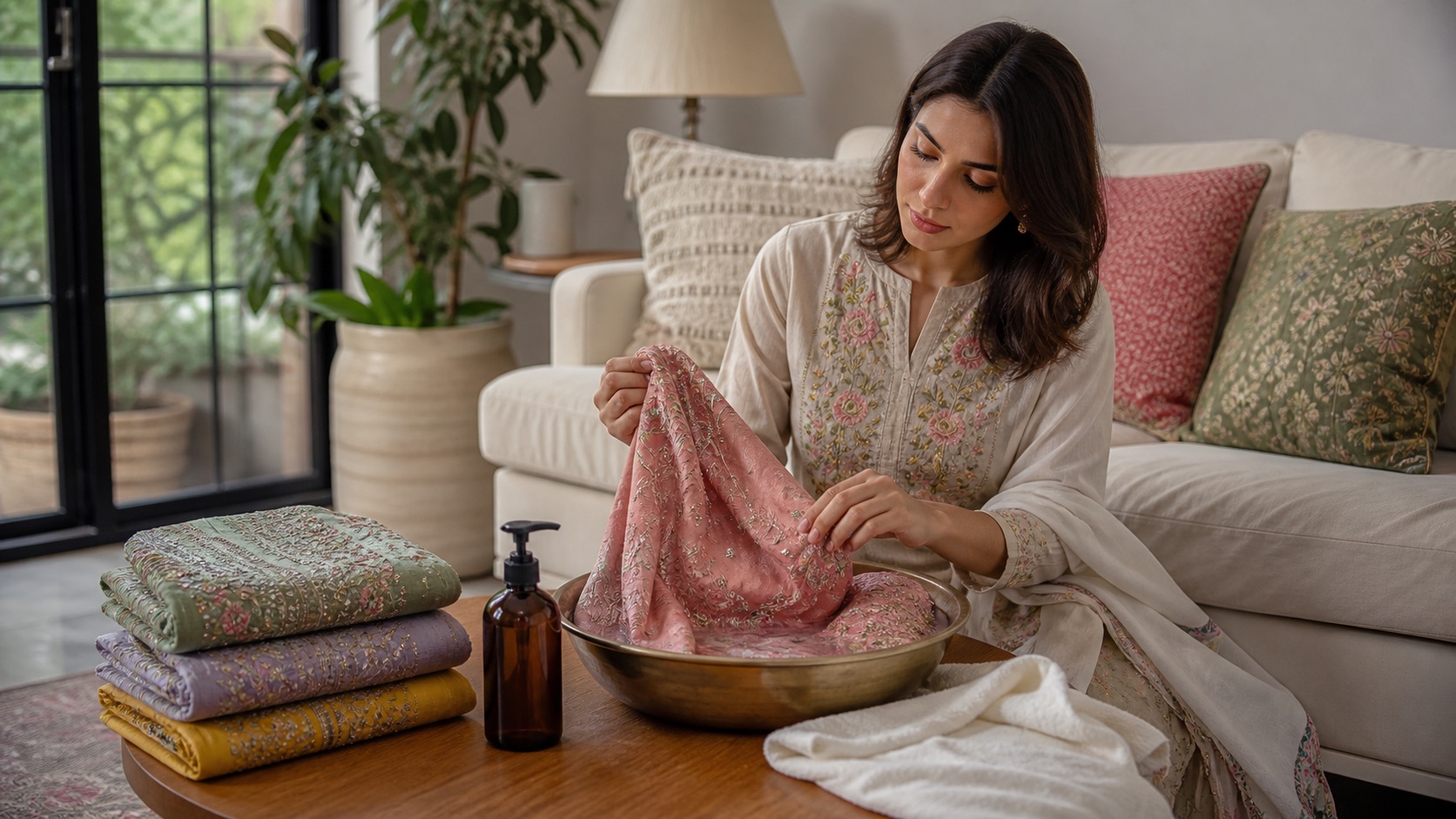
The care label is the beginning of the decision, not a dare to prove that hand washing is gentler. An embroidered outfit combines materials that may react differently: thread can bleed before the base cloth does, glue can soften, metal can tarnish and a heavy wet border can pull a light kameez out of shape.
Identify the most fragile part
Photograph the outfit in daylight and record loose beads, lifted thread or existing marks. Read the fibre and care labels for every component. Inspect the reverse of the embroidery: knots suggest handwork; backing, adhesive and dense machine stitches change how water reaches the cloth. If the garment is valuable, vintage, heavily embellished or labelled dry-clean only, use a cleaner experienced with South Asian formalwear and describe each stain rather than handing over a sealed bag.
Treat a mark before treating the whole outfit
Blot a fresh spill with a clean white cloth. Do not scrub it through embroidery or apply lemon, bleach, toothpaste or an unidentified stain remedy. Test any permitted cleaner on a concealed seam and check the cloth after it dries; a wet test can hide colour movement. Keep heat away from protein stains and do not iron a stain into permanence.
- Remove detachable tassels, belts and jewellery where the construction allows.
- Close hooks so they cannot snag thread.
- Support the garment’s weight during any approved hand wash; never lift it by one shoulder while saturated.
- Rinse without twisting, then roll in a clean towel to remove water.
- Dry flat or fully supported in shade, reshaping seams and borders before they set.
Steam and storage are part of care
Use a pressing cloth and work from the reverse at the lowest suitable temperature. A steamer can relax fabric but may loosen adhesive, mark water-sensitive silk or accelerate tarnish, so test first and keep distance from embellishment.
Store only when completely dry. Fold along tissue-supported lines so one heavy border does not hang from the shoulders for months. Use breathable, clean storage rather than plastic that traps moisture, and keep moth controls from touching fabric. Refold occasionally to move pressure points. Place a note inside describing the last cleaning, repairs and detached pieces; the next wearer should inherit knowledge with the clothes.
Filed under
Keep reading
Related stories
More from this desk, this beat, and the tags on this piece.
Derawar Fort and Cholistan: permissions, heat and distance
Mehreen Ali · 13 Sep 2026 · 16 min
Makli Necropolis visitor guide: heat, scale and conservation
Mehreen Ali · 13 Sep 2026 · 16 min
Readers
The conversation
0 notes
Anyone can leave a note. Guests add a name and email — no account required, and the email is never published.
No notes yet. Yours would be the first.