Lahore Fort is a timeline in stone: how Akbar, Jahangir and Shah Jahan changed it
Lahore Fort is not one palace designed at one moment. Its surviving monuments record changes in Mughal architecture from Akbar through Jahangir and Shah Jahan.
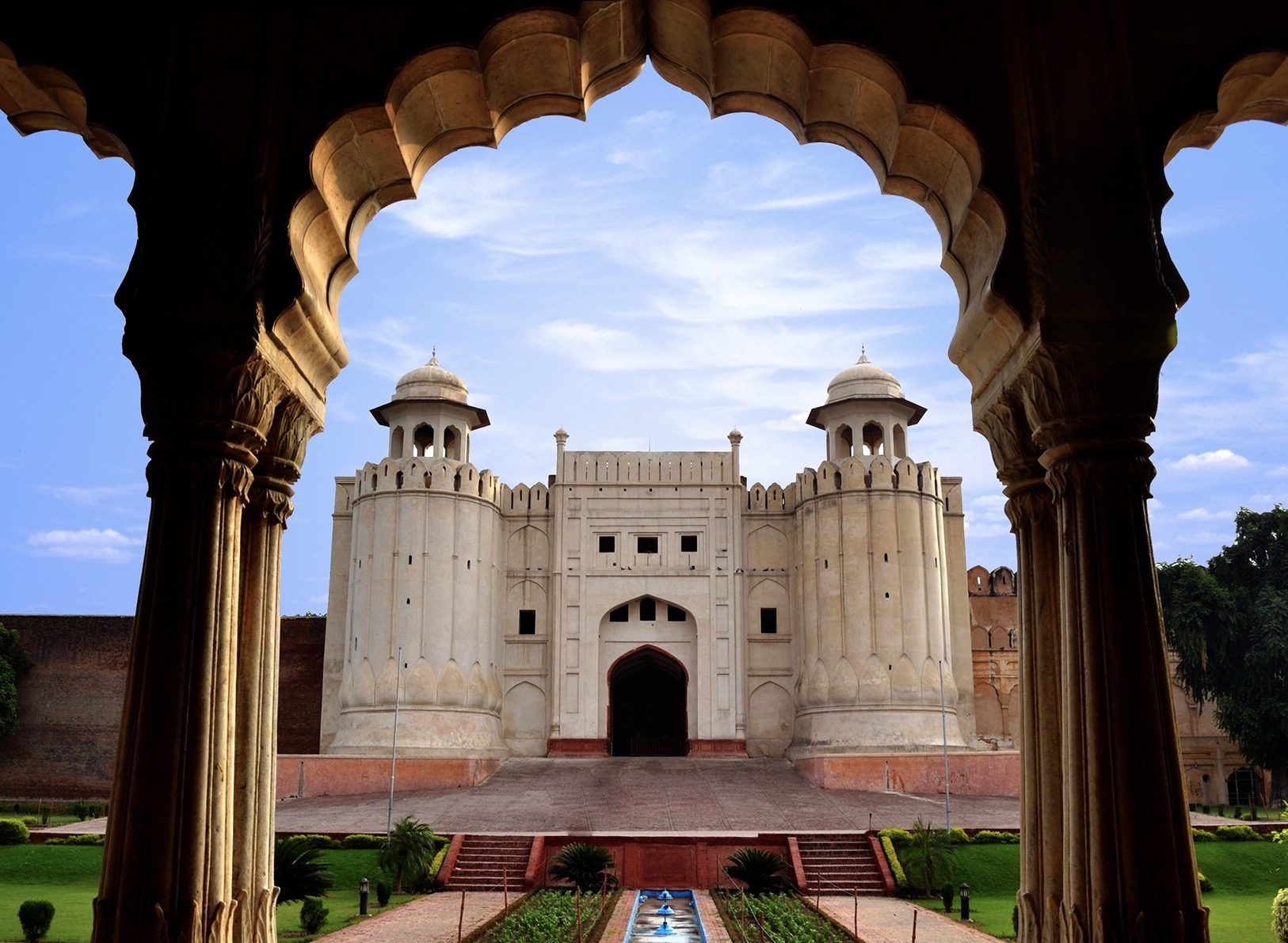
Lahore Fort is easiest to understand as a sequence. The site was occupied and rebuilt across long periods, but the surviving Mughal monuments let visitors see architectural priorities shift from Akbar's robust red-sandstone language towards Jahangir's decorated surfaces and Shah Jahan's marble refinement.
UNESCO counts 21 surviving monuments within the fort boundaries and treats the fort together with Shalamar Gardens as one World Heritage property representing Mughal artistic achievement.
Akbar's rebuilding
Akbar's period established major parts of the fort's Mughal form, using baked brick, red sandstone and architectural motifs drawing on multiple traditions.
The result was imperial architecture that already blended rather than copied one source.
Jahangir and the north court
Jahangir completed and decorated major court areas, including work associated with the remarkable Picture Wall.
Surface decoration became a way of projecting imperial imagery as well as enclosing space.
The Picture Wall
The long decorated wall uses glazed tile, fresco and other techniques in panels depicting figures, animals and ornamental themes.
Conservation has made it one of the strongest places to see how much visual information the fort once carried.
Shah Jahan's marble world
Shah Jahan added refined marble architecture, screens, inlay and mirrored interiors that contrast with earlier heavier forms.
The shift is visible in places such as Sheesh Mahal and private court spaces.
Sheesh Mahal
The mirrored palace is famous for reflective decoration, but its importance lies in the coordinated use of glass, gilt, stone and screening within an elite residential complex.
Crowding and photography can make it easy to miss the craftsmanship at human scale.
Public and private courts
Audience halls and private apartments show how architecture organised access to the emperor and separated ceremonial from residential life.
Notice thresholds and sightlines rather than treating each building as an isolated stop.
Sikh and colonial layers
The fort did not stop changing when Mughal rule weakened. Sikh and British periods left their own histories of occupation, reuse and conservation.
A Mughal-only story can therefore oversimplify the site's later life.
The Badshahi Mosque context
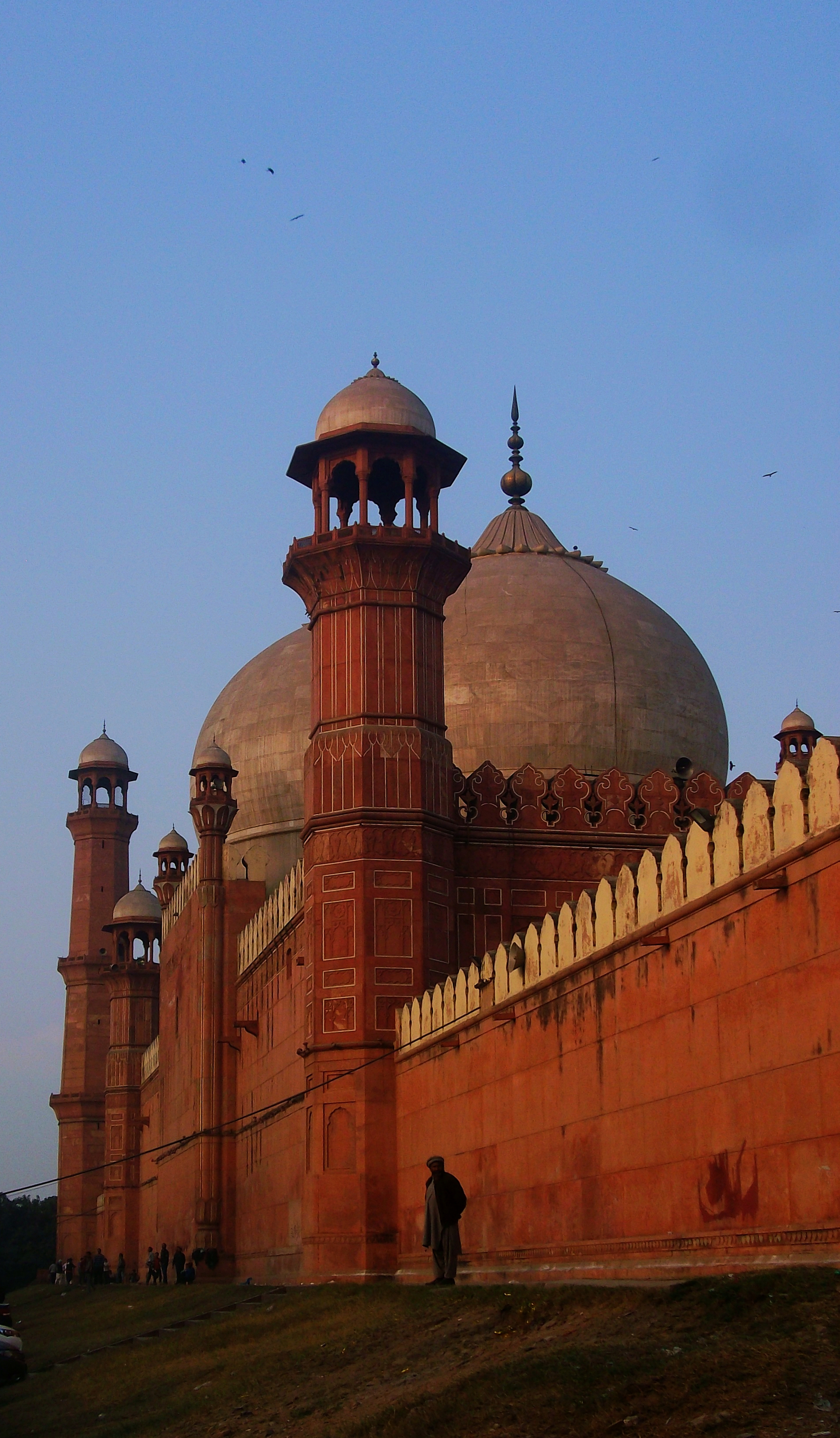
The mosque sits outside the inscribed fort boundary but forms an essential visual and historical relationship with the fortified city landscape.
UNESCO conservation discussions have recognised the importance of this wider setting.
Conservation history
Lahore Fort has faced long-running pressures from pollution, urban traffic, water, structural deterioration and inappropriate interventions.
Recent conservation should be understood as an ongoing process, not a final restoration state.
How to visit slowly
Choose a route that follows chronology or function. Give the Picture Wall, courts and Sheesh Mahal separate attention rather than trying to photograph everything in one pass.
Early arrival helps with both heat and crowds.
Conservation and responsible visiting: Lahore Fort is a timeline in stone
The fort's marble, tile, plaster, brick and painted surfaces need different conservation approaches. Touching fragile decoration or crossing barriers for photographs directly undermines the work needed to keep the complex legible.
What to check before you go: Lahore Fort is a timeline in stone
- Start early.
- Use a plan of the fort.
- Follow the Mughal chronology.
- Allow time for the Picture Wall.
- Combine with the wider Walled City only if the day has enough time.
Lahore Fort becomes richer when it stops being one royal building and becomes a timeline. Each court and surface records a different idea of how empire should look, making the fort one of Pakistan's clearest architectural documents.
Photography can flatten historical scale: Lahore Fort is a timeline in stone
A camera frames Lahore Fort history visitor guide into one composition, while the actual site may be kilometres wide or made of many components. This is especially important at Makli, Taxila, Rohtas and other landscape-scale heritage where no single image communicates the full spatial argument.
What not to claim: Lahore Fort is a timeline in stone
Heritage writing around Lahore Fort history visitor guide should resist precise origin stories that outrun the evidence. Ancient sites rarely provide a named founder, exact ritual function and complete social hierarchy simply because modern readers want a tidy explanation.
A better way to leave the site: Lahore Fort is a timeline in stone
After visiting Lahore Fort history visitor guide, write down three observations that came from the physical place and three things that remain uncertain. That small exercise separates what you actually saw from what you arrived already believing.
Read the site as evidence, not scenery: Lahore Fort is a timeline in stone
For Lahore Fort history visitor guide, start by asking what physical evidence is actually visible: street alignment, masonry, water system, burial architecture, defensive wall, monastic cell or garden terrace. Heritage becomes more understandable when the visitor links each claim to a surviving feature rather than memorising a date detached from the ground.
Chronology prevents several sites becoming one story: Lahore Fort is a timeline in stone
A place connected to lahore fort is a timeline in stone may contain layers built centuries apart. Later religious buildings, colonial interventions, Sikh-period use, modern repairs or continuing settlement can sit beside the period that made the site famous. Treating every wall as contemporary creates a false historical picture.
Before visiting, learn two or three anchor dates and the main sequence rather than dozens of names. During the visit, ask which visible elements belong to which phase. That simple chronological habit makes reused and rebuilt places far easier to read.
UNESCO status has a specific meaning: Lahore Fort is a timeline in stone
World Heritage inscription connected to lahore fort is a timeline in stone is based on a formal claim of Outstanding Universal Value under defined criteria, with boundaries and management obligations. It is not a tourism award, and UNESCO does not become the site's owner.
Conservation is an active present-day process: Lahore Fort is a timeline in stone
Historic sites associated with lahore fort is a timeline in stone survive because people manage water, salt, vegetation, pollution, structural movement, visitor pressure and repairs. Conservation is therefore not a one-time restoration that returns a monument to a perfect original state.
Use guides critically but generously: Lahore Fort is a timeline in stone
A knowledgeable local guide can make lahore fort is a timeline in stone much more legible by connecting spaces, pointing out construction details and explaining how routes work. Oral explanation is especially valuable at large serial or landscape sites where the visitor cannot carry the full plan in memory.
Travel logistics are part of responsible heritage use: Lahore Fort is a timeline in stone
Reaching lahore fort is a timeline in stone can involve heat, long road travel, stairs, uneven ground or regions where official travel advice changes. A good heritage itinerary allows time for the physical setting instead of treating the monument as a 30-minute stop between photographs.
Economic value and preservation need each other: Lahore Fort is a timeline in stone
Visitor spending around lahore fort is a timeline in stone can support guides, transport, crafts, food businesses and conservation attention. The challenge is ensuring that economic use does not physically consume the resource through uncontrolled building, litter, traffic or contact with fragile surfaces.
How to use this article as a reference: Lahore Fort is a timeline in stone
Save the specific official or primary source that matters most for lahore fort is a timeline in stone, along with the date you checked it. If the subject is commercial, keep the product label or receipt; if it is administrative, keep the application reference; if it is health-related, write down the question you need to take to a clinician. This turns reading into a record you can use later.
When circumstances change, update the one fact that changed rather than discarding the whole guide. That is especially important for regulations, travel conditions and health guidance, where a stable underlying principle can coexist with changing thresholds or procedures.
Walk the fort as a sequence of changing courts
Lahore Fort is easier to understand when you stop expecting one ruler to explain the whole complex. Different Mughal emperors altered buildings, surfaces and ceremonial spaces, and later political periods changed the site again. Use a map or guide to connect major structures to approximate phases so that decorative details do not float free of chronology.
Spend time on materials as well as grand views: stone inlay, tile, carved surfaces, painted decoration and spatial relationships often reveal how one part differs from another. The fort rewards slower looking because restoration and weathering can make additions from different periods appear more visually unified than they originally were.
Pair the fort with context, not a checklist
If visiting other Mughal sites in Lahore, compare how gardens, mosques and palatial architecture organise movement and display. The goal is not to collect every landmark in one day. Leaving enough time for the fort itself will usually produce a clearer understanding than racing between gates for photographs.
One last way to test the advice: Lahore Fort is a timeline in stone
At Lahore Fort is a timeline in stone, slow the visit down enough to connect the object or building in front of you with the chronology described in the guide. A map, museum label or official site description can help separate construction phases, later alterations and modern restoration. That distinction is more valuable than collecting a large number of photographs without knowing what each one represents.
At lahore fort is a timeline in stone, check current opening, route and conservation restrictions before travelling, and treat barriers as part of caring for the site. Where a guide gives a dramatic superlative or very precise historical story, ask what source supports it. Good heritage interpretation can admit uncertainty without making the place less interesting.
Sources and official profiles
Filed under
Was this helpful?
Keep reading
Related stories
More from this desk, this beat, and the tags on this piece.
Khewra Salt Mine and the Salt Range: what UNESCO tentative status actually means
Bilal Ahmed · 5 Oct 2026
Takht-i-Bahi: why Pakistan's best-preserved Buddhist monastery sits on a hill
Bilal Ahmed · 3 Oct 2026
Zahoor ul Akhlaq: the artist who reshaped Pakistan's miniature debate
Mehreen Ali · 8 Sep 2026
Zubeida Agha: colour and the beginnings of modern art in Pakistan
Mehreen Ali · 18 Sep 2026
Readers
The conversation
0 notes
Anyone can leave a note. Guests add a name and email — no account required, and the email is never published.
No notes yet. Yours would be the first.