How to plan a small Pakistani nikah at home
A home-nikah plan centred on ceremony audibility, consent, prayer, access, food and a house that can still breathe.
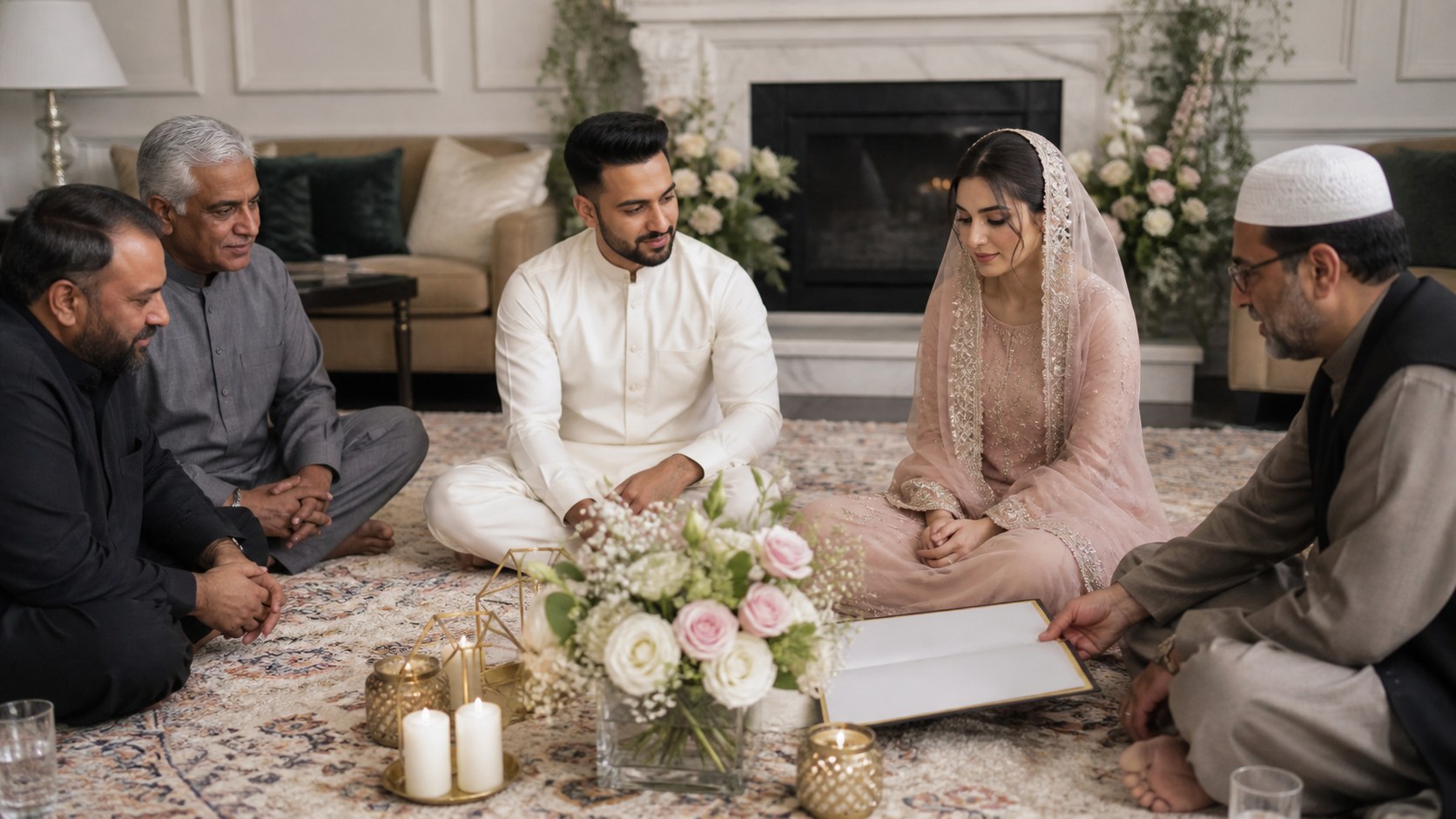
A small nikah needs fewer decorations than decisions. Everyone must hear the ceremony, the required people must know their role, consent must remain clear and guests must move through an ordinary home without blocking the couple, elders or exits.
Confirm the ceremony before styling the room
Ask the officiant what documents, identification, witnesses, wording and seating are required in your circumstances. Religious practice and civil-law requirements are not interchangeable; obtain appropriate local guidance about legal registration. Give names and pronunciations in advance.
| Zone | Purpose |
|---|---|
| Ceremony | Audible, well-lit seats for couple, officiant and witnesses |
| Quiet room | Prayer, privacy, feeding or sensory respite |
| Entrance | Shoes and coats without blocking the route |
| Food | Serving away from documents and ceremony equipment |
Test the house at guest height
Sit in the last seat and listen. Check stairs, bathroom access, prayer space and seating for older or disabled relatives. Use a simple microphone only if it improves clarity without feedback. Assign one person to admit late arrivals quietly and another to protect the ceremony from supplier questions.
- Complete family photographs in named groups.
- Serve one meal suited to the kitchen’s real holding capacity.
- Keep allergen information and water visible.
- Agree photography and livestream privacy before guests arrive.
After the signing, place documents immediately with a named person. The home should remember the nikah as a ceremony that happened there, not as a venue it failed to imitate.
Create a weather and illness fallback even for a home event. Know who can replace a practical role and which decorative task disappears first. Keep supplier deliveries outside the ceremony window.
Tell neighbours the busiest arrival and finish period, protect driveways and arrange waste before the day. Afterwards, confirm the next legal or administrative step rather than assuming the religious ceremony completed every local requirement. Give the couple private time before the house becomes a receiving line.
Write the final running order on one page with names and telephone numbers. Share it only with people doing a job. Guests need invitation details, not the household’s entire operational conversation.
Rooms with jobs
Assign spaces: ceremony seating, witness table, prayer, coats, food holding and a quiet room. Keep wheelchair and pushchair routes clear. Test sound without turning the living room into a venue that annoys neighbours—tell them the finish time.
Witnesses, scholar or imam logistics, and document checks belong on a written checklist. Photography needs consent rules in a small home where every doorway frames a private room. Serve food that can wait; do not trap one person frying through the vows.
Guest flow and cleanup
Stagger arrivals if the flat cannot hold everyone standing in the hall. Provide water before speeches. Afterward, cool leftovers promptly and return furniture so the home is livable the same night. A small nikah succeeds when the ceremony is audible, the witnesses are ready, and the hosts can sit down.
Documents, witnesses and timing
Confirm what the scholar or imam needs: IDs, guardianship or wakil arrangements where relevant, and witness names. Keep water, tissues and a pen on the ceremony table. Decide whether phones are silenced and whether livestream is allowed—small rooms amplify notifications.
If neighbours share walls, choose unamplified or lightly amplified Quran and dua, and finish when promised. Children need a clear adult owner so they do not become the ceremony soundtrack. Food should be ready to serve without a second cooking shift after the dua. The dignity of a home nikah comes from preparation that respects the size of the space.
Photograph the signed contract pages if your family keeps paper records, then store them safely. Civil paperwork, if required in your jurisdiction, should be scheduled with the same seriousness as the religious ceremony—not left as a vague later task.
Legal and religious tracks without confusion
In England and Wales, a home nikah is not automatically a legally recognised marriage. Check current GOV.UK marriage guidance and, if you need legal recognition, plan a civil ceremony or use a registered place of worship where appropriate. Scotland, Northern Ireland and US states differ. Do not let WhatsApp certainty replace official guidance.
Confirm witnesses, wakil or guardian arrangements where relevant to your school of practice, and what documents the scholar needs. Keep pens, water and tissues on the ceremony table. Decide livestream rules before someone starts a call without consent.
Sound, neighbours and accessibility
Test speech and Quran recitation at the volume you will actually use. Tell neighbours the finish time. Keep wheelchair routes clear and reserve a firm chair with arms for anyone who cannot sit on the floor. Shoes, coats and pushchairs need a landing zone that does not block the exit.
Food should hold safely; cool leftovers promptly afterward. Assign cleanup roles before guests arrive so the hosts are not alone with a demolished flat at midnight. Photograph signed contract pages if your family keeps paper records, then store them with civil documents if those exist. A small nikah’s dignity comes from preparation that respects the size of the home.
Guest list honesty for a flat
Capacity is standing room and bathroom access, not only chairs. Prefer staggered arrival over inviting everyone who was at the last wedding. Children need a named adult owner. If the room reaches its limit, stop adding furniture; clear surfaces instead. The ceremony should be audible to the witnesses and the couple, not drowned by a corridor conversation.
Legal, documents and witnesses
Confirm witnesses, wakil or guardian arrangements where relevant to your school of practice, and what documents the scholar needs. Keep pens, water and tissues on the ceremony table. Decide livestream rules before someone starts a call without consent. Photograph signed contract pages if your family keeps paper records, then store them with civil documents if those exist.
Rooms, sound and neighbours
Assign spaces: ceremony seating, witness table, prayer, coats, food holding and a quiet room. Keep wheelchair and pushchair routes clear. Reserve a firm chair with arms for anyone who cannot sit on the floor. Test speech and Quran recitation at the volume you will actually use. Tell neighbours the finish time.
Children need a named adult owner so they do not become the ceremony soundtrack. Food should hold safely without a second cooking shift after the dua. Cool leftovers promptly. Assign cleanup roles before guests arrive. Capacity is standing room and bathroom access, not only chairs. Prefer staggered arrival over inviting everyone from the last wedding.
Shoes, coats and pushchairs need a landing zone that does not block the exit. If the room reaches its limit, stop adding furniture; clear surfaces instead. The ceremony should be audible to the witnesses and the couple, not drowned by a corridor conversation. A small nikah’s dignity comes from preparation that respects the size of the home.
Civil paperwork, if required in your jurisdiction, should be scheduled with the same seriousness as the religious ceremony—not left as a vague later task. The home can hold sacred work when the logistics are humble and clear.
Food holding and the host’s seat
Choose dishes that wait: a finished salan, rice that can be refreshed, salad assembled late, and dessert that does not need a blowtorch. Keep allergen labels for nuts, dairy and gluten. Follow local leftover guidance when cooling food after guests leave.
Assign tea and door duty away from the person managing the ceremony table. The host should sit for the nikah. If that is impossible, the guest list is still too large for the home. Reduce until dignity fits the room.
Print a one-page run sheet: scholar arrival, witness seating, dua start, signing, congratulations, food. Tape it inside a cupboard door. When chaos rises, the page is calmer than anyone’s memory. Keep a spare charger away from the ceremony table so cables do not become trip hazards beside elders.
If rain forces everyone indoors from a planned garden, know which furniture moves first. If the scholar is delayed, know who offers water and short recitation without turning the wait into comedy. Home ceremonies forgive less improvisation than hotels because there is nowhere to hide a problem.
Keep a small emergency kit: safety pins, stain wipe, spare socks for guests who remove shoes, and the scholar’s preferred payment method already prepared. Home ceremonies stall on tiny absences. Anticipating them is part of hospitality, not fussiness.
Sources and official profiles
Filed under
Was this helpful?
Keep reading
Related stories
More from this desk, this beat, and the tags on this piece.

Walima explained: what the reception is for and why every family does it differently
Bilal Ahmed · 27 Oct 2026
Dholki, mayun and mehndi: why Pakistani pre-wedding events are not the same thing
Bilal Ahmed · 25 Oct 2026


Rukhsati is not a legal marriage step: what the tradition actually marks
Bilal Ahmed · 10 Oct 2026

Pakistani wedding RSVP etiquette: when the invitation names only some of the family
Bilal Ahmed · 3 Oct 2026
Readers
The conversation
0 notes
Anyone can leave a note. Guests add a name and email — no account required, and the email is never published.
No notes yet. Yours would be the first.