Pakistani architects who changed how the country builds
A method guide to Pakistani architectural history through climate, material, and public space—centred on Yasmeen Lari, Habib Fida Ali, and Nayyar Ali Dada without a ranked podium.
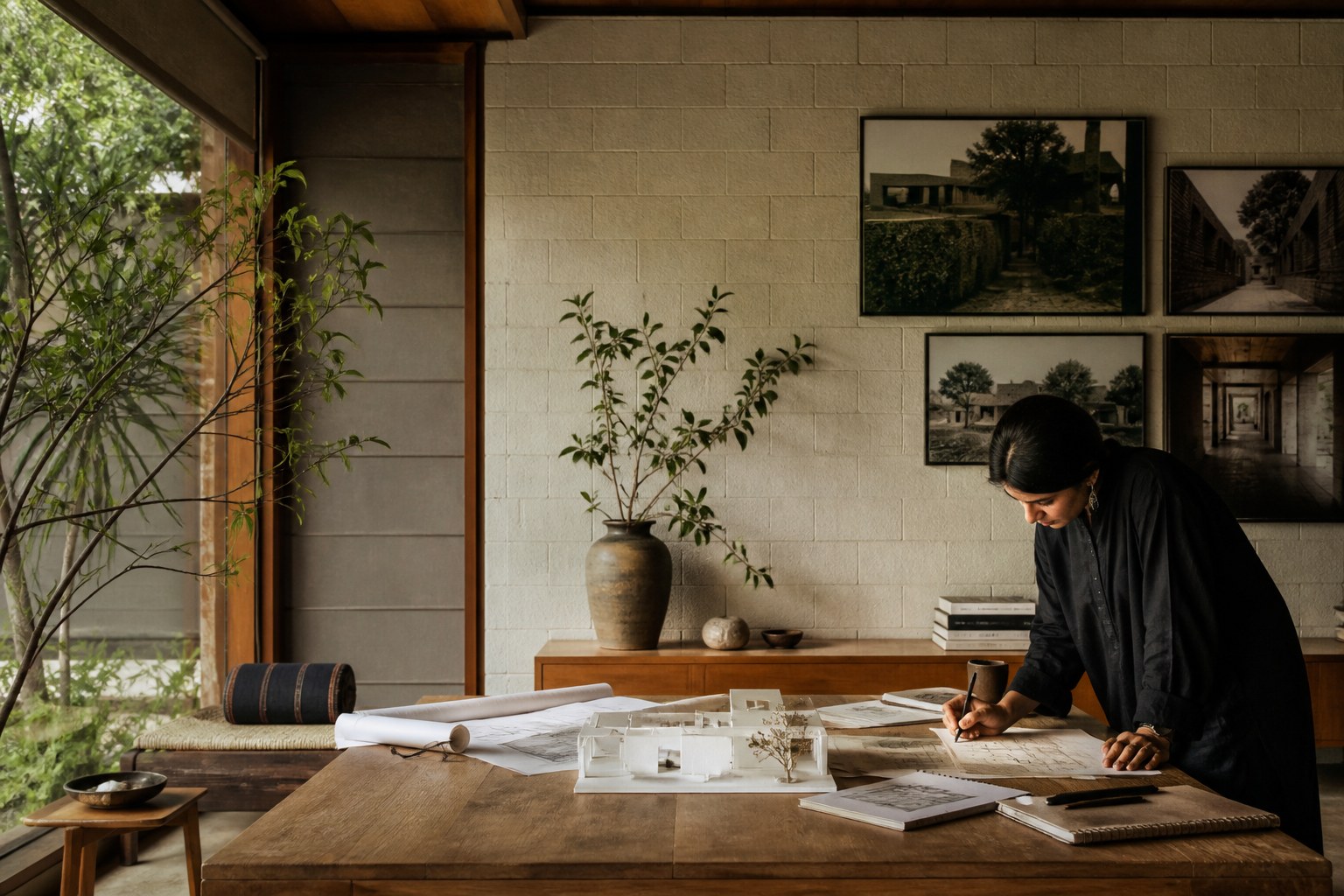
Pakistani architecture is too often narrated as a podium of famous names. A better method starts with climate, material, and public space, then uses particular architects as case studies—not winners. This page centres Yasmeen Lari’s zero-carbon and heritage practice, Habib Fida Ali’s modernist Karachi work, and Nayyar Ali Dada’s Lahore civic buildings, including the Aga Khan Award–winning Alhamra Arts Center. Inclusion is methodological, not a paid ranking.
Which building problem are you actually studying—heat, flood, brick, ceremony, or concrete honesty—and which career best exposes that problem?
— PakStyles culture desk
Yasmeen Lari: from landmark practice to zero-donor vernacular
Yasmeen Lari received the RIBA Royal Gold Medal in 2023, architecture’s high honour presented on behalf of the King, as recorded on RIBA’s Royal Gold Medal pages. The medal recognised a lifetime contribution that, in her later decades, has emphasised disaster-resilient, low-carbon construction and community training rather than only signature monuments. Through the Heritage Foundation of Pakistan, Lari’s public communications document adobe, bamboo, lime, and related vernacular systems used in flood rehabilitation, “zero donor” village strategies, Pakistan Chulah cookstove work, and heritage conservation projects from Thatta to Karachi archival records.
Read Lari through building physics and labour organisation, not through soft “humanitarian architect” branding alone. Ask how bamboo and mud perform in heat and flood, who is trained to build, and how women’s craft economies appear in foundation reporting. Decarbonise, decolonise, democratise—phrases she has used in lectures—are programme claims to test against project pages, not slogans to repeat unexamined.
Earlier landmark and conservation work sits beside later emergency architecture. Chronology matters. A career that includes both corporate-era commissions and post-disaster shelters should be narrated as change under pressure, not as a single pure identity.
Habib Fida Ali: fair-face concrete and Karachi modernism
Habib Fida Ali (1935–2017) established his Karachi practice in 1965 after graduating from London’s Architectural Association and working with William Perry. Practice materials and professional biographies note ARIBA membership, Institute of Architects Pakistan leadership roles, service on the Aga Khan Award for Architecture master jury in 1983, and nomination-related involvement in later cycles. Lifetime recognition from IAP is part of the public record; it does not replace walking a building.
Fida Ali’s reputation for fair-face concrete and modernist clarity belongs to Karachi’s late-twentieth-century ambition—institutions, houses, and corporate interiors that treated exposed material as finish rather than something to hide. When studying his work, ask how concrete ages in marine air, how sun and glare are handled, and how a modernist abstract language meets local labour skill. Official practice pages such as Habib Fida Ali Architects help date projects; still photograph carefully and verify current building use before citing interiors as if frozen.
Modernism in Karachi was never only imported glass. It was also a debate about honesty of structure, status display, and climate. Fida Ali’s best use in a guide is as a concrete case of that debate, not as a nostalgic hero.
Nayyar Ali Dada: brick, Lahore, and Alhamra
Nayyar Ali Dada, among the early National College of Arts architecture graduates, shaped Lahore’s civic cultural landscape. The Alhamra Arts Center—completed in phases culminating in the early 1990s—received the Aga Khan Award for Architecture in 1998. Archnet and practice histories describe brick volumes that evoke Mughal massing without pastiche copy, housing galleries, auditoria, and performance spaces for a city that needed public arts infrastructure.
Dada’s teaching at NCA since the 1960s, conservation advocacy including Lahore Conservation Society roots, and civil awards such as Pride of Performance are public facts listed across institutional biographies. Use them to date influence. Then return to brick: how it handles Lahore’s seasons, how courtyards organise arrival, how an arts centre behaves on a protest day versus a wedding-season evening.
Aga Khan Award for Architecture resources remain a primary route into jury citations and project documentation. Prefer those dossiers over travel-blog adjectives.
A method instead of a podium
Compare the three careers by problem, not by fame. Flood and carbon point to Lari’s later work. Marine climate and exposed concrete point to Fida Ali. Civic brick and cultural programme point to Dada. Other architects—from Kamil Khan Mumtaz’s traditionalist arguments to contemporary urban practices—belong in longer histories; omission here is scope, not denial.
Diaspora readers planning visits should check access rules, photography policies, and whether a “famous” building still serves its designed public function. Heritage tourism can hollow out the civic. Inclusion on this page is not an endorsement of every client or every political context in which a building was funded.
Climate first, signature second
Pakistan’s building problems are brutal and specific: heat, dust, monsoon water, seismic risk, informal incremental construction, and energy poverty. An architects guide that ignores those pressures becomes a celebrity scrapbook. Before naming a designer, name the environmental load. Then ask what material strategy answers it—mud brick’s thermal mass, bamboo’s tensile speed after floods, concrete’s thermal inertia and glare, fired brick’s local labour chains.
Lari’s post-disaster shelters make the load obvious. Fida Ali’s concrete modernism makes a different load obvious: institutional prestige in a coastal metropolis. Dada’s Alhamra makes programme load obvious: how many bodies gather for theatre and exhibition in a tense city. Different loads, different ethics. Ranking them against each other is mostly a category error.
Students can build a one-page matrix: climate load, material, labour skill required, public versus private client, and documented award or conservation status. Fill the matrix with evidence URLs. The matrix will outlast any “top architects” listicle.
Walk one building, read one award dossier, and open one foundation or practice page before declaring what Pakistani architecture “is.” The country builds in many voices; this guide only maps a method for hearing three of them clearly.
Heritage conservation versus emergency building
Lari’s Heritage Foundation portfolio spans World Heritage work at Thatta, Karachi landmark advocacy, archival rescue with municipal partners, and post-flood rehabilitation using vernacular methods. Those are not the same design problem wearing one brand. Conservation asks how to stabilise historic fabric and interpret it for living communities. Emergency building asks how to house people quickly without creating future carbon and debt traps. A responsible reader keeps the file folders separate even when one architect leads both.
Zero-donor language in foundation communications emphasises local materials and reduced dependency on external aid cycles. Test the claim by reading project updates for training methods, material sources, and what “donor” means in each context. Aid politics are contentious; architecture writing should not launder them into unexamined virtue.
RIBA’s medal is international recognition. It should send readers back to Pakistani sites and reports, not replace them. The medal is a pointer; the bamboo joint and the lime plaster are the evidence.
Karachi’s historic buildings face different threats than Sindh’s floodplains: speculation, neglect, heat, and administrative fragmentation. When Lari’s foundation discusses Karachi heritage galleries or archival deposits, the relevant neighbours are municipal record-keeping and developers’ incentives. When it discusses flood shelters, the neighbours are hydrology and displacement. Mixing the vocabularies produces fog.
Lahore brick and Karachi concrete as regional languages
Dada’s brick civic work and Fida Ali’s concrete modernism are sometimes forced into a single “Pakistani modern” sentence. Resist that. Lahore’s brick culture, kiln labour, and Mughal-referential massing are not Karachi’s coastal concrete culture. Regional material languages are achievements. Collapsing them flatters nationalism and weakens design analysis.
Visit notes should include weather. Alhamra in humid monsoon light does not read like Alhamra in dry winter sun. A fair-face concrete facade after years of pollution requires honest description of weathering, not only opening-day photography. Architecture ages in public; criticism should too.
For diaspora design students, the useful assignment is not “pick a favourite architect.” It is: document one climate load, one material response, and one public consequence in a named building, then cite the award dossier or practice page that corroborates dates. That assignment scales beyond the three careers named here and keeps the guide from hardening into a false canon.
Sources and official profiles
Was this helpful?
Keep reading
Related stories
More from this desk, this beat, and the tags on this piece.



Readers
The conversation
0 notes
Anyone can leave a note. Guests add a name and email — no account required, and the email is never published.
No notes yet. Yours would be the first.