Home
Pakistani home decor without turning heritage into a theme
A home-design guide that integrates Pakistani objects through use, provenance and personal history instead of decorative shorthand.
By Rabia Kamal
Home editor
2 min read
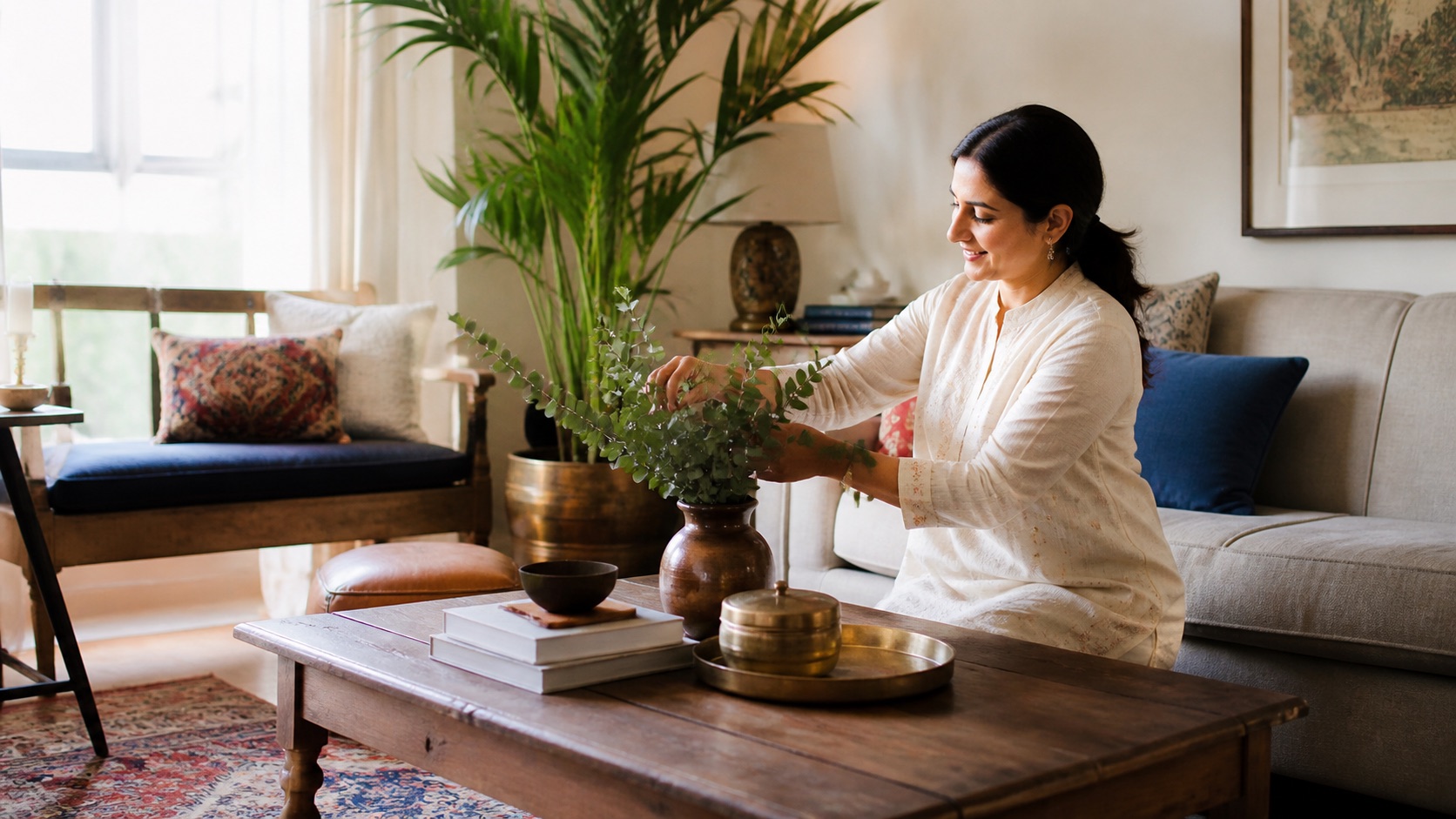
A home begins to feel themed when objects are asked to announce Pakistan before they are allowed to be useful, beautiful or personal. One inherited brass lota with a known story can carry more presence than a shelf of newly bought “ethnic” props.
Start with what the household already touches
Gather textiles, ceramics, photographs, books, baskets and furniture already in use. Write one line about each: who made or owned it, where it came from and what job it can still perform. Repair before replacing. A ralli may become a bed layer; an ajrak can be worn and occasionally displayed rather than permanently stretched without regard for fading.
| Object | Design decision |
|---|---|
| Embroidered textile | Protect from sun, moisture and friction; credit region and maker where known |
| Family photograph | Use a considered frame and ask consent before displaying private images |
| Carved furniture | Give it working clearance instead of surrounding it with matching ornament |
| Contemporary art | Buy for the artist’s practice, not merely recognisable motifs |
Let materials recur quietly
Repeat one wood tone, metal finish or colour in small intervals. Do not force every room into jewel tones, arches and truck-art pattern. Pakistani modernism, urban apartment life, village craft, colonial inheritance and contemporary design do not collapse into one visual vocabulary.
- Choose a functional anchor for the room.
- Add one textile or artwork with enough space to be seen.
- Balance pattern with ordinary surfaces and present-day objects.
- Remove anything whose only job is to prove cultural legitimacy.
Buy contemporary work in the present tense
When adding something new, look for a named artist, studio or workshop and read how the piece was made. Ask about materials, edition, care and payment rather than treating craft as anonymous inheritance. A new Pakistani lamp or print does not need to resemble an heirloom to belong beside one. That contrast can make the room more truthful: family history continues through current makers and current taste.
Design for the life in the room: prayer, children, guests, work, tea and storage. Heritage feels alive when an object can gather new memories without losing the old ones attached to it.
Filed under
Keep reading
Related stories
More from this desk, this beat, and the tags on this piece.
Moving from Pakistan to the UK: what household items are worth bringing
Rabia Kamal · 13 Sep 2026 · 16 min
Rug buying for Pakistani homes: size, fibre and cleaning reality
Rabia Kamal · 13 Sep 2026 · 16 min
How to display Pakistani art without turning the room into a souvenir shop
Rabia Kamal · 13 Sep 2026 · 17 min
Multigenerational living: designing shared rooms with more privacy
Rabia Kamal · 13 Sep 2026 · 16 min
Shared children’s room storage for clothes, school and Eid outfits
Rabia Kamal · 13 Sep 2026 · 16 min
Readers
The conversation
0 notes
Anyone can leave a note. Guests add a name and email — no account required, and the email is never published.
No notes yet. Yours would be the first.