Pakistani school lunch ideas for UK and US families
Pack Pakistani school lunches that survive a bag, a timetable and two countries’ food-safety rules—choosing formats by temperature lane, not by nostalgia alone.
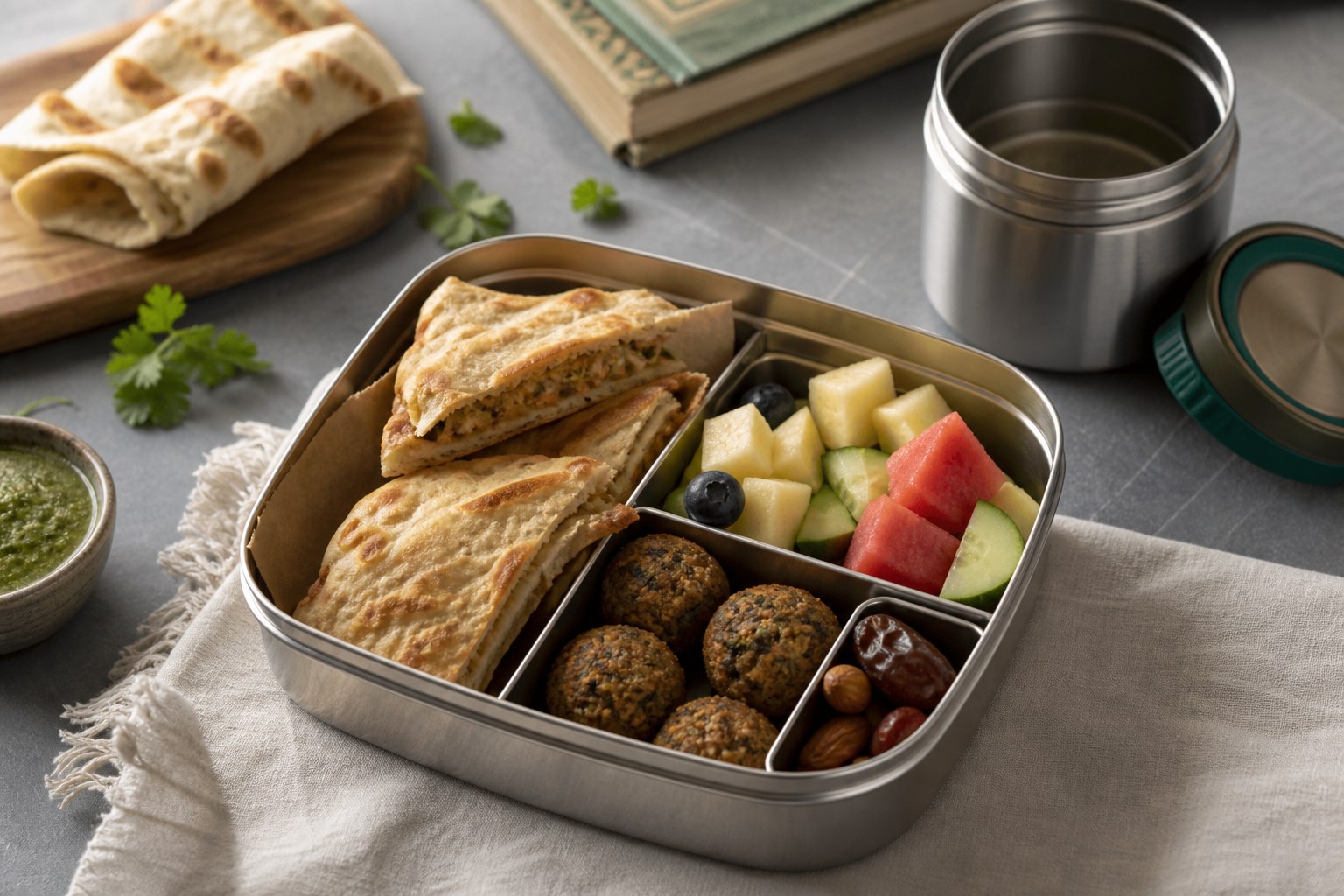
A Pakistani school lunch has three jobs: it must still be safe by midday, it must survive a crowded bag, and it must be something the child will actually eat after assembly. Nostalgia for last night’s karahi does not automatically satisfy any of those tests. Format and temperature lane matter more than whether the dish photographs as “authentically homemade.”
This is a packing method for UK and US families who cook Pakistani food at home. It is not a ranking of cute bento ideas, and it is not medical or allergy advice for an individual child. School policies differ; always follow the school’s written rules on nuts, sharing and fridge access.
Choose the temperature lane before the recipe
Every lunch item belongs in one of three lanes:
- Cold lane: perishable food that must stay chilled until lunch.
- Hot lane: food kept hot in a preheated insulated flask until lunch.
- Shelf-stable lane: foods that do not rely on a cold chain once packed (whole fruit, plain crackers, some breads when handled cleanly).
Mixing lanes without equipment is how chicken, yoghurt and cooked rice become risky. In the United States, the USDA FSIS bag-lunch guidance tells households to keep perishable food cold with an insulated bag and at least two cold sources, and to discard leftover perishable food after lunch rather than recycling packaging for another day. In Britain, the Food Standards Agency’s picnic guidance is the closest official framing for food that travels: keep chilled foods in a cool bag with ice packs, limit how often the bag opens, and do not leave perishable food sitting out beyond the agency’s time limits.
If the school has a refrigerator and the child will reliably use it, you still need a cold chain for the journey. A yoghurt pot that warms in a backpack for ninety minutes is not rescued by a fridge at 12:40.
Formats that survive a school bag
Pakistani leftovers become school food only after they are redesigned for handling. A saucy curry that needs a plate and a spoon may be perfect at home and miserable on a playground bench. Prefer formats that can be eaten with hands or a single utensil, do not leak into homework, and still taste like themselves within a safe cold chain.
Cold-lane winners
Paratha wedges with dry aloo or keema that was chilled overnight. Cool the filling properly the night before. Pack wedges in parchment so they do not sweat into a plastic bag. Keep the lunch bag insulated with two cold sources. Soft fillings that weep oil need a paper wrap and a second barrier.
Chicken or vegetable pinwheels. Spread a thin layer of chutney or yoghurt-based sauce only if the whole pack stays cold. Roll, chill, slice. Pinwheels fail when the sauce is watery or the roll sits warm in a locker.
Mini shami or chapli-style patties, fully cooked and chilled. These travel better than loose mince. Pack them with cucumber sticks and a lemon wedge in a sealed pot. Mustard oil aromas can be strong in a closed classroom; choose seasoning with the school day in mind, not only the dinner table.
Chapati roll-ups with a dry filling. Think grilled vegetables, a thin smear of channa paste, or leftover dry keema. Wet gravy turns the bread into paste by break time.
Hot-lane winners
Daal in a preheated flask. Fill the flask with boiling water first, empty it, then add piping-hot daal. Keep the lid closed until lunch. Thin daal pours more reliably than a paste.
Khichdi or carefully handled rice dishes. Rice is a special case. The FSA’s home food fact checker stresses rapid cooling, short chilled storage and single reheating until steaming hot. For a hot lunch, cook rice fresh in the morning or reheat thoroughly once into a preheated flask; do not pack yesterday’s rice that sat out. If you cannot manage that discipline, choose bread-based lunches instead.
Soup-style chickpeas. A looser chana reheats and holds in a flask better than a dry masala that sticks and burns at the edges.
Shelf-stable companions
Whole fruit, roasted chana in a sealed pot, plain crackers, dates, and cucumber that was washed and dried can balance a richer main. Avoid packing open mithai that melts onto pencils. Avoid nut-heavy snacks where the school restricts nuts; UK schools often manage allergy risk under local policy informed by national allergy-safety expectations such as the Department for Education’s allergy safety in schools materials.
| Idea | Lane | Main failure mode |
|---|---|---|
| Aloo paratha wedge | Cold | Sweating in plastic; weak ice packs |
| Flask daal | Hot | Not preheated; too thick to pour |
| Chutney chicken roll | Cold | Watery sauce; warm locker |
| Leftover biryani | Hot only if reheated once into flask | Rice left cooling overnight in a pot |
| Shop yoghurt drink | Cold | No second ice source; dairy warming |
UK and US differences that actually matter
British schools vary on fridge access. Many children have none. Plan as if the bag is the entire cold chain. The FSA’s chilling pages are the domestic reference for how quickly cooked food should be cooled before it ever enters that bag.
American guidance is more explicit about two cold sources and discarding leftovers after lunch. FSIS also notes that some foods—whole fruit, hard cheese, breads, crackers—are safer options when refrigeration is uncertain. That does not mean a Pakistani lunch must become an American deli sandwich. It means the cold chain is non-negotiable for chicken, egg, dairy and cooked rice.
Allergen labelling differs too. In the US, the FDA food-allergy overview lists major allergens including milk, eggs, peanut, tree nuts, wheat, soy, fish, shellfish and sesame. If you pack commercial snacks, read the label every time recipes change. Homemade food for a child with allergies should follow the clinician’s and school’s plan, not a blog’s substitution chart.
Packing order for a school morning
- Freeze gel packs overnight; chill the insulated bag if you can.
- Assemble cold perishable food from the fridge last, after bread is wrapped.
- Place cold sources above and below perishable items.
- Keep drinks that will be opened often in a separate pocket so the food bag stays closed.
- Include a napkin and a spoon only if the format needs one—fewer parts mean fewer losses.
- Tell the child which box is lunch and which is snack so the cold chain is not broken at break time for no reason.
Batch work the night before where safety allows: cook and chill patties, roll and chill wraps, portion cucumber. Morning should be assembly, not a second dinner service. The FSA chilling guidance still applies to anything cooked the night before—cool promptly, refrigerate, then pack cold.
Social reality without shame
Some children want food that looks like everyone else’s. Some want the opposite. Neither preference is a character test. A roti roll that resembles a wrap, a flask that looks like soup, or a dry snack box that can be eaten quickly may reduce lunchtime friction without abandoning the household’s cooking. Spills, smells and sharing rules are part of the design brief. A heavily spiced fish curry can be perfect at home and unfair to a child sitting in a closed classroom.
If food comes home untouched, ask which failure happened: temperature, texture, time to eat, social pressure, or simply dislike. Fix the real failure. Do not escalate spice or portion size out of parental pride.
The lunch that works is the one that arrives safe, intact and unfinished for the right reasons—appetite, not avoidance. Keep a short list of three formats your child actually empties. Rotate those. Retire the beautiful idea that always comes home warm, crushed and untouched.
A week of formats that reduce morning negotiation
Monday: flask daal and cucumber. Tuesday: chilled paratha wedge with dry aloo. Wednesday: chicken pinwheels kept between two ice packs. Thursday: chapati roll with dry filling and fruit. Friday: flask chickpeas and dates. Keep Saturday for testing a new idea at home before it enters the bag. Sunday: cook and chill the protein components you will use early in the week, following the same cool-then-refrigerate discipline you would use for any leftover.
Write the three formats that actually empty on a sticky note inside the cupboard door. When relatives send recipe videos, ask whether the dish survives a bag before you add it to the school list. The note is not anti-tradition. It is how tradition arrives edible at midday.
One more practical check before the morning rush: open the bag the night before with the ice packs you intend to use and confirm there is room without crushing bread. A perfect menu that does not physically fit becomes a rushed substitute at 7:40. Fit is part of food safety because a crushed, leaking pack is the pack left on a radiator “just for now.”
Label water bottles and flask lids with the child’s name. Lost lids break the hot lane as surely as weak ice packs break the cold lane. Small logistics protect the cooking you already did.
Recheck school allergy letters each term; policies and classroom rules change more often than family recipes do.
Sources and official profiles
Was this helpful?
Keep reading
Related stories
More from this desk, this beat, and the tags on this piece.
Pakistani grocery shopping in the UK: pantry, freezer, and fresh food
Hassan Raza · 15 Feb 2026
Readers
The conversation
0 notes
Anyone can leave a note. Guests add a name and email — no account required, and the email is never published.
No notes yet. Yours would be the first.