Khussa, sneakers, and the everyday uniform
A clean khussa for the house, a broken-in sneaker for the street: how Pakistani everyday outfits tell the truth at the ankle.
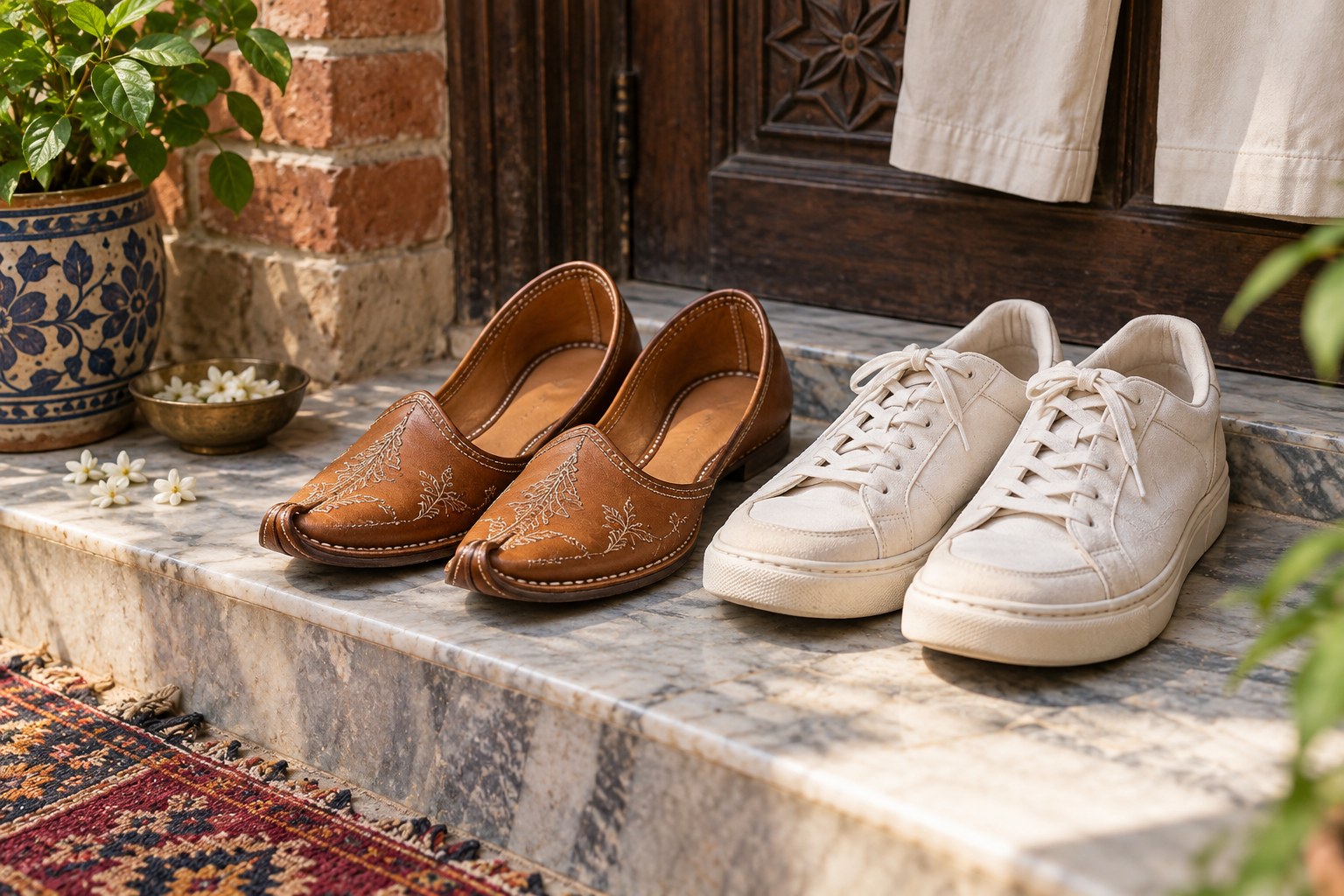
The most honest Pakistani everyday outfit often ends at the ankle: a clean khussa for home and indoor visits, a broken-in sneaker for the street, and no need to apologise for switching between them. This comparison guide explains how those two shoe cultures work in Karachi and Lahore wardrobes—when each succeeds, how to care for them, and how trousers and shalwar should meet them.
It is not a brand ranking. Shoe markets change, counterfeits exist, and comfort is personal. Treat named retail categories as types, then verify fit with your own foot and city pavement.
What a khussa is doing when it works
Khussa and related traditional slip-on forms signal care in indoor Pakistani settings: family homes, Eid visits, some offices, and events where removing dirt at the door matters. A well-made pair has a sole you can actually walk in, stitching that does not carve your heel on day one, and leather or textile uppers that accept polish or gentle cleaning.
Failures are predictable. Unfinished heels destroy socks and skin. Cardboard-like soles die on wet roads. Over-embroidered party khussa snag trousers and cannot handle a market run. Keep a “street khussa” and a “room khussa” if your life needs both—or accept sneakers for the street and reserve khussa for clean interiors.
What sneakers are doing when they work
Sneakers win for broken pavements, long university days, travel queues and mixed errands. In Pakistani cities they also absorb the reality that many journeys are multimodal—walk, rickshaw, bike, mall marble. A useful everyday sneaker is stable, replaceable, and quiet enough for indoor moments where squeaking foam becomes comedy.
Office acceptance varies. Clean leather sneakers pass in more startups; mesh running shoes may fail in ministries. Keep a white pair white with a realistic cleaning routine, or stop buying white. Status sneakers that cannot take dust are leisure objects, not everyday uniform pieces.
Trouser geometry at the ankle
Wide shalwar over a bulky sneaker can look accidental. Tapered trousers over a delicate khussa can catch and tear. Aim for intentional pairing: break and stack that look chosen. Cropped lengths show socks—decide whether that is part of the outfit. Women pairing sneakers with long shirts should check how hem and shoe colour interact in motion, not only in a mirror pose.
| Scenario | Lean khussa | Lean sneaker |
|---|---|---|
| Home guest visit | Usually yes | If clean and host culture allows |
| Long outdoor market day | Only if sole is serious | Usually yes |
| Formal office | If workplace Eastern-formal | Only if culture accepts |
| Wedding guest (non-bridal) | Often for certain events | Rarely for formal halls |
| Airport + family home combo | Pack for arrival | Wear for transit |
Care, cobblers and cost per wear
A cobbler who can resole and re-heel traditional shoes extends the life of good khussa dramatically—this is normal maintenance, not failure. Sneakers usually die midsoles first; rotating two pairs lengthens both. Count cost per wear instead of purchase price. A cheap pair that lasts six walks is expensive.
Drying shoes after monsoon matters for health and smell. Do not trap wet leather in plastic. Use cedar or newspaper stuffing. Fungal issues are common in humid climates; treat early and consult a pharmacist or clinician for persistent foot problems rather than only buying new shoes.
Styling without costume
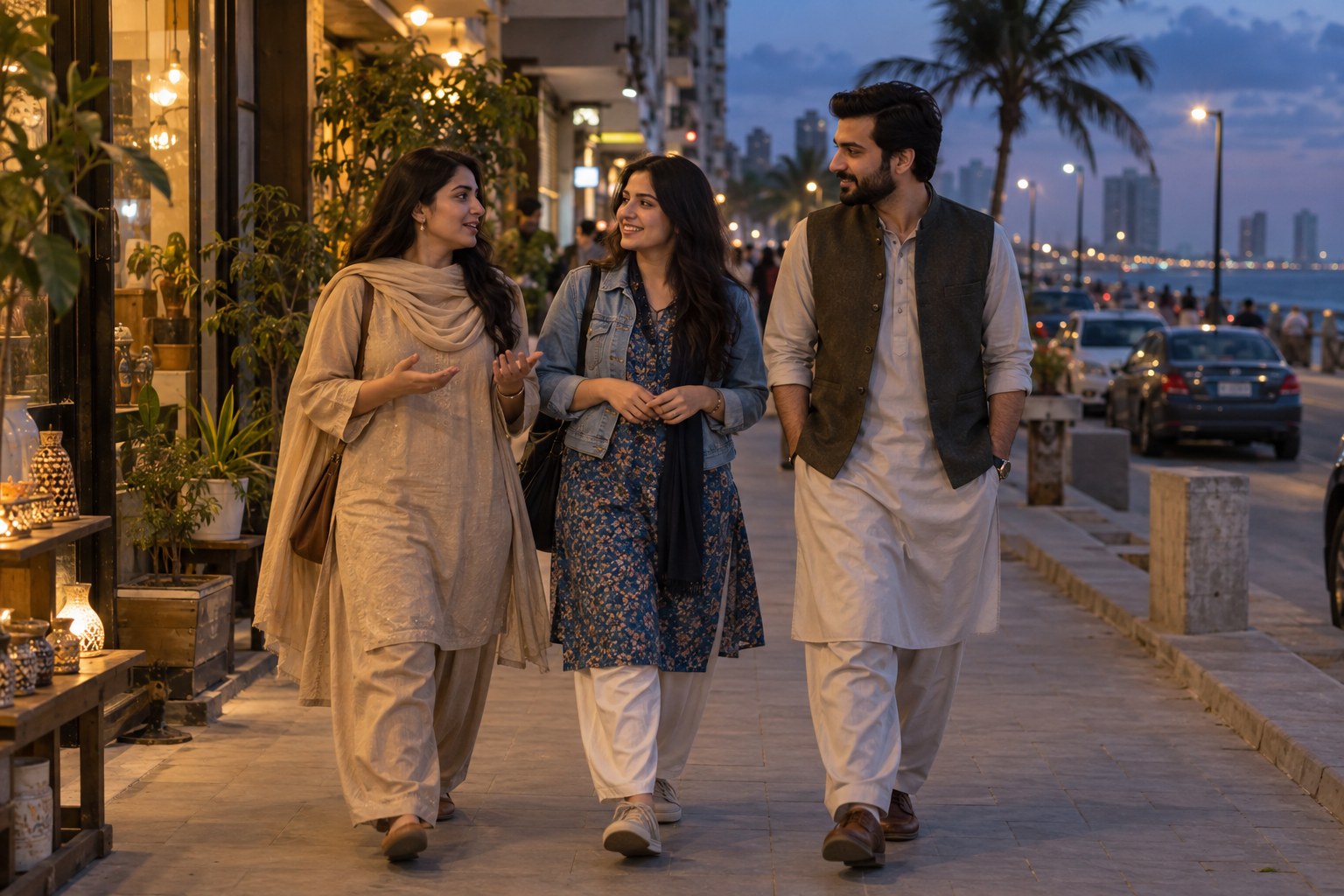
The everyday uniform is not a costume mashup for social media. It is a route plan: sneakers until the door, khussa inside; or sneakers all day in casual workplaces; or polished traditional shoes when the room asks for them. Men in waistcoats and sneakers can look current when proportions are clean. Women in embroidered kurtas and sneakers can look practical when the shoe is not fighting the hem.
- Match shoe formality to the most formal indoor space on your route.
- Carry a foldable bag for shoe switches when visiting homes.
- Replace socks as often as you replace skincare samples—more if you walk a lot.
- Reject any pair that alters your gait; style is not worth knee pain.
- Keep one repair relationship: cobbler or trustworthy shop desk.
Khussa and sneakers are not opposites in a culture war. They are tools. The ankle is where Pakistani everyday dress tells the truth about whether an outfit was built for a life or for a photograph.
Buying notes without fake exclusives
Traditional shoe bazaars, mid-market high-street shops, and international sneaker retailers all coexist in major Pakistani cities. Counterfeits of global sneaker brands are common; if authenticity matters to you, buy from authorised channels and keep receipts. For khussa, handmade variation is normal—fit the pair you are buying, not the display pair.
Gift culture means many people own ornate khussa they never wear. Re-gift, cobble into wearability, or release the guilt. An unworn embroidered pair in a box is not a personality.
Diaspora buyers ordering online should measure foot length and width, ask about sizing quirks, and plan returns before events. A wedding-week delivery delay turns a clever dual-shoe plan into barefoot panic.
If you run or play cricket, specialised sports shoes are a third category. Do not destroy everyday sneakers doing intervals, and do not wear carbon-plate racing shoes to the market. Tool clarity prevents injury.
Socks, no-show liners and skin
No-show socks can save sneakers from becoming foot saunas, but cheap liners slip and blister. Khussa with bare feet works for some and injures others; know your skin. Antifungal powders and dry-out routines are part of shoe ownership in humid cities. Persistent pain deserves clinical attention, not only a new insole brand you saw in an ad.
Children’s shoes and growth
Children destroy shoes faster and grow out of them mid-season. Prioritise fit and secure fastening over adult fashion copying. Traditional festive shoes for kids should still allow play at family events; otherwise you will carry the child and the aesthetic.
Colour management
White sneakers and white shalwar are a high-maintenance couple. Navy sneakers forgive more. Black khussa shows dust differently than tan leather. Choose colours for your cleaning willingness. Style that depends on daily bleaching is a second job.
When pairing patterned socks with either shoe type, decide whether the sock is meant to be seen. Unintended sock theatre at the ankle undermines an otherwise clean outfit.
Travel packing: stuff sneakers with socks to hold shape; wrap khussa to protect embroidery; never assume hotel laundry understands leather. A portable brush earns its place.
If you work in kitchens, labs or factories, safety footwear overrides both khussa and fashion sneakers. Do not romanticise traditional shoes in hazard zones.
Gendered marketing and ignoring it
Shoe marketing often splits “feminine” embellished khussa and “masculine” sneakers as if people do not share pavements. Buy for foot and route. Men wear embroidered traditional shoes; women wear serious sneakers; nonbinary and gender-nonconforming readers should not have to decode moral language to purchase footwear. Comfort and dignity first.
Detail check 1 for 05: compare stitching on both sides of a garment or shoe, ask how it should be cleaned, and walk for ten minutes before committing. Small verification habits prevent expensive mistakes more reliably than waiting for a seasonal trend article to validate your choice.
Filed under
Was this helpful?
Keep reading
Related stories
More from this desk, this beat, and the tags on this piece.
Readers
The conversation
0 notes
Anyone can leave a note. Guests add a name and email — no account required, and the email is never published.
No notes yet. Yours would be the first.