What modest dressing looks like when it is not a campaign
Abayas, long shirts and covered hair as everyday engineering: opacity, heat, commute and prayer—not a seasonal hashtag.
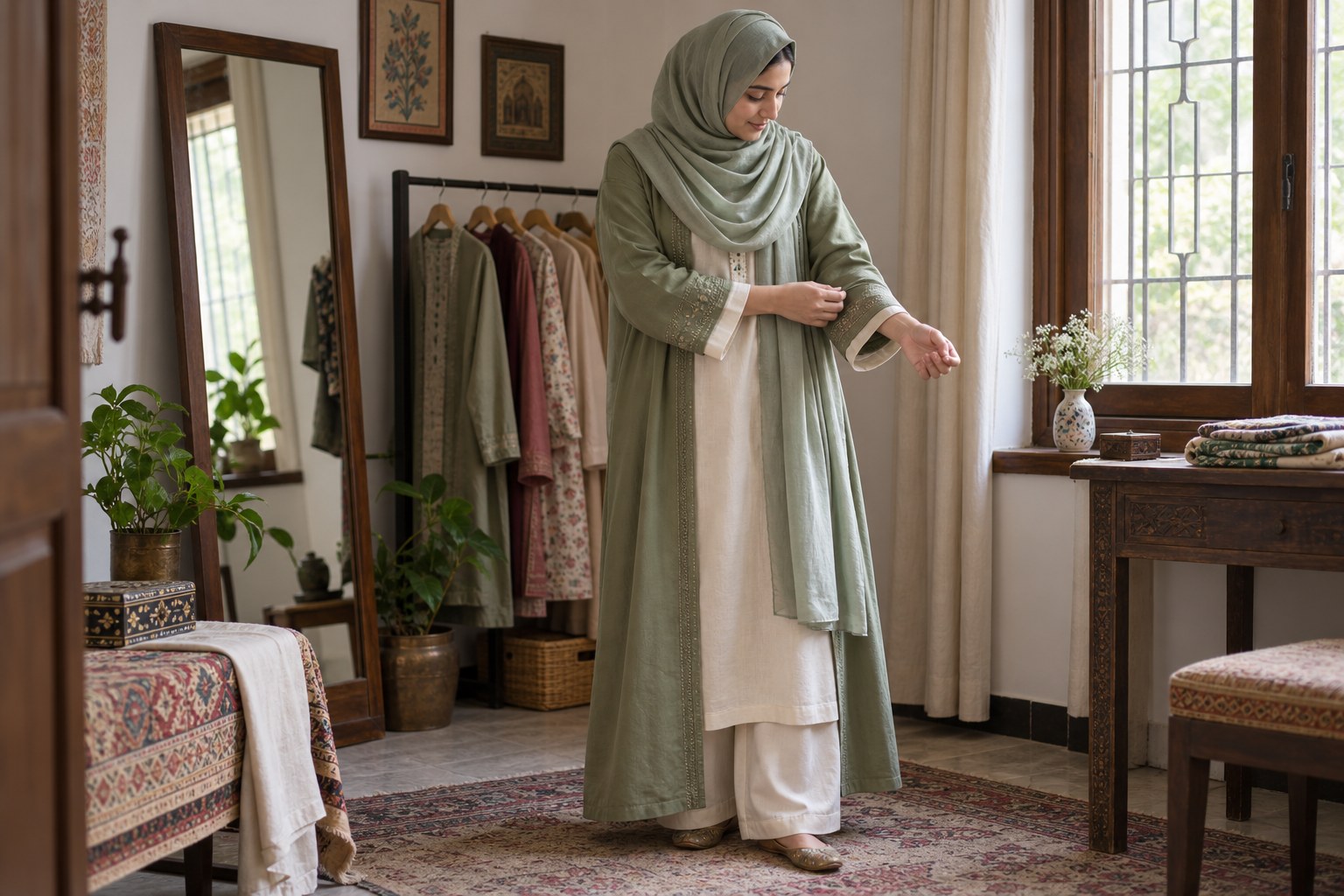
Modest dressing is not a trend cycle, and it is not a single silhouette. Across Karachi, Lahore, Islamabad and diaspora cities, women who cover hair, choose longer shirts, prefer abayas, or keep arms and legs covered for faith, family or personal comfort are solving a daily wardrobe problem: heat, offices, transport, prayer, and social life—without waiting for a campaign to validate them.
This guide treats modest dressing as ordinary clothing engineering. It avoids converting faith into fashion content, and it does not invent a single “Pakistani modest look.” Practices differ by community, generation, workplace and city. The useful question is what makes covered dressing work on a Tuesday, not what makes it photograph for a launch.
Define your non-negotiables before you shop
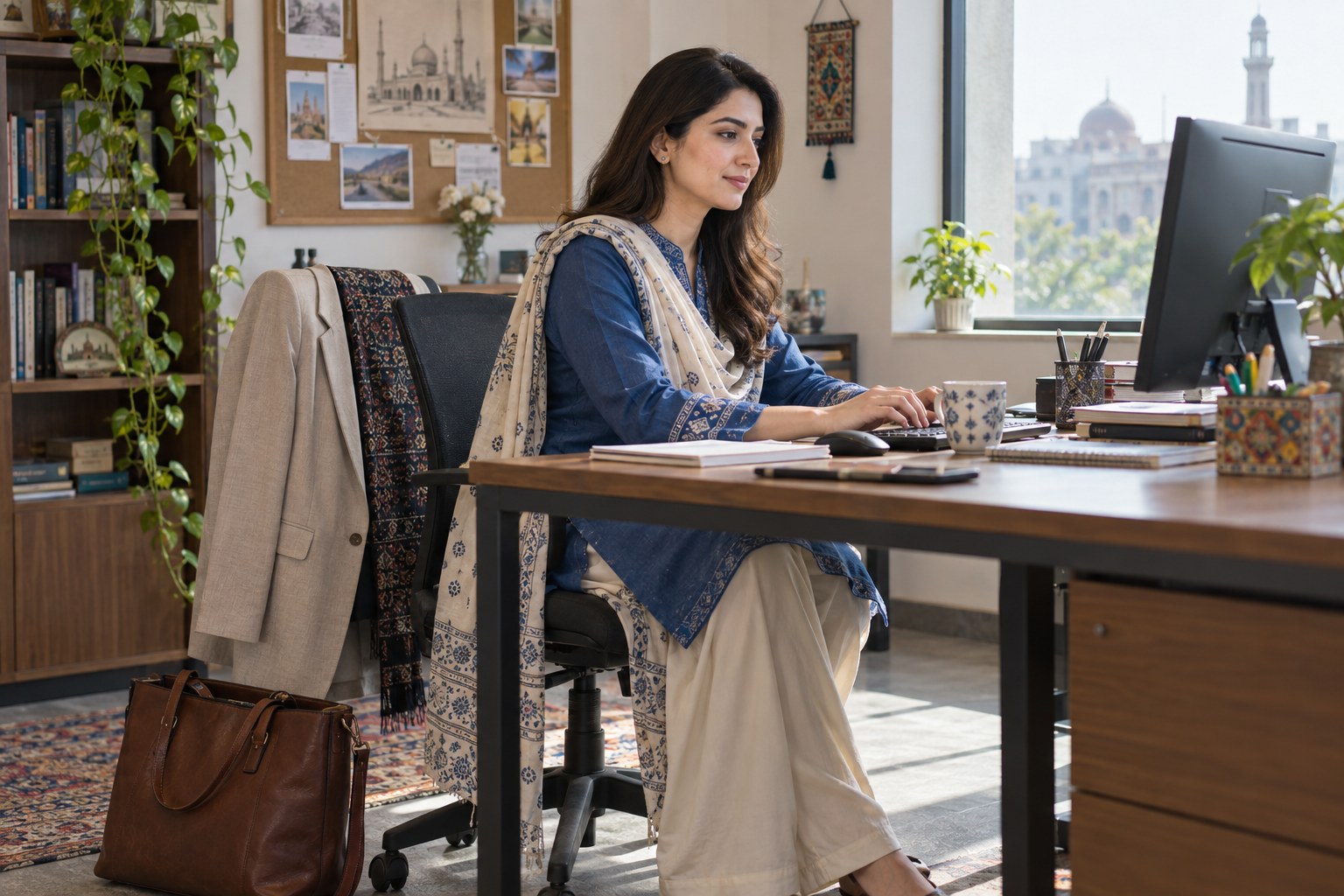
Write three lines: what must be covered, what length feels secure when you sit and bend, and whether hair covering is daily, situational or unused. Those lines prevent sales assistants from selling you a “modest edit” that fails as soon as you raise your arms. Opacity matters as much as length; pale lawn in sunlight can undo a careful hem.
Workplace rules and school or campus expectations may add constraints. Treat those as technical requirements. A garment that is modest at home but transparent under office lighting is unfinished for that life.
Abaya, long shirt, and coordinated separates
An abaya can be a daily uniform or an outer layer over jeans and a blouse. Fabric weight decides whether it survives Karachi humidity or becomes a portable sauna. Look for armholes that do not expose when you drive or hold a railing, and for closures that do not gap. Black is practical and not mandatory; many women use deep navy, charcoal and soft greys for the same reason office wardrobes do—stain forgiveness and calm repetition.
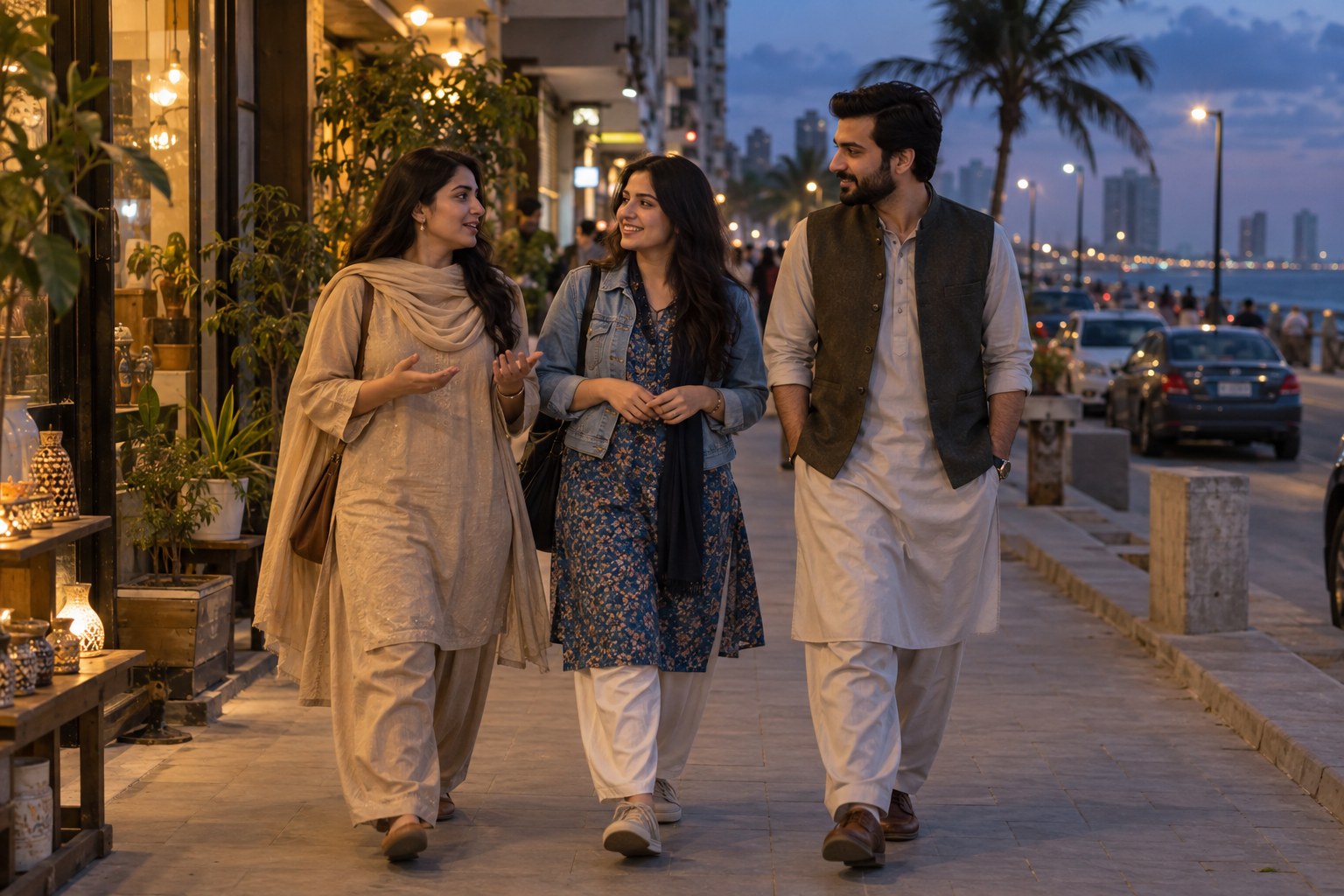
Long shirts and kurtas remain the everyday workhorses of Pakistani modest wardrobes. Side slits should be evaluated when walking outdoors, not only when standing still. Pairing with wide trousers, straight pants or jeans changes how much slit is tolerable. A scarf or dupatta that must be readjusted every four minutes is not a styling flourish; it is a design failure for a commute.
Heat, fabric and laundry
Covered dressing in Pakistani summers is a textile problem. Cotton, certain rayons, linen blends and technically light synthetics behave differently when layered. A double layer that looks ideal in an air-conditioned boutique can become impossible on a bike or in a bus queue. Prefer fibres you can wash frequently; modest wardrobes often rotate fewer silhouettes more often.
Pakistan’s broader textile base—see industry context via APTMA—means good local cloth is available, but labelling can be vague in smaller shops. Ask about opacity, shrinkage and whether a fabric clings after sweat. Rub the cloth between your fingers under the shop’s harshest light.
Hair covering without costume pressure
Women who cover hair use hijab styles, dupatta drapes, caps and combinations that fit their communities. There is no single correct aesthetic. What matters practically is security in wind, breathability, and whether pins damage the fabric you wear daily. Keep a spare cover in your bag. Choose undercaps based on comfort for your hours, not for a photograph.
Do not let social media’s “hijab fashion” economy dictate purchases that ignore your climate. A styled wrap that requires twenty minutes each morning will lose to a reliable five-minute method you can repeat on low-energy days.
| Context | Priorities | Common failure |
|---|---|---|
| Office / campus | Opacity, professional line, easy prayer if needed | Sheer fabrics, loud campaign embroidery |
| Family events | Length security when seated on floors, graceful layers | Slits that open on sofas, unstable dupatta |
| Commute heat | Breathable layers, washability, secure cover | Heavy abaya + nonbreathable inner |
| Diaspora winter | Coat-compatible lengths, indoor overheating plan | Outdoor coat that fights indoor modest layers |
Shopping without the campaign voice
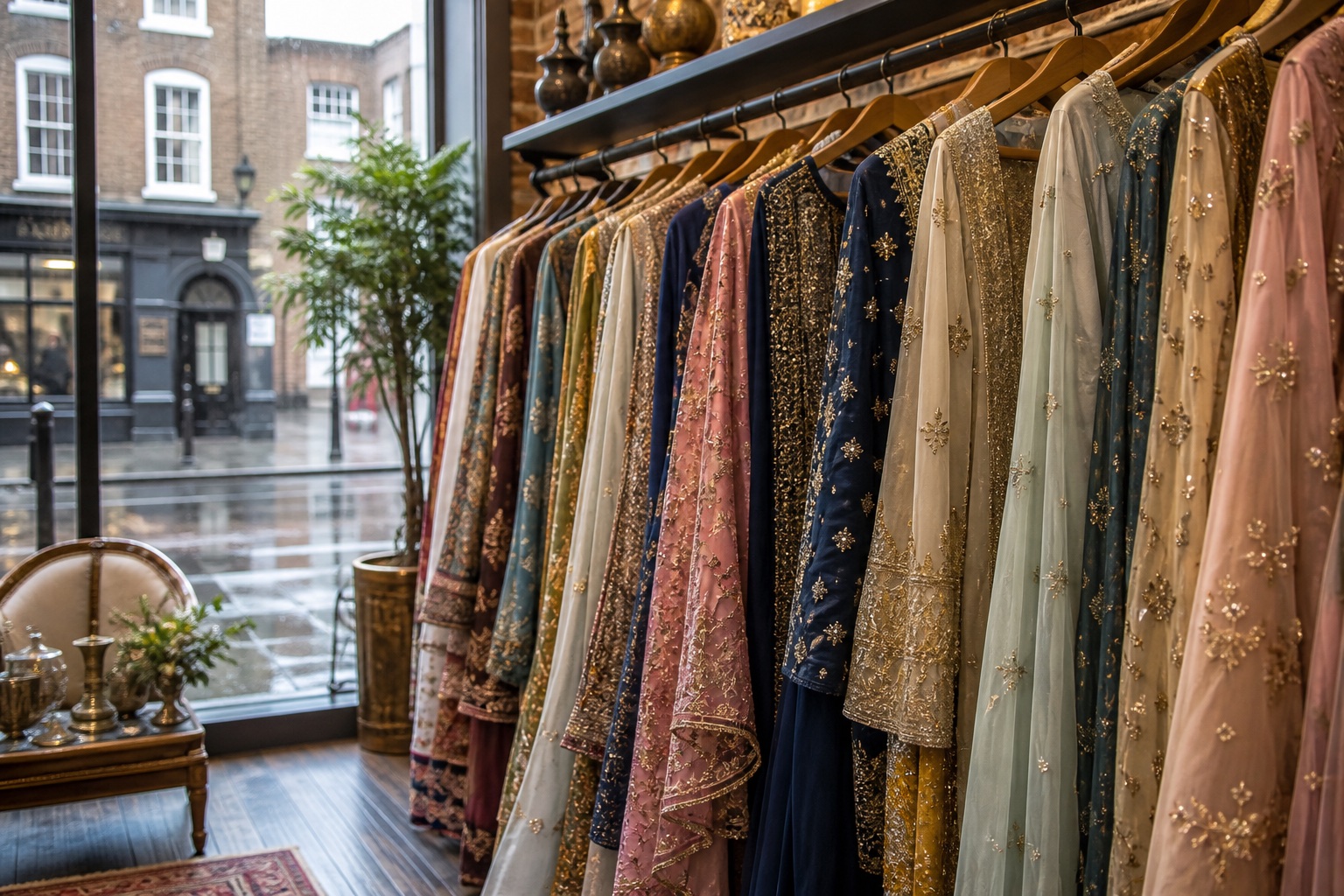
Some Karachi and Lahore boutiques now cut longer lengths and fuller sleeves because demand exists, not because a hashtag arrived. Evaluate them as clothing stores: finishing, return policy, colour fastness, and whether staff pressure you into a branded identity. Digital retailers can help with variety; verify model height, fabric descriptions and return windows for embellished pieces.
Be wary of marketing that treats modest dressers as a newly discovered consumer tribe. You are not a niche to be converted; you are a customer with measurements. If a brand’s “modest” collection is simply last season’s stock with longer hems and louder piety in the copy, keep walking.
Jewellery, shoes and bags
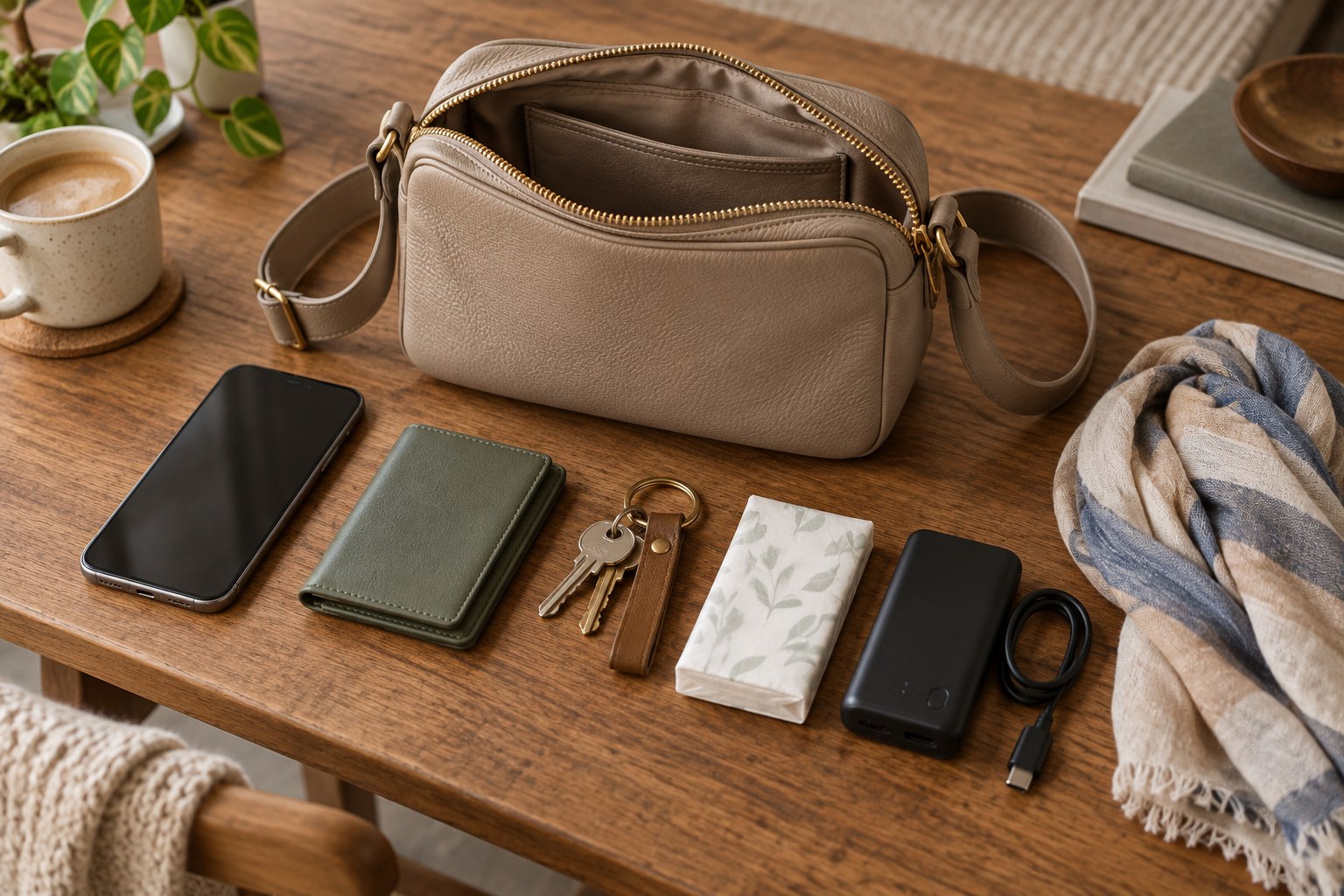
Modest outfits still use jewellery; scale and snag risk change. Earrings that catch on a scarf edge become daily irritation. Shoes should match commute reality—khussa, sneakers, low heels—rather than campaign sandals. Bags that leave hands free matter more when you are also managing a scarf in wind.
- Build a small uniform of proven pieces before chasing statement abayas.
- Match inner and outer layers for opacity as a system.
- Keep prayer-friendly options accessible if prayer happens away from home.
- Repair and tailor: a trusted hem and side-slit adjustment beats a new purchase.
- Ignore any implication that modest dressing must look expensive to be legitimate.
Modest dressing looks like ordinary life when it is allowed to be ordinary: washed cotton, secure coverage, clothes that survive offices and buses, and no requirement to perform spirituality for a lens. Campaigns will keep rediscovering this wardrobe. The women who wear it every day already knew the brief.
For cultural reporting that treats dress as lived practice rather than novelty, read critically across Pakistani press such as Dawn Images, and treat brand campaigns as advertising unless independent construction details are clear.
Men and boys in modest registers
Modest dressing conversations often centre women, but many households also navigate longer shirts, looser trousers and less revealing sportswear for men and boys in religious or community settings. The same engineering questions apply: opacity, ease of prayer, heat and whether a garment still works for school or work. Avoid assuming that “modest fashion” is only a female consumer category.
When family pressure and personal preference diverge
Some readers dress more covered than they prefer because of family expectation; others dress less covered than relatives want. A wardrobe guide cannot resolve those negotiations. It can only insist on safety, comfort and honesty: do not buy clothes that make walking dangerous, overheating likely or prayer impossible in the name of peacemaking. Where conflict exists, practical layers and optional covers sometimes create shared space better than a single confrontational outfit.
Children and school-adjacent dressing
Parents dressing daughters and sons for schools with uniform policies still face after-school and weekend modest preferences. Choose play-tolerant fabrics, secure hijab options for sports where relevant, and avoid formal embroidery on clothing meant for running. Comfortable modest clothing for children should prioritise safety—no trailing hems near stairs or bicycle chains.
Online shopping pitfalls
Model photographs often use height, pins and lighting that exaggerate coverage. Read centimetre charts. Check return costs for international diaspora orders. When a product title says “modest,” look for actual sleeve length, opacity notes and fabric composition. If those are missing, message the seller before paying, and keep the answers.
Repair culture
A modest wardrobe thrives on tailoring: lengthening sleeves, closing slits, adding linings, replacing snagged scarf edges. Build a relationship with a darzi who understands your non-negotiables. Replacing a whole abaya because a zip failed is rarely necessary.
Also plan storage. Scarves snag on rough hangers; abayas stretch on wire. Folding strategies and breathable covers extend the life of pieces you rely on daily. Fragrance and moth prevention matter for seasonal wool layers used in diaspora winters or hill trips.
Finally, reject the idea that modest dressing must constantly justify itself in aesthetic language. It can be beautiful; it does not owe anyone a campaign. The highest compliment is that you forgot about your clothes because they were doing their job while you did yours.
Across Pakistani cities, the most sustainable modest wardrobes look slightly boring in a spreadsheet—repeatable colours, proven cuts, repaired edges—and quietly elegant in person because they fit the life that wears them. That is the opposite of a drop culture. It is closer to how serious uniforms work: clarity, dignity, and maintenance.
Diaspora winters and indoor heat
In UK and North American winters, modest dressing meets coats, radiators and dry indoor air. Choose outerwear long enough for your shirts and abayas, and plan how you will peel layers indoors without discomfort. Static electricity and wool scarves can make hijab fabrics behave differently than they do in Karachi humidity—test combinations before an important day.
Community events in diaspora cities may mix formal expectations with gymnasium venues and mixed weather. Carry a spare cover and a cardigan. Modest clothing that only works in perfect conditions is incomplete for migrant life.
Shopping locally can mean fewer abaya specialists and more adaptation of mainstream coats and long shirts. That adaptation is legitimate. You do not need a Pakistani label for a garment to count as part of a Pakistani or Muslim wardrobe practice.
Language matters in service encounters. If a shop assistant lectures you about religion while failing to find an opaque size, leave. Expertise in coverage is shown through measurements and options, not through moral theatre. Equally, if you are accompanying a relative who dresses differently from you, do not outsource your discomfort onto shop staff.
Sources and official profiles
Was this helpful?
Keep reading
Related stories
More from this desk, this beat, and the tags on this piece.
Readers
The conversation
0 notes
Anyone can leave a note. Guests add a name and email — no account required, and the email is never published.
No notes yet. Yours would be the first.