A Friday office kit for Lahore when the forecast is 40°C
What to wear to a Lahore office on a hot Friday: fabric, commute, Jumma, and the shock of air-conditioning, without buying a new personality.
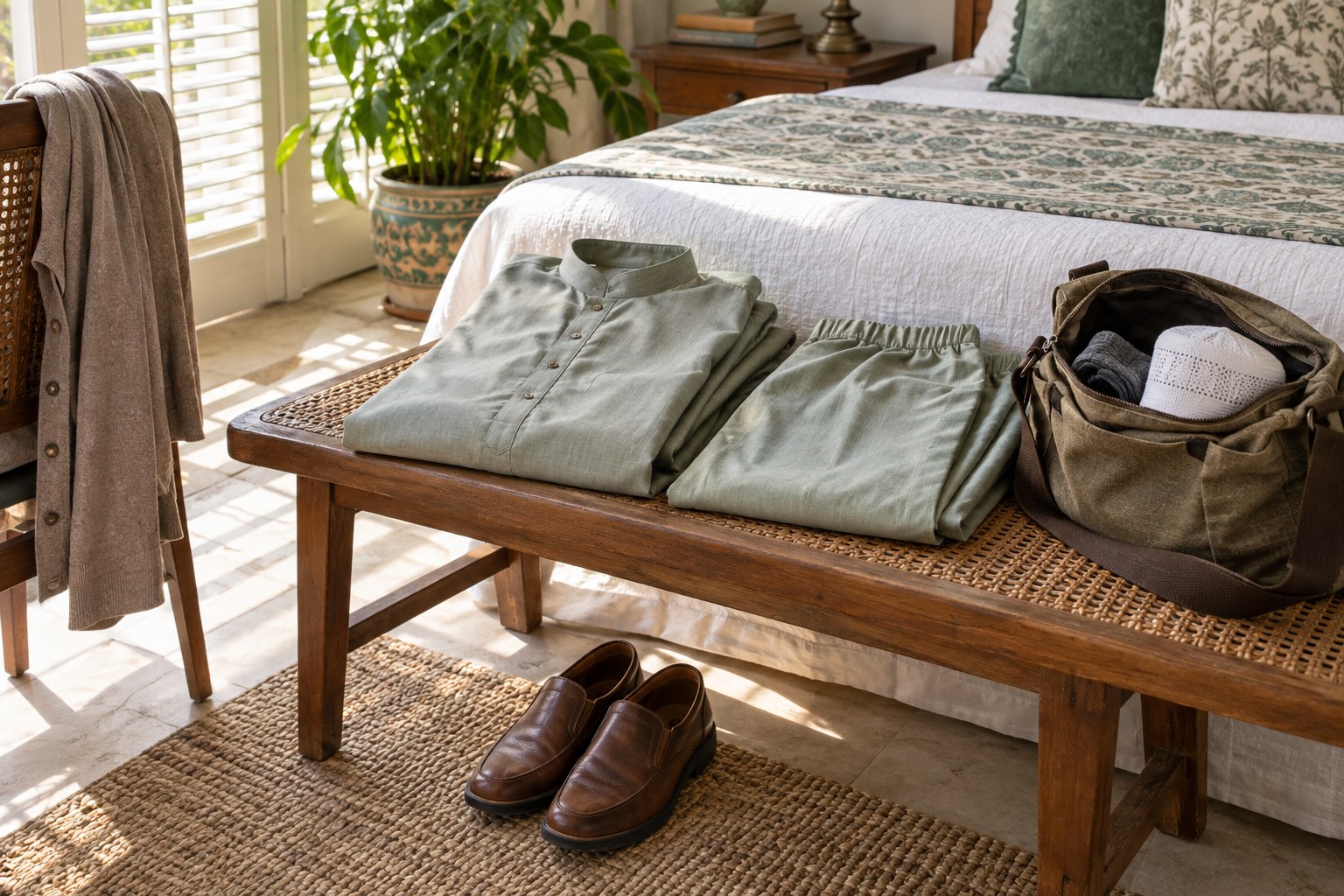
Friday in a Lahore office is not a runway for “smart casual”. It is a commute, a prayer break for many colleagues, a meeting that overran, and a temperature the Pakistan Meteorological Department will sometimes describe, in summer, as a heatwave rather than as a mood. When notices for Punjab cities sit around 40°C and above, the garment that looked decisive under shop lighting will declare itself at the bike stand. The brief is opacity, sweat, and a shirt you can still sit in after Jumma.
If the cloth cannot survive the hour between home and the lobby, it is not officewear. It is a photograph waiting for air-conditioning.
PakStyles fashion desk
Read the heat notice as logistics, not as a moodboard
Heatwave language from the meteorological department and from the National Disaster Management Authority is public guidance about risk to health, power, and outdoor work. It is not a style forecast. It does tell you that a Lahore Friday in June can be a different climate from the catalogue photograph taken in February.
Regional heat products from PMD’s Punjab offices have used plain thresholds that are useful for clothing decisions even when you are not a meteorologist. In published heatwave-update material, a forecast near 40-41.9°C has been framed as a “hot day alert” range with advice to limit outdoor exposure, cover the head, drink water, and favour light, loose cotton cloth. Higher bands escalate the language. Treat those bands as a reason to shorten the walk from parking, not as permission to invent a heroic outdoor wardrobe.
Plan the kit as if you will be outside longer than you hoped: a delayed ride, a walk from a distant parking space, a generator that has not yet caught up. Official notices are about risk; your shirt is about remaining decent while that risk exists.
Fabric that has already survived your body
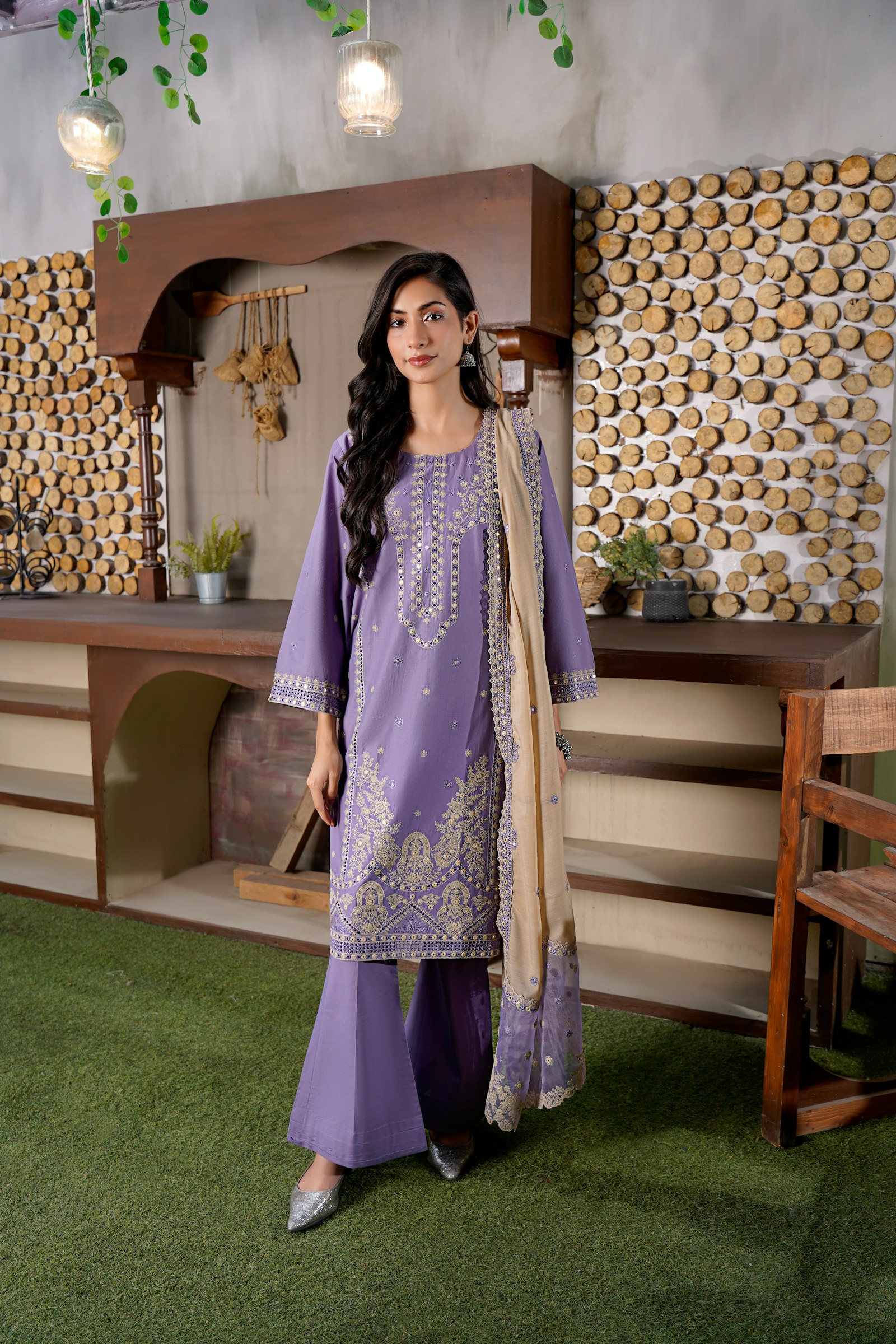
Choose a fabric you have already sweated in. Lawn, tropical cotton, and a well-washed shalwar kameez earn their place because they dry and because they do not become transparent at the first dark patch. A white shirt that maps every undershirt is a meeting problem, not a laundry accident. If you are still deciding between two pieces on Thursday night, pick the one you would wear to sit on a charpai at 4pm, then add the collar the office actually requires.
Opacity is a daylight test. Hold the cloth against a window or step outside briefly, not only under fitting-room LEDs. Dark sweat marks show earliest on pale, thin weaves; that is physics, not a moral failure. An undershirt can help, but it also adds a layer of heat. Sometimes the better fix is a slightly denser cotton you already trust.
High-street rooms such as ChenOne are ordinary stocking points for tropical cotton shirts in more than one city. Naming a chain is not an endorsement of every SKU. Whatever you buy, wear it on a commute before you trust it on a Friday that also contains guests.
| Commute | What the cloth must survive | Common failure |
|---|---|---|
| Motorbike | Helmet collar crush, wind, a little oil, hem that stays put | Stiff formal shirt that shines and rides up |
| Rickshaw / ride-hail | Heat without airflow, fabric that does not cling when you sit | Thin white that maps sweat immediately |
| Car with weak AC | Oven seats, shoes that meet a hot or flooded basement | Debut shoes that blister by midday |
| Long walk from parking | Sun on shoulders, dust, a bag that does not dump in a lift | Blazer carried all morning “for later” |
The commute is the garment test
Motorbike, rickshaw, and car park are different briefings. A helmet collar will crush a stiff formal shirt and polish a cheap one into shine. A car with broken air-conditioning is an oven with seats. If you ride, the hem has to stay put and the fabric has to forgive a little oil. If you drive, shoes still meet a flooded basement in monsoon weeks.
Bags matter more on Friday because people carry prayer caps, a change of socks, or a packed lunch that will leak. A tote that dumps its contents in a lift is not refined. A small, washable bag that can sit on a dusty floor is. Do not add a blazer “for the office” if you will carry it on your arm from 9am. Either the room is cold enough to need it, or it is a costume you are punishing yourself with.
Mosque, office, and the shock of air-conditioning
Many Lahore offices thin out around Jumma. The clothes still have to walk to a mosque, sit on a floor, and come back into a refrigerated meeting. Sleeves that cannot fold, trousers that cannot kneel, and a dupatta that needs both hands are poor tools for that hour. You do not need a separate “mosque outfit” if the weekday kit already has ease at the knee and a hem that stays decent when you sit. You do need shoes you can slip, and a plan for dust on dark cloth.
Then the air-conditioning. The body that was wet on the canal road will freeze under a vent if the shirt is thin and the office is proud of its temperature. A light second layer that can live on the back of a chair is more useful than a heavier “proper” shirt. Do not correct a colleague’s thermostat with a speech about authenticity. Correct your own kit so you can stay in the room.
If your workplace has a dress code that insists on a jacket in midsummer, negotiate with policy where you can, and with fabric where you cannot. A jacket that lives on a chair for three hours is still better than a synthetic shirt that seals sweat against skin. Document what your office actually enforces on Fridays; informal practice often differs from the handbook.
What not to buy the night before Jumma
A new stiff kameez, an untested white, or shoes that have never walked a hot pavement will all give evidence on Friday. Wash the cloth. Wear the shoes around the block. Check opacity in daylight, not in a fitting room. If you are dressing for a client, the client would like you to arrive looking composed, not experimental. Save the experiment for a Saturday bazaar.
Colour matters less than people think, and more than catalogues admit. Deep colours hide sweat better and can feel hotter in full sun; pale colours look sharper until the first dark patch. Choose based on your commute length and how often you can change, not based on a photograph of a model standing under shade cloth.
A repeatable Friday kit, not a new personality
- One opaque cotton or lawn top you have already sweated in.
- Trousers or shalwar with ease at the knee for prayer if you pray.
- Shoes that have walked a hot pavement and can slip for Jumma.
- A washable bag that survives a dusty floor.
- A chair-back layer for air-conditioning shock.
- Water, and a plan to shorten outdoor waits when notices say so.
This is not a replacement for a full workwear wardrobe. The Friday kit only has to do one job: get you from the door to the desk, through prayer if you pray, and home again without the cloth becoming the story.
Lahore will be hot again next week. Build a Friday kit you can repeat: a cloth that stays decent, shoes that meet the car park, and enough ease for Jumma. If it only works in the lobby’s air-conditioning, it does not work.
Undershirts, dupattas, and what “opaque enough” means
An undershirt can rescue a pale lawn shirt on a short walk and betray you on a long bike ride by trapping heat. Test both ways on a Thursday if Friday includes clients. Women who wear a dupatta to the office need a fabric that stays on one shoulder without constant adjustment in a lift; a style that needs both hands is a Jumma liability and a meeting liability.
Perfume and deodorant marks on a new pale shirt are not mysterious. They are reasons to keep a darker spare in a drawer at work if your office life allows it. A spare is logistics. A whole second outfit carried “just in case” is how bags become luggage.
Jewellery follows the same heat rules as cloth. A heavy chain that sticks to a sweaty neck will announce itself in the first meeting. Keep metal minimal on 40°C Fridays unless the piece already lives on you without thought.
If your office still requires leather shoes in midsummer, choose a pair that has already flexed, and keep socks you can change after the walk from the car. Debut leather on a heatwave Friday is a blister schedule. Polish can wait for a cooler week; intact skin cannot.
Sources and official profiles
Was this helpful?
Keep reading
Related stories
More from this desk, this beat, and the tags on this piece.
Pakistani clothes alterations in the UK: what a tailor can usually fix
Zainab Noor · 8 Oct 2026
Readers
The conversation
0 notes
Anyone can leave a note. Guests add a name and email — no account required, and the email is never published.
No notes yet. Yours would be the first.