Eid family outfit planning without forced matching
Coordinate Eid family outfits without forcing identical fabric: align colour temperature, formality and one shared detail so photographs cohere and people still dress like themselves.
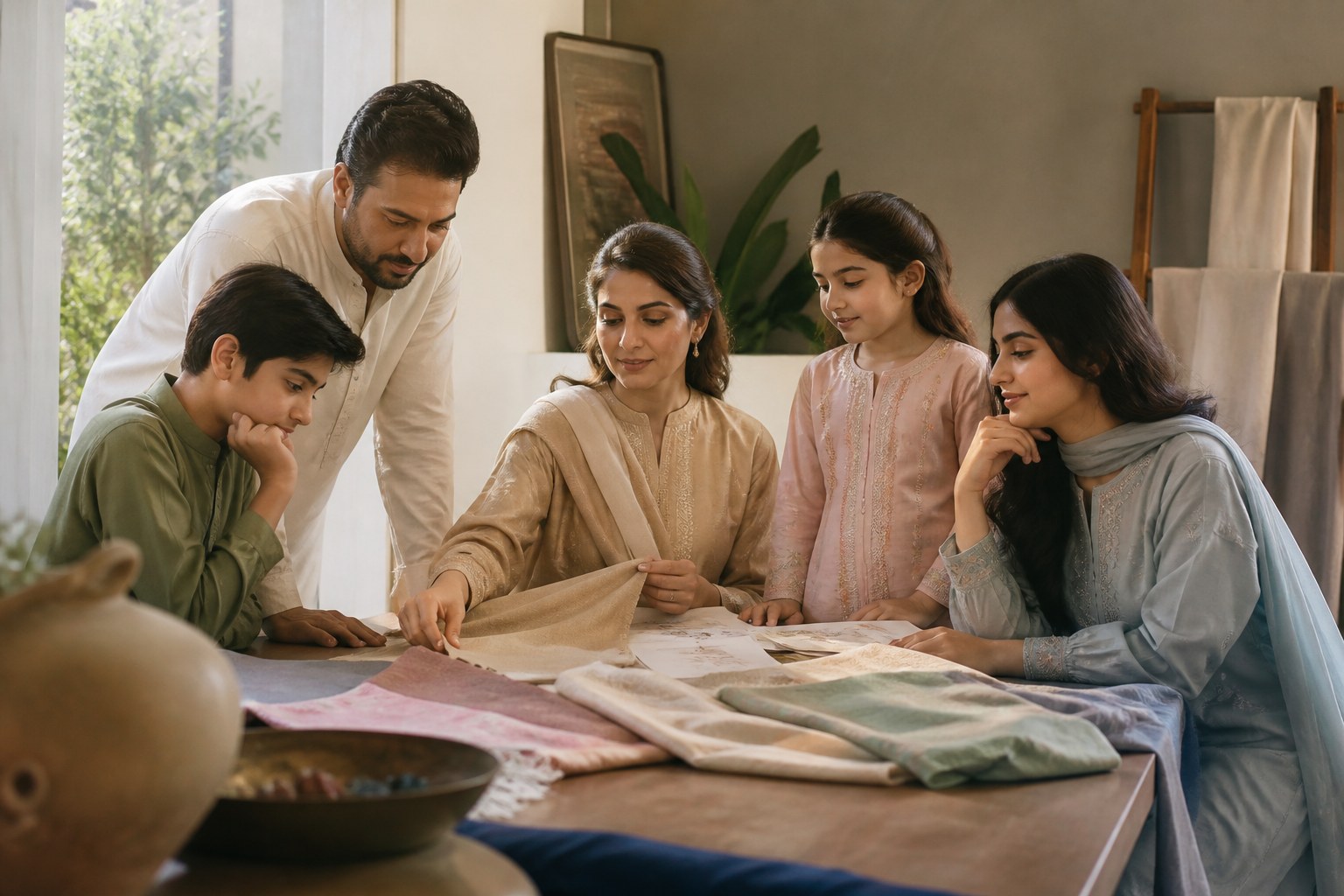
A coordinated Eid photograph does not require a family dressed from one bolt of fabric. Repeating colour temperature, formality level or a single textile detail is enough for coherence. Forced matching often produces resentment, last-minute stitching crises and children who refuse to move.
This planning essay is for households negotiating Eid outfits across ages and tastes—in Pakistan and abroad. It assumes mixed budgets and at least one person who hates identical sets.
Choose a palette family, not one shade
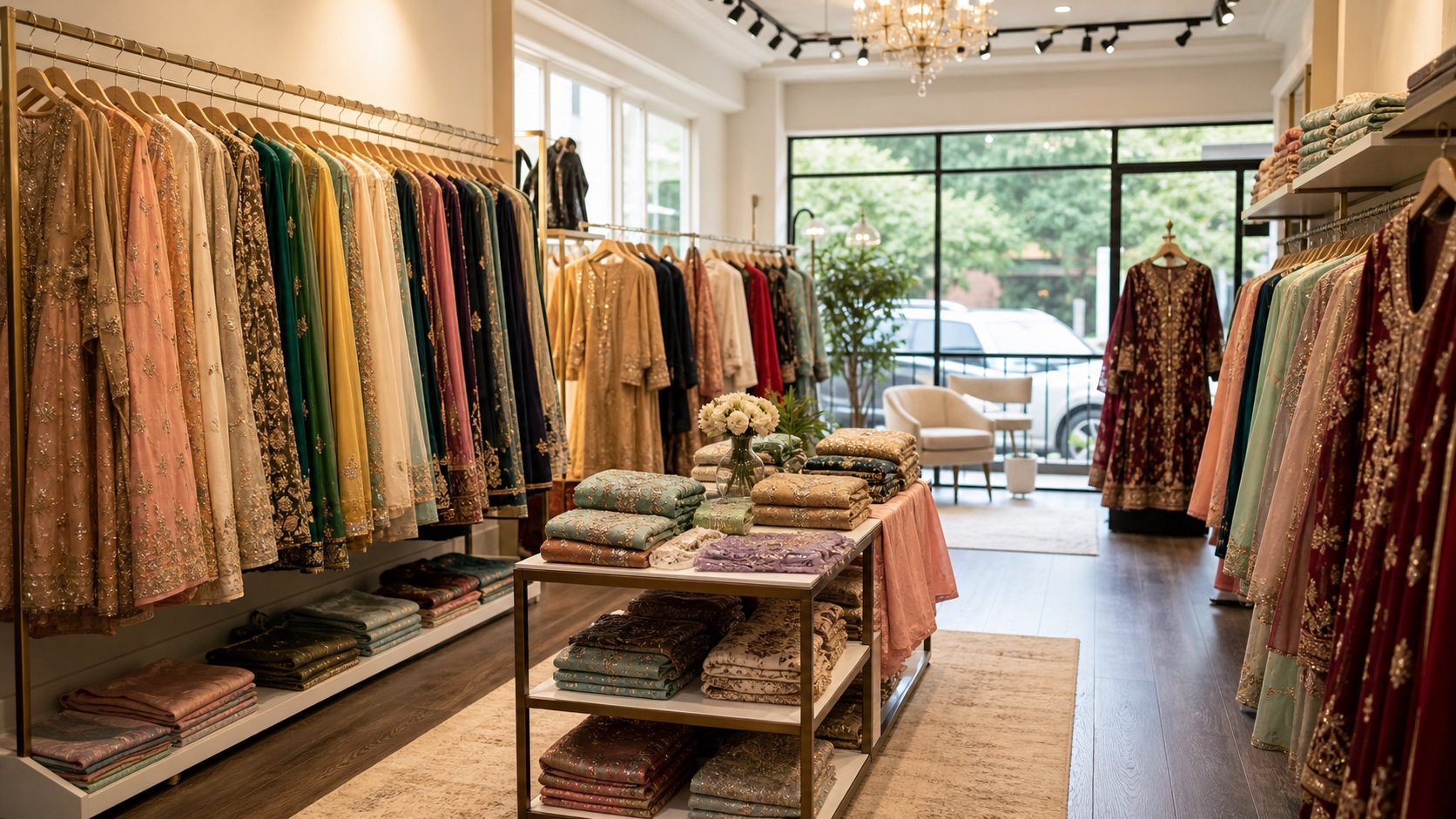
Agree a temperature: warm (creams, golds, rusts, marigold), cool (mint, sky, lavender, silver) or deep (emerald, maroon, navy). Within that family, allow different values—light and dark—so elders, teens and toddlers are not competing for the same exact dye lot. Metallic accents can unify mismatched base colours.
Match the level of formality
Photographs fracture when one adult wears full formalwear and another wears weekend cotton without a linking layer. Decide the day’s highest formality—mosque, brunch, dinner visit—and dress everyone within one step of that level. A blazer, shawl or polished shoe often bridges more effectively than a panic purchase of matching embroidery.
| Connector | How to use it | Risk if overdone |
|---|---|---|
| Palette family | Same temperature, varied shades | Becoming identical by accident |
| Shared textile detail | Same lace edge, similar buti, related print scale | Costume effect if every garment matches |
| Jewellery metal | All gold-tone or all silver-tone | None if kept simple |
| Dupatta / pocket square colour | One repeated accent colour | Looking staged if everything else clashes |
Use one late-stage connector
If outfits are already bought and slightly chaotic, pick one connector the week before: identical floral pins, similar wristbands, a repeated dupatta colour, or shoes in the same tone. Late-stage connectors are cheaper than remaking garments and kinder than criticism.
Budget and shopping without a family argument
Set a spending ceiling early. Not every person needs new clothes every Eid. Swapping dupattas, restyling last year’s outfit with a new mid-layer, or investing only in shoes can be enough. Keep receipts if returns are likely; UK consumers can browse general help via Citizens Advice, and anyone reading care labels on new garments can consult FTC care labeling guidance where it applies.
Photograph logistics that reduce pressure
Take the group photograph early, before food and frayed tempers. Choose shade for light colours that blow out in harsh sun. Allow individuals a portrait in their preferred pose so the group shot is not the only proof they showed up.
Families look united when the eye finds a rhythm. They look forced when every collar matches by decree. Aim for rhythm. Leave room for personality—Eid is a celebration, not a uniform inspection.
Sources and official profiles
Was this helpful?
Keep reading
Related stories
More from this desk, this beat, and the tags on this piece.
Pakistani clothes alterations in the UK: what a tailor can usually fix
Zainab Noor · 8 Oct 2026
Readers
The conversation
0 notes
Anyone can leave a note. Guests add a name and email — no account required, and the email is never published.
No notes yet. Yours would be the first.