Bridal
Pakistani mehndi designs: styles, placement, timing, and aftercare
A mehndi design changes as the hand moves, the stain develops and the wedding timetable tightens. Choosing by a flat photograph misses half the design.
By Ayesha Khan
Editor-in-chief
3 min read
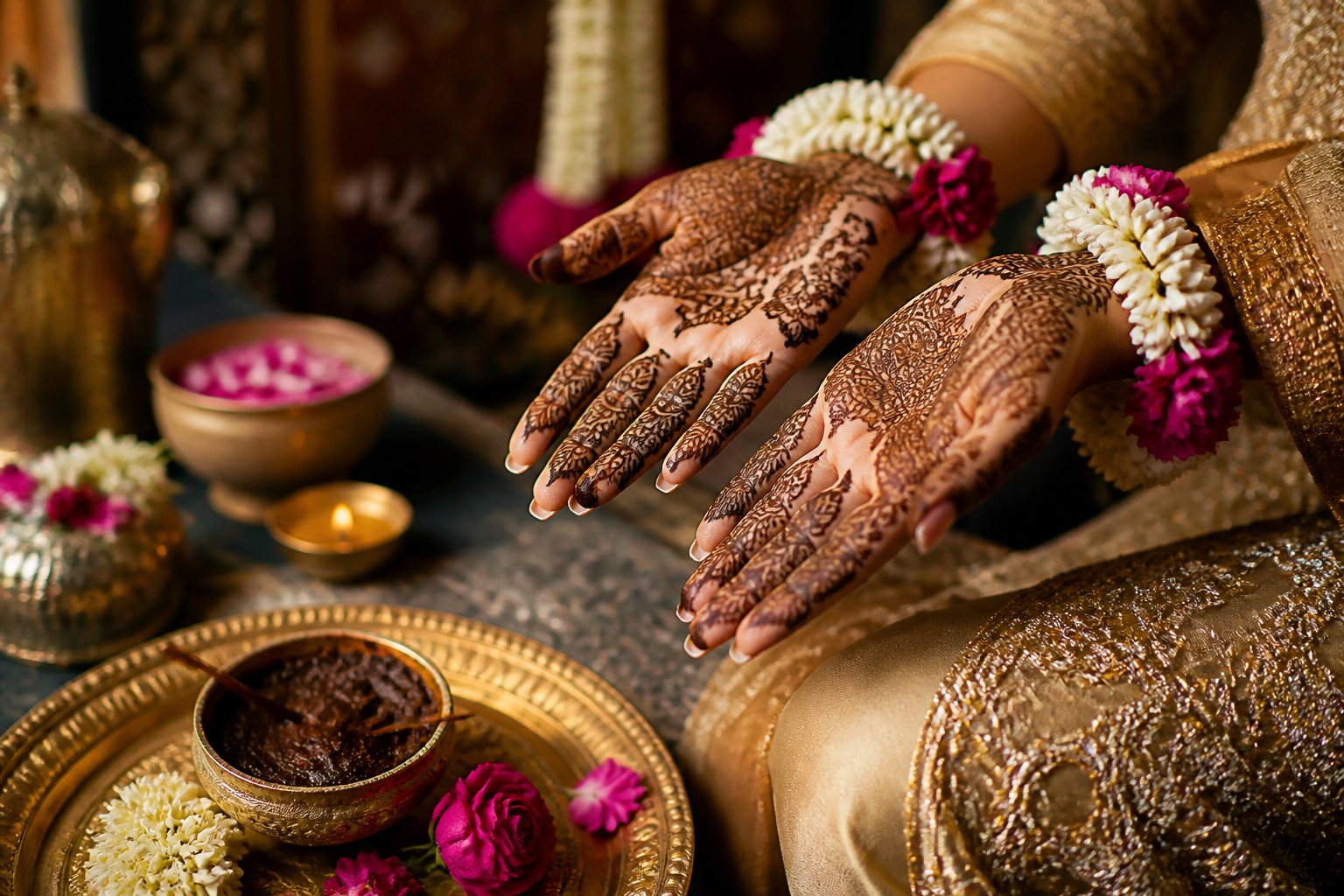
A mehndi design changes as the hand moves, the stain develops and the wedding timetable tightens. Choosing by a flat photograph misses half the design.
Do you prefer a design that reads dramatically across the room or rewards close looking?
— A question for PakStyles readers
Arabic flow and negative space
Large floral trails and open skin photograph clearly and suit clients who dislike visual density. The challenge is making both hands feel related without mirror-copying them.
Slow down at “Arabic flow and negative space” and identify the example doing the argumentative work. Name its date, maker, place or material where the public record allows. In Pakistani mehndi designs: styles, placement, timing, and aftercare, that precision gives readers something they can examine and challenge instead of asking them to accept a broad cultural claim on trust.
Indo-Pakistani detail and narrative fill
Fine paisley, jaali, florals and figurative motifs create richness but require time and stillness. Ask to see healed stains, not only wet paste photographs.
Compare “Indo-Pakistani detail and narrative fill” with one genuinely different example. Similarities may reveal a pattern, while differences expose the limits of the category. Keep regional, linguistic, religious, class and diaspora variation visible rather than presenting one household or institution as the whole of Pakistan.
Placement follows jewellery and sleeves
Share the cuff, bangles, rings, shoes and sleeve length with the artist. A wrist border hidden under a sleeve or dense fingers under statement rings wastes effort.
Ask whose labour disappears when “Placement follows jewellery and sleeves” is described too quickly. Credit makers, translators, technicians, organisers and communities where evidence supports it. Attribution improves the story and helps readers follow the subject beyond the best-known public name.
Stain care without dangerous shortcuts
Book early enough for colour to mature, keep the area warm and dry, and follow the artist’s safe instructions. Avoid unlabelled “black henna”, which can cause serious reactions.
Bring the argument back to something observable. For “Stain care without dangerous shortcuts”, a reader should be able to visit, read, listen, inspect or verify the example. That makes disagreement productive: another person can add evidence, correct a date or show where Pakistani mehndi designs: styles, placement, timing, and aftercare needs a wider frame.
Where to continue after Pakistani mehndi designs
NHS skin and cosmetic-procedure guidance is a starting point for the current record connected with Pakistani mehndi designs: styles, placement, timing, and aftercare. Check dates, credits and availability at the source; then follow the names, works and institutions mentioned above rather than relying on a search-result summary.
Do you prefer a design that reads dramatically across the room or rewards close looking? If you have a strong answer, name the specific example or first-hand experience that shaped it.
What would you add—or challenge? Do you prefer a design that reads dramatically across the room or rewards close looking? Keep the conversation attached to a named work, tested method, dated source, or first-hand observation so it improves the guide for the next reader. Before commenting on Pakistani mehndi designs: styles, placement, timing, and aftercare, revisit one complete example and note the detail that confirmed—or overturned—your first impression. Include enough context for somebody else to find or repeat it: the work or product name, city or venue where relevant, approximate date, and the particular choice you noticed. That is more valuable than a vote for “best”.
Sources and official profiles
Filed under
Keep reading
Related stories
More from this desk, this beat, and the tags on this piece.
Nikah dupatta guide: coverage, pins, weight and photographs
Zainab Noor · 13 Sep 2026 · 16 min
How heavy should a baraat lehenga be? A comfort-first fitting guide
Zainab Noor · 13 Sep 2026 · 17 min
The Pakistani bride’s emergency kit: what actually earns space
Zainab Noor · 13 Sep 2026 · 16 min
Double dupatta bridal styling without doubling the discomfort
Zainab Noor · 13 Sep 2026 · 15 min
Readers
The conversation
0 notes
Anyone can leave a note. Guests add a name and email — no account required, and the email is never published.
No notes yet. Yours would be the first.