Pakistani doodh patti for one cup or a family pot
Doodh patti scaled by evaporation and taste—from a solitary mug to the family pot that keeps talking after the first pour.
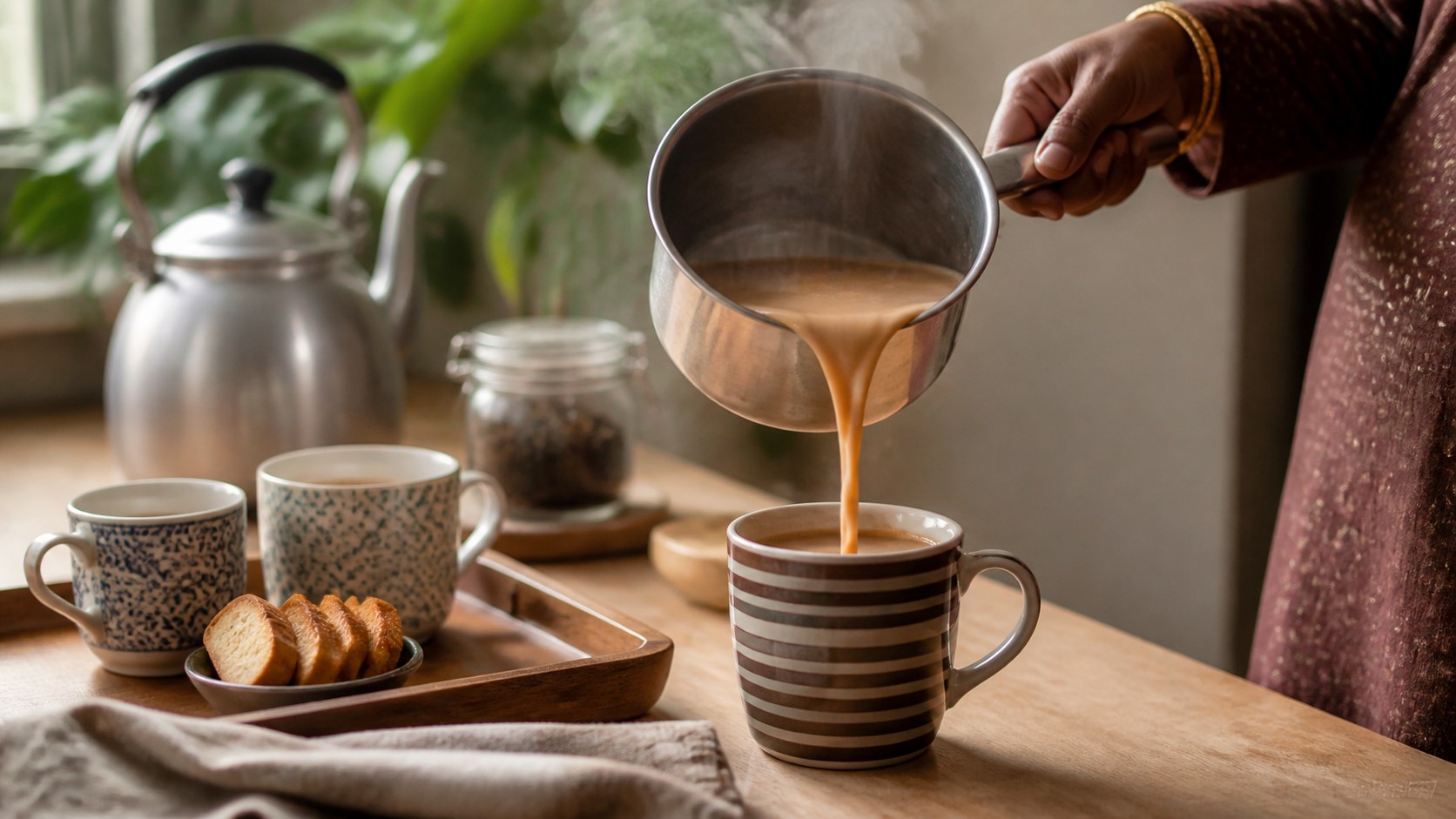
One cup of doodh patti is a conversation between tea and milk in a small vessel. A family pot is a negotiation with surface area, evaporation and the person who always wants it stronger. Multiply the ingredients blindly and the last cup tastes cooked before the first is poured. Scale the method, not only the shopping list.
Doodh patti—milk tea simmered so leaf and dairy meet in the same pot—sits beside kadak, cutting chai and qehwa in Pakistani tea culture without replacing them. It is not a chai latte with different branding, and it is not green tea with milk added as an afterthought. The leaf should remain audible in the cup; the milk should feel cooked into the tea rather than merely diluting it.
Choose the leaf for the job you actually want
Most home pots use a strong black tea: CTC granules for speed and colour, or a broken-leaf blend that can stand milk. Loose leaf gives you control; bags are acceptable when mornings are short, provided you use enough of them and do not dunk politely for thirty seconds. Brand loyalty in Pakistani kitchens is real—Tapal, Lipton, Vital and countless shop blends—but technique still decides whether the cup tastes like a house or like brown water.
Cardamom is optional perfume, not a legal requirement. Ginger belongs when you want it, not because a café menu said so. Clove and cinnamon can bully a small pot; if you use them, keep them countable.
| Style | Milk role | Typical mistake |
|---|---|---|
| Doodh patti | Simmered with the leaf | Milk boiled into a skin while tea stays weak |
| Kadak / cutting | Less milk, more reduction | Ordering it then adding enough milk to erase it |
| Tea bag dunk | Milk added after | Calling it doodh patti because dairy was present |
| Qehwa | Usually none | Treating it as doodh patti that forgot milk |
A single cup that teaches the ratios
For one mug, many cooks succeed with roughly equal parts water and milk, or a milk-forward mix if that is the household taste, plus enough tea to darken the simmer. Bring water and tea to a lively simmer first so the leaf opens, then add milk and return to a controlled bubble. Sugar goes in when you can still taste and adjust; late sugar is fine if you prefer to keep the pot flexible for guests.
- Measure the cup you will drink from. Recipes that ignore vessel size lie.
- Simmer tea in water until the liquor smells extracted.
- Add milk; keep the heat honest so the pot reduces without erupting.
- Taste for strength before you chase colour. A dark cup can still be thin.
- Strain into a warmed mug. Leave a little in the pan if you need to adjust sugar for someone else.
If a skin forms, you either held the pot too long at a bare simmer or served late. Stir gently and pour; do not scrape burnt skin into the cup as if it were a flavour bonus.
The family pot: surface area is an ingredient
Doubling tea and milk in the same narrow saucepan does not double the result of a mug recipe. A deeper volume reduces more slowly, spends longer near scorching temperatures at the base, and can taste cooked at the edges while the centre still seems weak. Prefer a wider pot when serving four or more, or make two staggered pots rather than one exhausted cauldron.
- Decide how many cups will be poured in the first round, not how many people might theoretically appear.
- Keep a little concentrated tea liquor or an extra spoon of leaf ready if the first pour tastes shy after milk.
- Hold milk back slightly if relatives arrive in waves; finished doodh patti held for forty minutes becomes a different drink.
- Assign pouring to someone who will not negotiate every cup into a custom science project while the pot cools.
Evaporation is why family pots drift strong. If the remaining tea tastes harsh, loosen with hot milk, not cold water from the tap. Cold water shocks the temperature and dulls aroma.
Kadak beside doodh patti, not above it
Kadak is the sharper sibling: more reduction, less milky softness, sometimes almost tannic. It is useful at a tapri, before a long drive, or when someone asks for tea that argues back. It is a poor default for a room of mixed ages and preferences. If one person wants kadak and three want doodh patti, make the gentler pot and offer a small reduced cup on the side—or accept two vessels. Forcing one strength on everyone is how tea becomes a personality contest.
Scaling without a spreadsheet
| Servings | Method note | Watch for |
|---|---|---|
| 1 | Mug-as-measure; strain immediately | Oversteeping while you answer a message |
| 2–3 | Small saucepan; milk in after colour shows | Boil-overs on a crowded hob |
| 4–6 | Wide pot; taste mid-simmer | Base scorching while top looks calm |
| 8+ | Two pots or a base plus milk finish | One giant batch turning dull before service |
Some cooks prepare a strong tea decoction, strain it, then combine with hot milk to order. That hybrid helps gatherings. It is not a failure of tradition; it is how you stop the last aunt from drinking tannin soup.
Dairy, alternatives and allergies
Whole milk is the familiar texture. Semi-skimmed still works. Plant drinks foam and sweeten differently; test before a guest arrives expecting the usual. If someone avoids dairy, say whether the pot is safe rather than waving vaguely at the tray. Cross-contact matters when biscuits, mithai and tea spoons share a table—see the FSA’s allergen information for consumers for why a bit of milk is not a trivial detail in mixed company.
Make-ahead and leftover honesty
Finished doodh patti is best fresh. If you must hold it, keep it hot for a short service window or cool promptly and refrigerate. Reheat until steaming hot and do not reboil into leather. For general leftover timing in UK kitchens, the FSA’s cooking and leftovers guidance and chilling advice are clearer than a sniff test. In the US, FoodSafety.gov’s four steps cover the same common-sense chain: clean, separate, cook, chill.
What to serve beside the cup
Rusk, simple biscuits, or nothing at all. Doodh patti does not require a full tea service to be hospitable. What it does require is attention at the stove for a few minutes and a refusal to let the pot become a background appliance. When the pour looks right and tastes balanced, sit down. Tea that costs the host the entire conversation was not worth the second reduction.
Write your household ratio on a card inside the tea tin: leaf, water, milk, time, sugar default. The next person who makes the pot should not need to interrogate you by voice note. That is how a family pot stays a family method rather than one person’s private improvisation.
If elders prefer a softer cup and teenagers want it stronger, pour the milder pot first and reduce a small leftover portion for the kadak drinkers. Two strengths from one session beats one argumentative average that satisfies nobody. Keep spare cups warm in a low oven or with hot water so the second pour does not hit cold china and taste suddenly thin. A thermos can hold a short commute; it cannot rescue a pot that was already over-reduced before you poured.
Office flasks, guests and the myth of one perfect strength
A flask of doodh patti for the office should be poured slightly under-reduced, because it continues to steep and darken while it sits. Over-strong tea in a sealed bottle becomes bitter by mid-morning. Leave sugar out of the flask if colleagues will share it; dairy tea with sugar left warm for hours is also a food-safety question, not only a taste question. Cool and refrigerate leftovers promptly, and do not treat a desk flask as a day-long hot-holding device.
When guests arrive after Maghrib, make the first pot for the room you have, not the room you hope for. A second fresh pot for latecomers tastes better than stretching one batch until it coats the pan. If someone asks for “cutting,” clarify whether they mean less milk, more reduction, or a separate strong cup—the word travels with different meanings between cities and generations.
Keep a small notebook of successful pots: date, leaf brand, water-to-milk feel, and who liked it. Pakistani tea culture is full of confident opinions; your household still needs its own evidence. The best doodh patti is the one your people will ask for again without performing a lecture about authenticity.
Finally, remember that doodh patti is allowed to be ordinary. Not every cup needs to be a performance for guests or a photograph for a group chat. The weekday pot that gets everyone out of the door on time is doing its job. Save the elaborate cardamom-and-thermos choreography for evenings when you have the attention to match it. Technique matters most when you choose to use it; the rest of the week, a careful simmer and an honest pour are enough.
Sources and official profiles
Filed under
Was this helpful?
Keep reading
Related stories
More from this desk, this beat, and the tags on this piece.



Pakistani grocery shopping in the UK: pantry, freezer, and fresh food
Hassan Raza · 15 Feb 2026
Readers
The conversation
0 notes
Anyone can leave a note. Guests add a name and email — no account required, and the email is never published.
No notes yet. Yours would be the first.