Coast
The Makran coastal highway
A road along the Arabian Sea that is not a talking point: Gwadar as a town, guest houses that are homes, and hours of wind you cannot caption.
By Mehreen Ali
Travel editor
6 min read
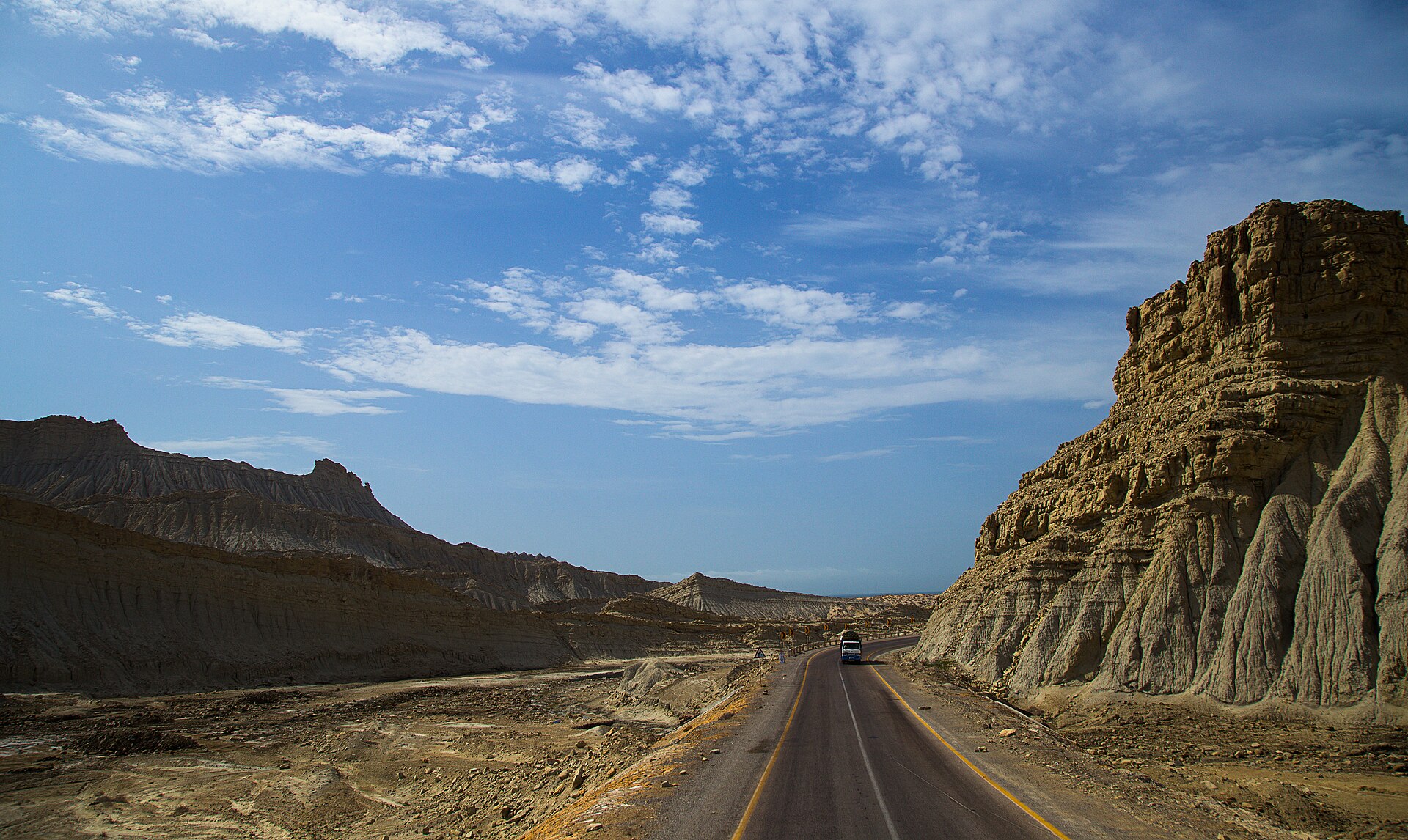
The Makran coastal highway is sold, too often, as a sentence about corridors and ports. The road itself is older than the sentence: a line between Karachi and Gwadar that passes towns where people fish, sleep, argue, and make tea, whether or not a conference in another city is using their name. Drive it as a guest of those towns. Do not drive it as a citizen of a press release.
Gwadar is where I buy flour. If you have come to lecture me about a port, keep driving.
— A shopkeeper off the main road, Gwadar
Start with the hours, not the headline
Leave Karachi early. The first stretch will feel like any Pakistani highway: trucks, heat, a stop for fuel you should not skip. Then the land thins and the sea begins to keep you company on the left. Kund Malir is the photograph everyone already has. It is a real place anyway. Stop, walk on the sand, pay for whatever you drink, and do not stay long enough to turn a fishing stop into a festival of drones. The cliffs will be there without your choreography.
Hingol and the rock formations will try to become the whole story. Let them be an hour. The highway is the hours between named things: a checkpoint, a stretch of wind that pushes the car, a town where you should eat because the next kitchen is farther than your optimism. Fill the tank whenever you can. Carry water. Carry cash. Carry the understanding that this is Balochistan, not a scenic route invented for your holiday.
Ormara, Pasni, the towns that are not the viewpoint
Ormara and Pasni are not amenities. They are towns with fish, schools, and a relationship to the sea that does not require your wonder. Eat what is being fried. Sleep if the day has gone long. Ask before you photograph a harbour. A man mending a net is at work. Work is not a texture. If someone offers tea, sit. If someone does not, do not wander into a lane to improve your pictures. The coastal highway’s manners are the same as Hunza’s, with more heat and fewer apricot trees.
Guest houses here are often extra rooms in a life already running. Treat them as such. Shoes, noise, generators, the hour when the house sleeps — follow the house. Do not bargain as a sport on a road where rooms are scarce and summer is a furnace. If the rate is posted, that is the rate. If it is not, ask once, agree, and stop hunting for a win.
Gwadar is a town with a sea
Arrive in Gwadar without a speech. The harbour, the bazaar, the hammerhead of land that every caption mentions — all of it is ordinary to the people who live there. Buy fruit. Eat fish that was in the water that morning. Walk where you are allowed to walk. The town has been asked, for years, to stand in for a national argument. You are not required to continue that argument with a camera. You are required to pay the bill, speak to people as if they have interior lives, and leave the courtyard — and the jetty — out of any shot you were not invited to take.
There is a version of this trip that treats Gwadar as a future and the present as empty. That version is rude. Children go to school here. Shops open. Someone is repairing a motorbike in a lane that will never be in a briefing. Stay two nights if you can. One night is a raid. Two nights is the beginning of seeing a place that is not only coast and not only policy.
Heat, wind, and the car
Summer on this road is not a vibe. It is a physical fact that will punish a late start and a small water bottle. Drive in the morning. Rest in the worst of the afternoon. Do not perform toughness. The wind can be a gift and a problem; it will sand your mood either way. Check the spare tyre in Karachi, not in a place where the next workshop is a theory. If a stretch feels empty, that is not an invitation to speed. Goats, people, and the army do not appear on your playlist.
Landslides are less the story here than washouts, heat-struck engines, and the occasional closure you will hear about from the last fuel station, not from an app. Ask. Listen. Turn around if you are told to turn around. A coastal highway is still a road with a mood. Your itinerary is not a contract the landscape signed.
How to be a guest in Makran
Dress as if you know you are in someone else’s town. Ask before photographing women, children, boats, graves, shrines. Default to no. Pay local drivers who know the checkpoints and the hours. Do not treat a uniform as scenery and do not treat a fisherman as a symbol of resilience. He is a fisherman. Buy the fish.
- Cash, water, fuel, a spare, and a day of slack. The four things the road will not invent for you.
- Sleep in Gwadar or Pasni in places that are houses. Eat in rooms that were already cooking.
- Do not fly a drone over a harbour, a courtyard, or a checkpoint. This should not need writing down.
- If you only have sentences about a corridor, you have not yet been on the trip.
The return is part of the road
Turning back toward Karachi is not a defeat. It is the other half of the highway. Stop at the same stalls if they were fair. Spend the money you saved by not staying in a place that wanted to be a resort. The Arabian Sea will keep its colour without you. The towns will keep their mornings. Your job is to have passed through as a customer and a guest, not as a narrator of other people’s geography.
Send the guest house a winter message if you can return in a kinder month. Makran, like Hunza, has seasons when the rooms are empty and the sea is still there. That is when a fair rate does the most work. Come back then, slower, with less to prove about having done the coastal highway.
Drive the Makran because the water is on your left and the towns are real. Pay them. Name Gwadar as a place people live. Leave the talking points at the last fuel stop in Karachi.
Keep reading
Related stories
More from this desk, this beat, and the tags on this piece.
Charna Island trip planning: boats, weather and operator checks
Mehreen Ali · 13 Sep 2026 · 15 min
Pakistani textiles explained: ajrak, phulkari, ralli, and beyond
Mehreen Ali · 19 Aug 2026 · 2 min
Readers
The conversation
0 notes
Anyone can leave a note. Guests add a name and email — no account required, and the email is never published.
No notes yet. Yours would be the first.