Pakistani chai snacks: a balanced sweet and savoury table
Build a chai table as an edited composition: one fryer hero, one waiting savoury, one small sweet, and acidity that resets the mouth between cups.
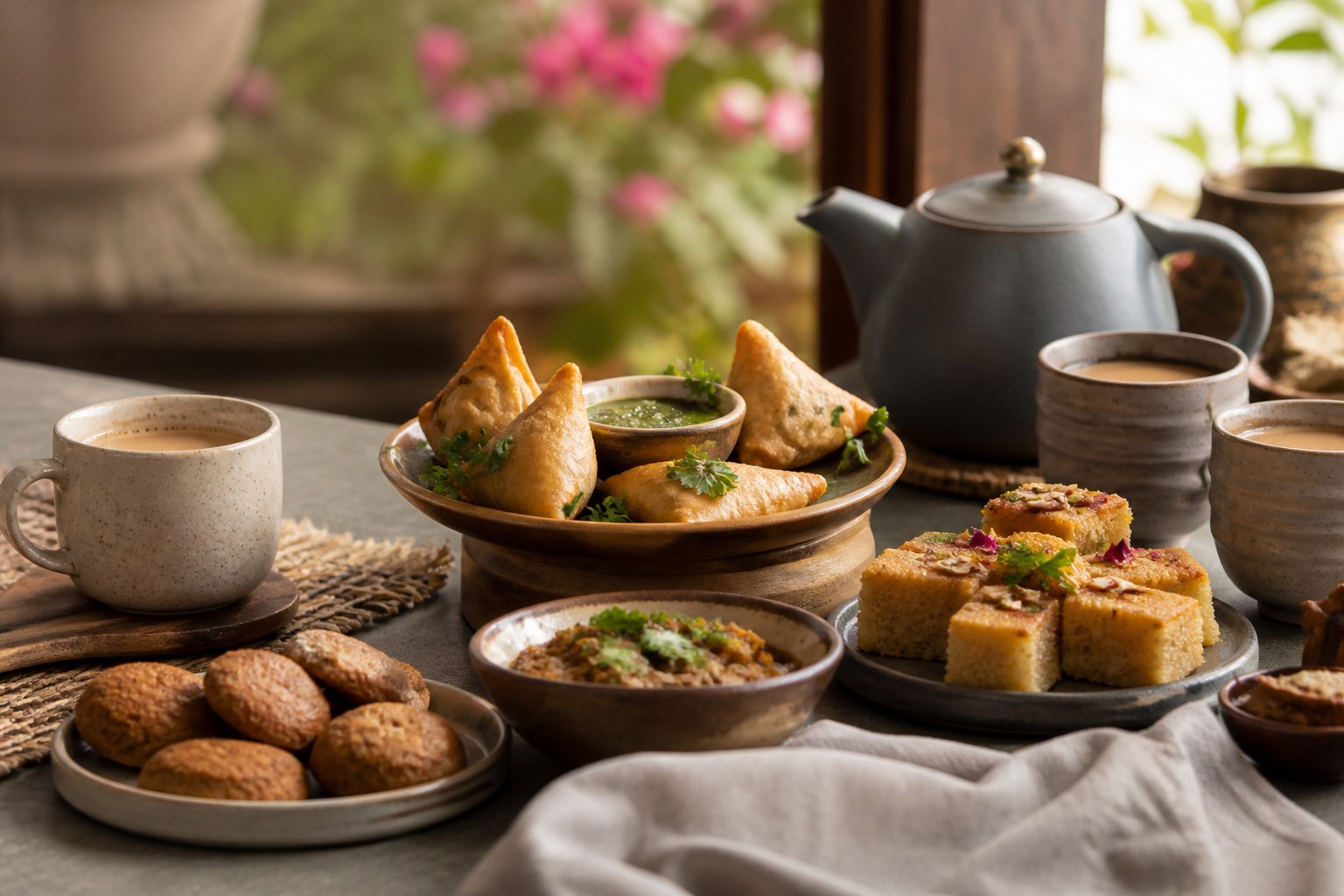
A good chai table is edited. Guests remember the evening when one fried thing arrived hot, one dry savoury waited patiently, one sweet note appeared without becoming a dessert course, and something sharp reset the mouth between cups. They forget the table that tried to recreate an entire bakery and karahi house at once.
This is a composition guide for hosts in Pakistani and diaspora households. It assumes you already know how to make chai. The problem is usually the snacks: too many, too similar, or left in the danger zone while conversation runs long.
The four-part balance
Assign each role once:
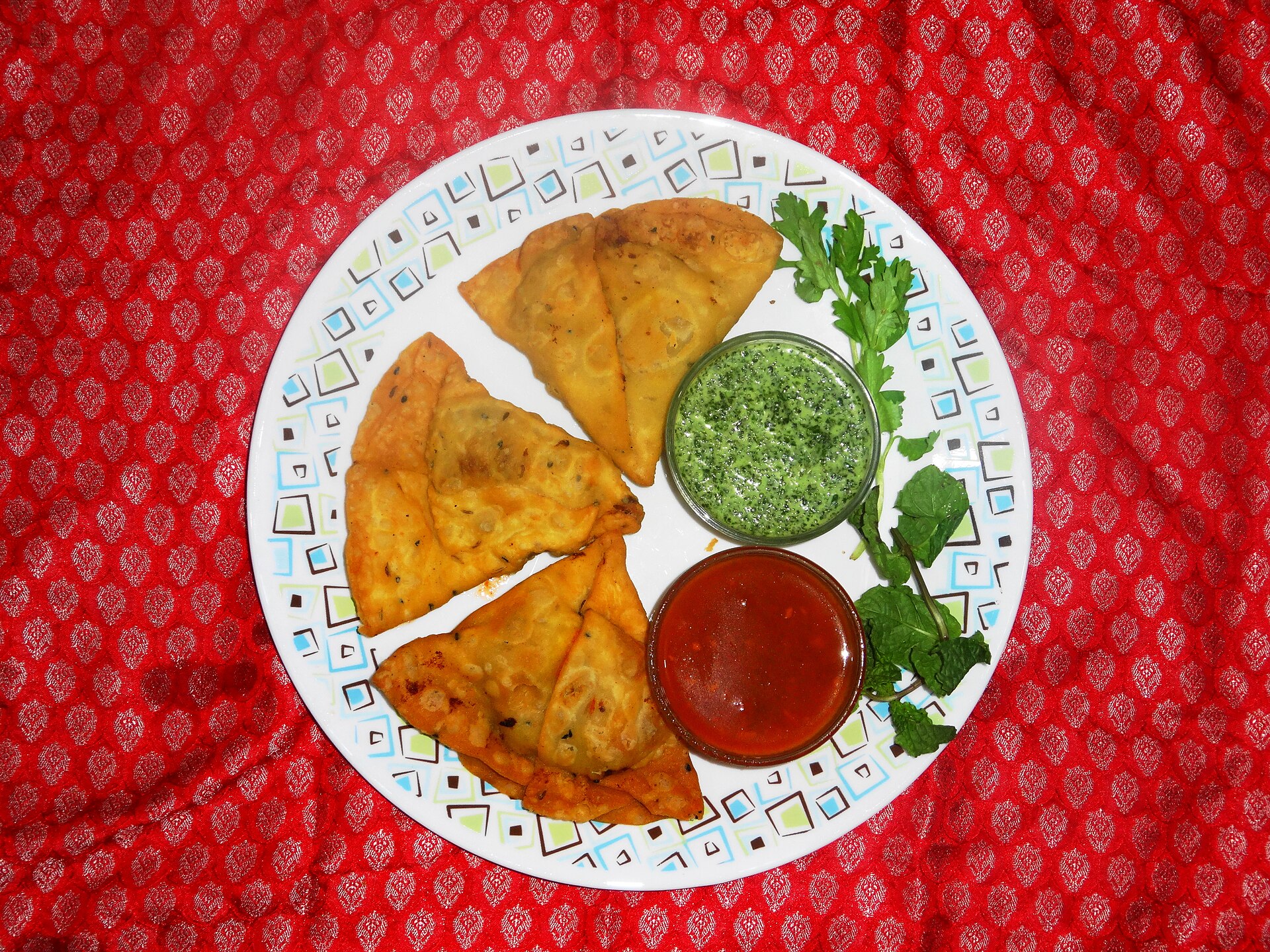
- Fryer hero — samosa, pakora, or another item that must be eaten soon after cooking.
- Waiting savoury — nimco, roasted chana, baked pastry, or biscuits that hold texture.
- Small sweet — one mithai piece, date-and-nut bite, or cake slice cut small.
- Acid or herb punctuation — green chutney, lemon, pickled onion, or fresh mint.
If you want a fifth item, make it fruit or cucumber, not a second deep-fried duplicate. Two fried heroes compete; they do not impress.
Choose one hero from the fryer
Samosas and pakoras earn their legend because heat and crunch arrive together. That also makes them unforgiving. Fry in manageable batches. Drain properly. Serve in waves rather than building a mountain that cools into oil. The USDA FSIS deep-fat frying guidance is aimed at safe handling and oil behaviour in home kitchens; treat hot oil as a hazard, keep children clear, and never leave a fryer unattended while you pour chai.
For mixed vegetarian and meat tables, keep fillings separate and labelled. A guest with an allergy should not have to interrogate a platter of identical triangles. In the UK, the FSA’s allergen information pages explain why clear information matters even in domestic hosting when you invite people beyond your household. In the US, the FDA allergen overview is a useful checklist of major allergens when you shop for commercial pastry wrappers, nuts and spice mixes.
Add a dry savoury that waits well
Nimco, mathri, khara biscuits, baked puff pastries and roasted pulses exist so the table does not depend on the fryer alone. Place them in wide bowls before guests arrive. They buy you time. They also give children and latecomers something to eat without requiring a fresh batch of oil.
Salt level matters more than variety. If the dry snack is as salty as the fryer hero, the chai tastes thin and guests drink water instead. Choose one assertive snack and one quieter one, or serve a single dry snack in a generous bowl.
Shop-bought nimco is legitimate hosting equipment. Taste it before the event; stale oil flavour cannot be rescued by a pretty bowl. Homemade batches freeze better as components than as a finished mixed nimco that has already absorbed humidity.
Sweet should be small, not absent
Chai already carries sweetness for many households. The snack sweet should be a counterpoint, not a second dessert trolley. One tray of gulab jamun that sits in syrup for two hours becomes a different, wetter food than the same sweet served promptly. Prefer pieces that can be lifted cleanly. If you serve something syrupy, give spoons and limit the quantity so it does not dominate the table smell.
Chocolate biscuits and cake slices are legitimate diaspora chai partners. They are not a failure of authenticity. They fail only when they arrive in such volume that nobody has room for the savoury food you worked harder on.
Chutney is the table’s punctuation
Green chutney, tamarind sauce or a sharp onion salad does the work that people describe as “fresh.” Without acid, fried food coats the mouth and the third cup of chai tastes dull. Keep chutney cold until service. Do not leave a dairy-based raita on a warm sideboard for the length of a long visit; follow the FSA’s chilling guidance for perishable dips and return them to the fridge between waves if the gathering runs long.
Holding times without a commercial kitchen
Home hosts do not have hotel lamps. They have honest limits:
- Fried items: cook in batches; aim to serve within minutes, not as a cooling centrepiece.
- Cooked meat fillings waiting to be fried: keep refrigerated until the pan is ready; the FSA’s cooking guidance still applies to thorough cooking.
- Dairy drinks and raita: cold chain or short service window.
- Dry snacks: covered, dry, away from steam from the kettle.
If guests are delayed, pause the fryer and extend the dry snacks. Do not try to hold a finished samosa “warm” on a low oven for an hour and expect the same food.
Tea service that supports the snacks
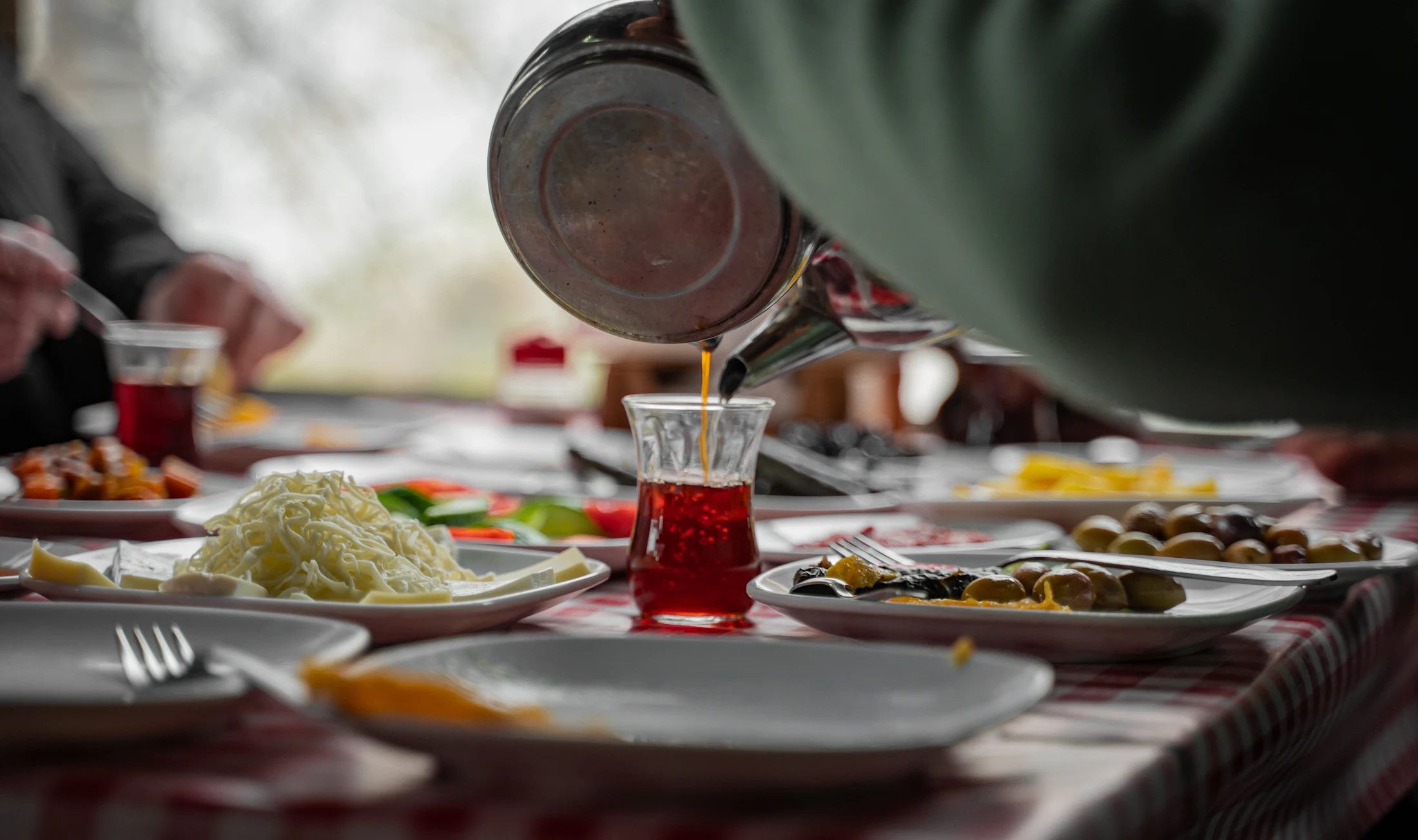
Pour chai in waves. A giant thermos that sits for ninety minutes solves logistics and sometimes sacrifices aroma; a second pot solves aroma and needs a helper. Decide which problem you are solving. Provide a caffeine-light option if elders or children need it—cardamom milk, or a smaller cup—without announcing it as a moral correction.
Seating changes how much food you need. A standing hallway visit needs fewer plates and more napkins. A seated living-room evening can handle a second fryer wave. Match the snack plan to the furniture, not to an imaginary wedding buffet.
Assign roles if the household allows: one person on oil, one on kettle, one on plates. A chai table collapses when the same person must fry, pour, greet and wipe spills without a pause. Hospitality is a system with hot oil in it.
When the evening works, the last samosa is gone while it still crackles, the nimco bowl is half full, the sweet tray looks intentional rather than abandoned, and the chutney dish is empty enough to prove it mattered. That is balance. Scale is optional; editing is not.
Sources and official profiles
Was this helpful?
Keep reading
Related stories
More from this desk, this beat, and the tags on this piece.

Pakistani groceries online in the UK: delivery, chilled food, and substitutions
Hassan Raza · 2 Feb 2026
Readers
The conversation
0 notes
Anyone can leave a note. Guests add a name and email — no account required, and the email is never published.
No notes yet. Yours would be the first.