Pakistani plus-size occasionwear: fit questions shops should answer
Plus-size Pakistani occasionwear shopping should demand garment measurements, grading honesty, support and alteration allowance—not a lecture about looking smaller.
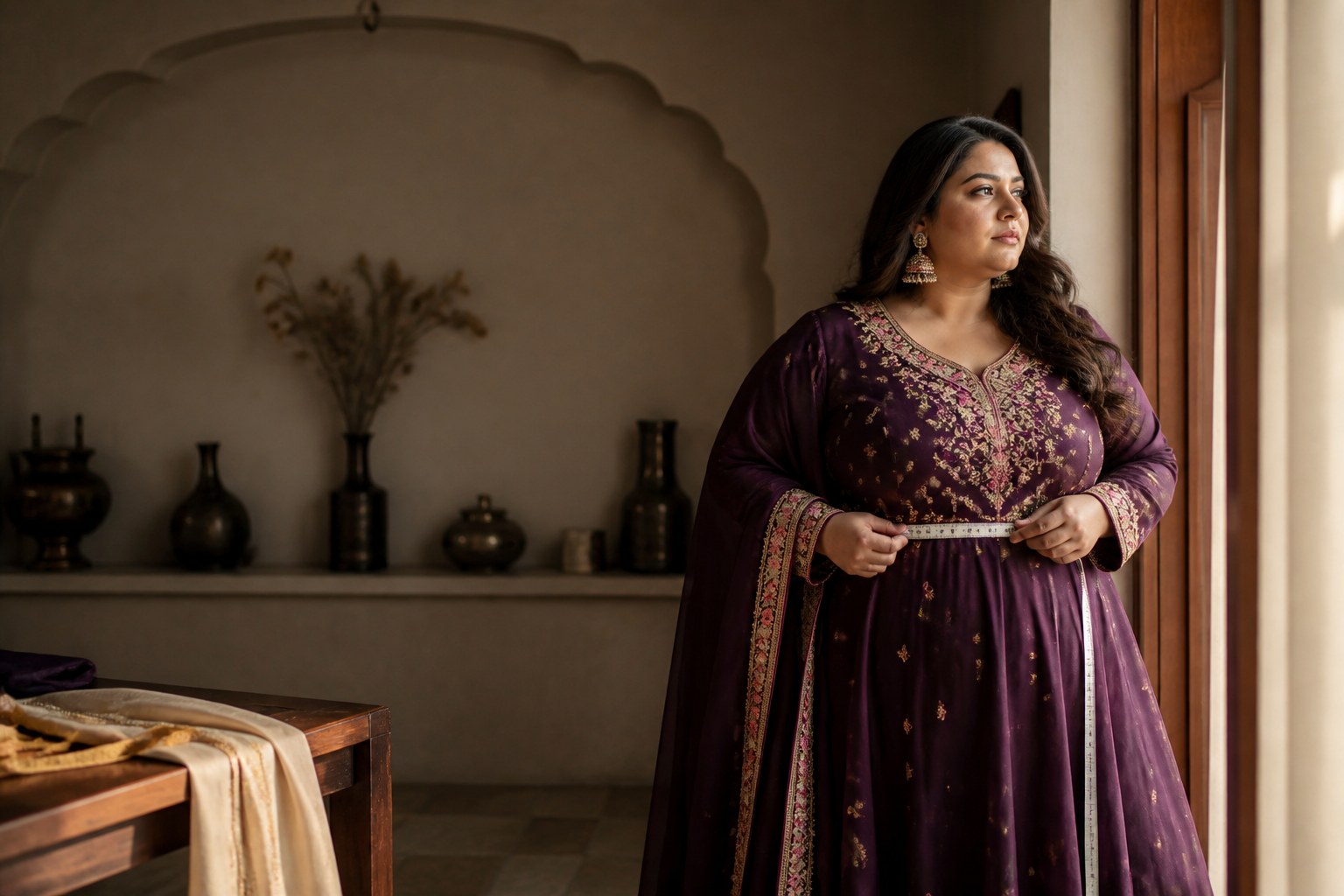
Plus-size Pakistani occasionwear does not need a “slimming” lecture. It needs shops and tailors to reveal garment measurements, pattern grading, support, alteration allowance and where embellishment restricts movement. If a retailer cannot answer those questions, the size chart is marketing, not fitting information.
This article is a question kit for buyers seeking formal and semi-formal Pakistani outfits in larger sizes—online or in person. It does not rank brands.
A size chart is not garment measurements
A chart that says “XXL = 46-inch bust” does not tell you the finished garment’s bust, waist, hip, shoulder width, sleeve girth or length. Ask for finished garment measurements for the exact SKU and colourway you will buy. Cut and grading can differ between light lawn and heavily embroidered organza even inside one “size.”
Grading must happen across the pattern
Scaling a small-size pattern upward only at the waist creates strain at armholes, shoulder slope and hip curve. Ask whether the brand grades blocks properly across sizes. A shop that understands the question will talk about armhole depth, dart placement and side-seam allowance rather than only bust numbers.
Embroidery changes how fabric behaves
Heavy zardozi, mirror work and dense border embroidery reduce give. Ask where embroidery sits relative to bust apex, waist and hip, and whether panels can be opened. Borders at hems limit shortening; borders at side seams limit letting out. Support matters for heavier fronts: inner camisoles, stitched cups, or guidance on foundation garments.
Comfort belongs in the brief
Ask about sleeve mobility when hugging; breathability of lining; dupatta weight and pin points; whether a slit, panel or stretch zone exists for walking; bathroom practicality for multi-piece sets. Modesty preferences are part of fit—say so before embroidery begins.
Returns, alterations and consumer framing
Custom embroidery often means limited returns. Clarify that before payment. UK buyers can read general guidance on faulty goods, changing your mind, and consumer protection rights. US buyers should keep care labels; the FTC’s Care Labeling Rule materials explain care-label expectations for many apparel items. Budget alteration time before the event calendar becomes immovable.
Plus-size occasionwear succeeds when information is sized as carefully as the pattern. Ask for the tape-measure truth.
Sources and official profiles
Was this helpful?
Keep reading
Related stories
More from this desk, this beat, and the tags on this piece.
Readers
The conversation
0 notes
Anyone can leave a note. Guests add a name and email — no account required, and the email is never published.
No notes yet. Yours would be the first.