Pakistani modest fashion beyond the abaya
A proportion-led look at Pakistani modest dressing through shalwar, kurta, dupatta, layering and personal choice.
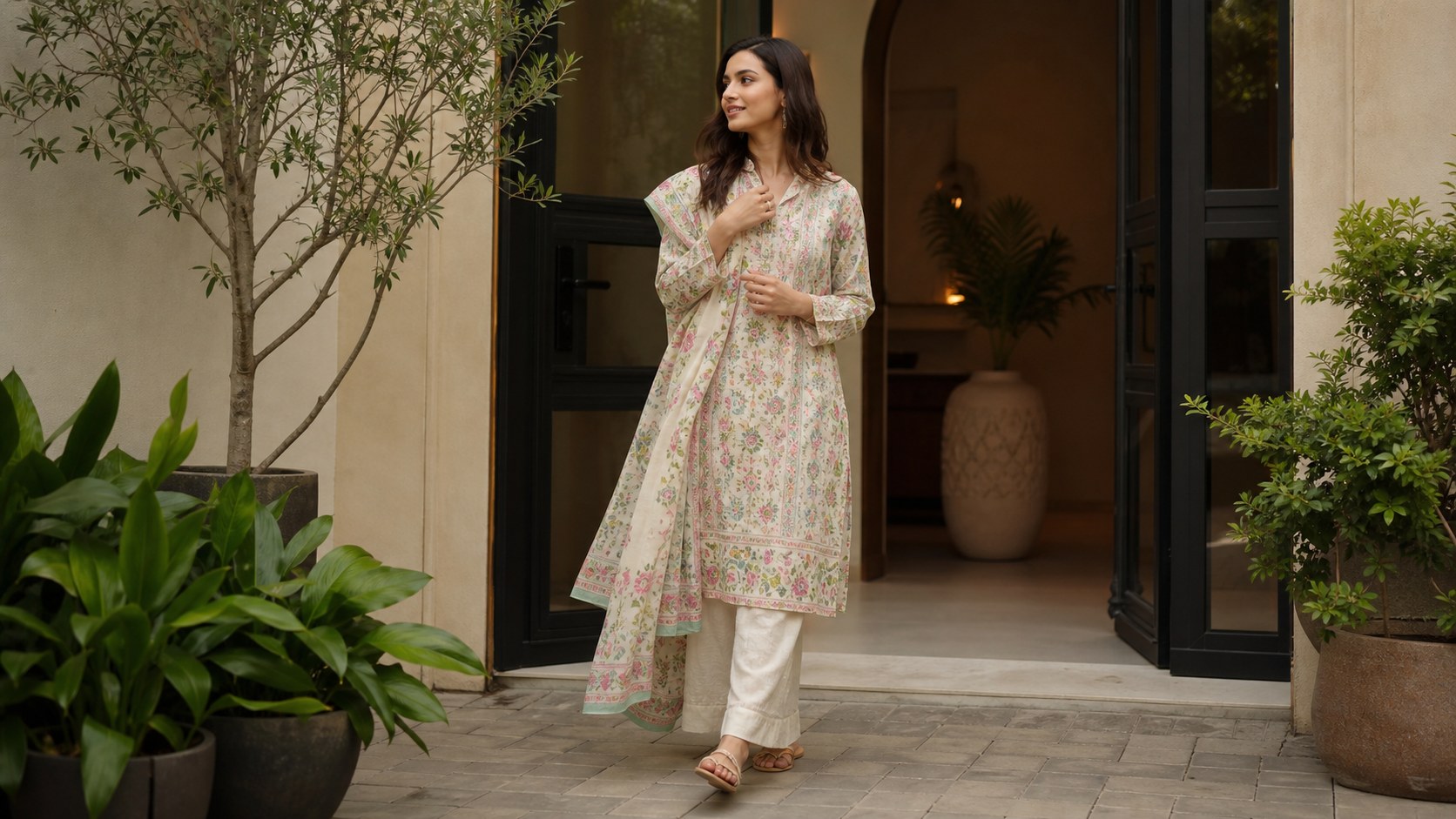
Modesty is not a garment category that begins and ends with an abaya. In Pakistani wardrobes it can be built through the relationship between pieces: the length of a kurta over a shalwar, the volume of a sleeve, the opacity of a dupatta and the freedom to decide which parts of the body receive emphasis.
This page treats modest dressing as proportion, coverage choices and practical agency - not as a single approved uniform, and not as a licence for strangers to grade faith by hem length.
Build coverage into the cut
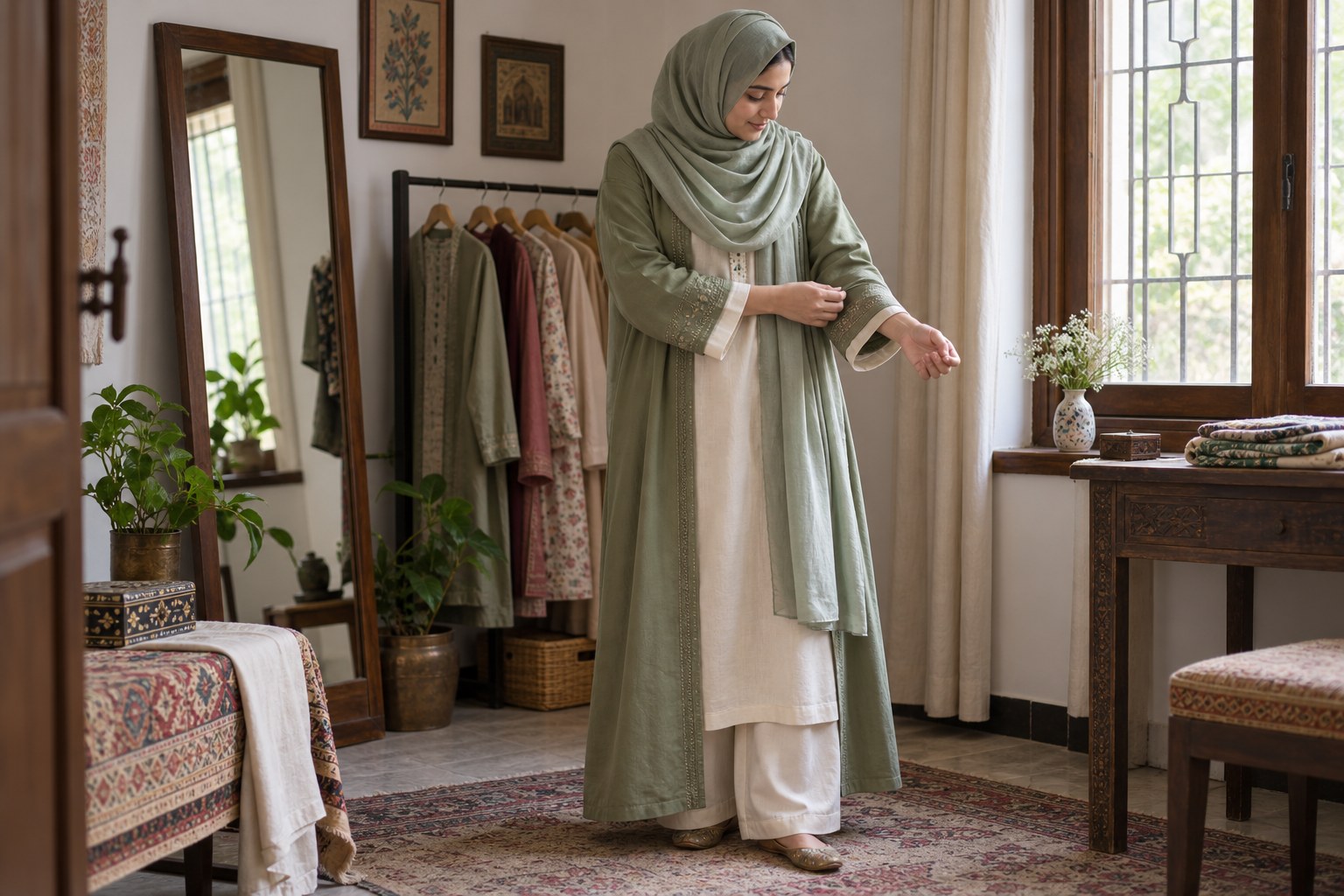
A straight kameez with side slits needs enough hip ease and an underlayer that remains covered in motion. An A-line kurta creates room without clinging. A fuller shalwar or trouser can balance a shorter top, while a long waistcoat adds a vertical layer without duplicating sleeves. These are design decisions, not attempts to hide a body.
Opacity should be checked in daylight with the intended undergarment. Pale lawn may be comfortable yet revealing; a breathable slip can solve that more gracefully than buying a heavier synthetic suit. For work, pockets, washable fabric and sleeves that stay clear of a keyboard are modest-fashion concerns because dignity includes being able to do the job.
| Building block | What it can solve | What to test |
|---|---|---|
| Kurta length and slit | Thigh coverage in motion | Sitting, stairs, wind |
| Shalwar / trouser volume | Balance with shorter tops | Workplace dress codes, shoe clearance |
| Sleeve cut | Arm coverage without heat trap | Raise arms; fabric cling |
| Dupatta / scarf | Head or chest coverage on demand | Stable drape; hand freedom |
| Waistcoat / long layer | Vertical coverage without bulk | Coat compatibility; button gap |
The dupatta is an option, not an apology
Someone may use it for head coverage, neckline coverage, colour, ceremony or not at all. Style it around that purpose. A head-covering arrangement needs stable weight distribution; a shoulder drape should leave the hands free. Neither choice permits strangers to grade the wearer’s faith or respectability.
In mixed diaspora settings, explain your needs to hosts or employers in practical language when necessary - “I keep my arms covered” or “I wear a scarf in the prayer room” - rather than debating abstract definitions of modest fashion.
Workwear and occasionwear use the same principles
At work, choose fabrics that survive the day and cuts that do not require constant correction during meetings. At weddings, coverage still needs movement tests: floor seating, dancing, hugs and photographs. A formal outfit that only remains modest while you stand still is unfinished.
Jewellery can support or undermine the cut. A heavy necklace on a carefully planned neckline may force continuous adjustment. Secure earrings often give presence without disturbing coverage engineering.
Heat, sport and real life
Modest dressing in hot humid weather must include fibre and lining honesty. Coverage that causes heat illness is not virtuous design. Breathable layers, moisture-aware undergarments and looser cuts are part of the craft. For sport, look for garments designed for movement rather than forcing formal shalwar logic into a gym.
Travel adds security and practicality questions: can you move through airports, manage bags and meet dress expectations at destination without a full rewrite of your wardrobe? A long cardigan or shirt-jacket can bridge contexts more calmly than multiple total outfit changes.
Shopping without the abaya-only aisle
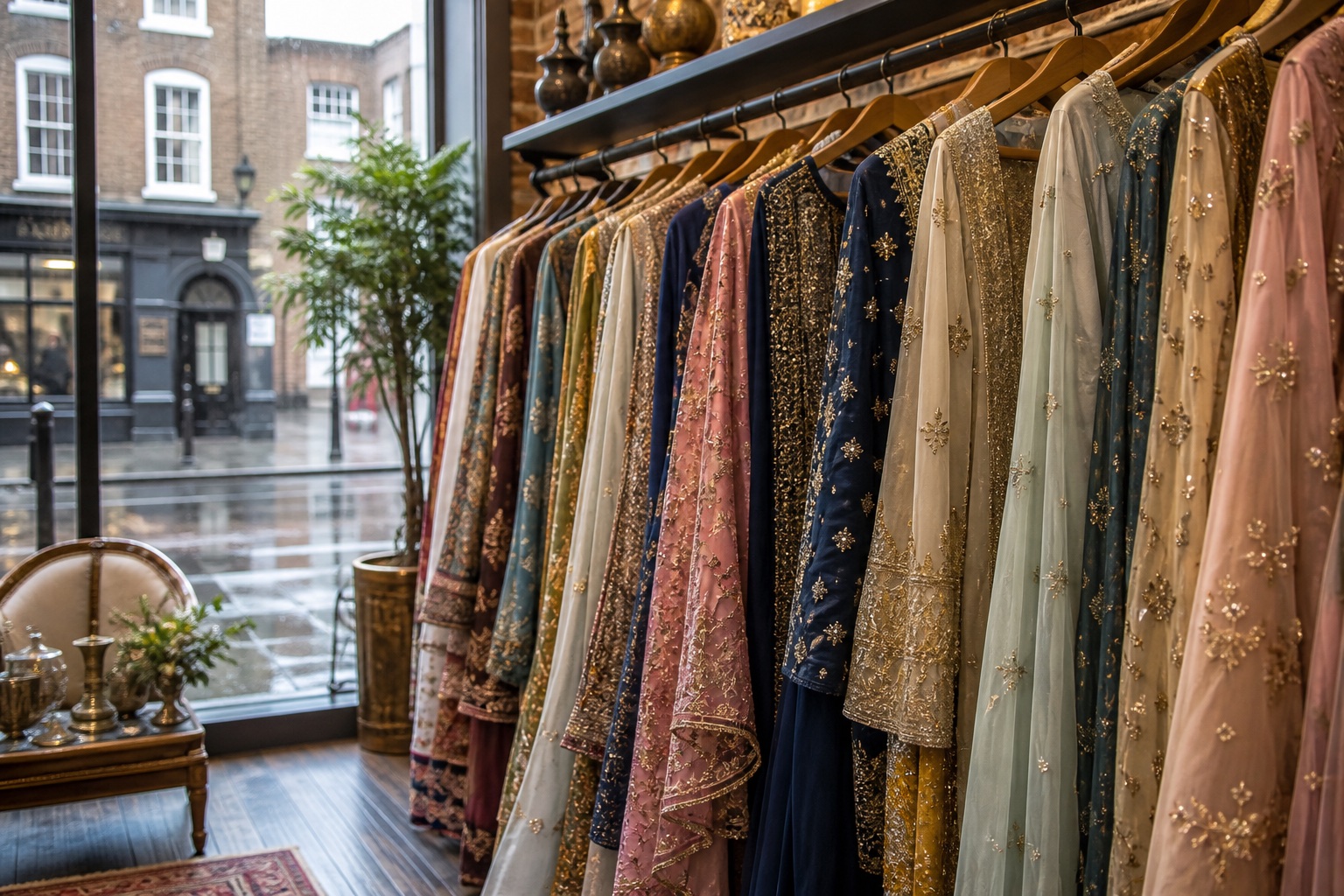
Search for proportion first: longer kameez, trouser options, opaque fabrics, sleeve variety, layering pieces. Try before believing product titles. “Modest edit” tags are marketing. Your daylight opacity test and movement test are evidence.
If you also wear abayas, they can sit alongside shalwar kameez rather than replacing the entire wardrobe. Many people rotate by context: abaya for certain public spaces, shalwar kameez for home and community events, layered separates for work. Continuity of values does not require identical silhouettes every hour.
Community pressure and personal line-drawing
Families disagree. Generations disagree. Online strangers disagree loudly. A useful personal method is to write your non-negotiables - for example sleeve length, opacity, hem behaviour when seated - and treat everything else as flexible aesthetics. That list protects you from endless renegotiation before every wedding.
Do not outsource your line to the most fearful relative or the most performative influencer. Modest Pakistani fashion beyond the abaya is largest when it remains a toolkit: shalwar volume, tunic proportion, layering, head-covering choice, workwear practicality and occasion engineering. The strongest wardrobe offers agency - clothes that sit, walk, pray, commute and celebrate without continuous correction.
Men’s modest dressing notes
Men navigate modest and respectful dressing through kurta length, sleeve coverage, trouser cut and sometimes a cap or scarf in prayer spaces. Workplace translation may mean pairing a clean kurta with tailored outer layers. The same anti-surveillance principle applies: clothes should enable participation, not invite policing contests between relatives.
Fragrance, grooming and fit still communicate care. Modest dressing is not an excuse for neglected shoes or sleeves that block handwashing. Practical dignity includes cleanliness and movement.
Teaching girls and teenagers without fear scripts
If you are helping a young person build a wardrobe, separate safety, school rules and family values from body shame. Teach opacity checks and movement tests as skills. Offer choices within boundaries rather than a single enforced silhouette. A teenager who understands why a slip matters in sunlight is better prepared than one who only hears prohibitions.
Online shopping adds pressure through filtered images. Sit together for the daylight test when parcels arrive. Returning what fails is part of literacy, not wastefulness.
Pakistani modest fashion beyond the abaya is a living practice of proportion and choice. Keep it specific to the wearer’s days - work, prayer, heat, weddings - and it stays humane. Let it become a public exam and it stops being clothing.
Workdays, prayer spaces and two-stage dressing
Choose fabrics that survive meetings without constant correction. For weddings, run coverage through floor seating, dancing and hugs. When ceremony and reception differ, pack a calm ceremony arrangement and a brighter restyle.
Heat, sport and travel
Coverage that causes heat illness is not virtuous design. Use purpose-built modest activewear for sport. Long shirt-jackets can bridge airports and destinations without rewriting the whole wardrobe.
Personal standards without surveillance culture
Write non-negotiables - sleeve length, opacity, seated hem behaviour - and treat the rest as flexible aesthetics. Generosity toward others’ different lines keeps community life livable.
Keep a short written brief before the next purchase: setting, movement, garments already owned, and the single addition that unlocks the most combinations. Test sitting and walking, then stop adjusting at the door.
Share hard-won fit and care lessons with people you dress beside so failures are not rediscovered the night before an event.
Record what worked under real conditions and let that record drive the next choice instead of an unverified trend claim.
Teaching teenagers modest wardrobe skills works better through daylight opacity tests and movement drills than through fear scripts. Offer choices within boundaries. Returning parcels that fail coverage tests is literacy, not wastefulness.
Men navigate respectful dressing through kurta length, sleeve coverage and prayer-space norms without needing identical silhouettes every hour. Practical dignity includes cleanliness, fit and movement.
Shopping without an abaya-only aisle means searching for proportion first: longer kameez options, trouser variety, opaque fabrics, sleeve choice and layering pieces. Product titles that say modest edit are marketing. Your daylight opacity test and movement test are evidence. Abayas can sit beside shalwar kameez as context tools rather than as a single compulsory uniform for every hour.
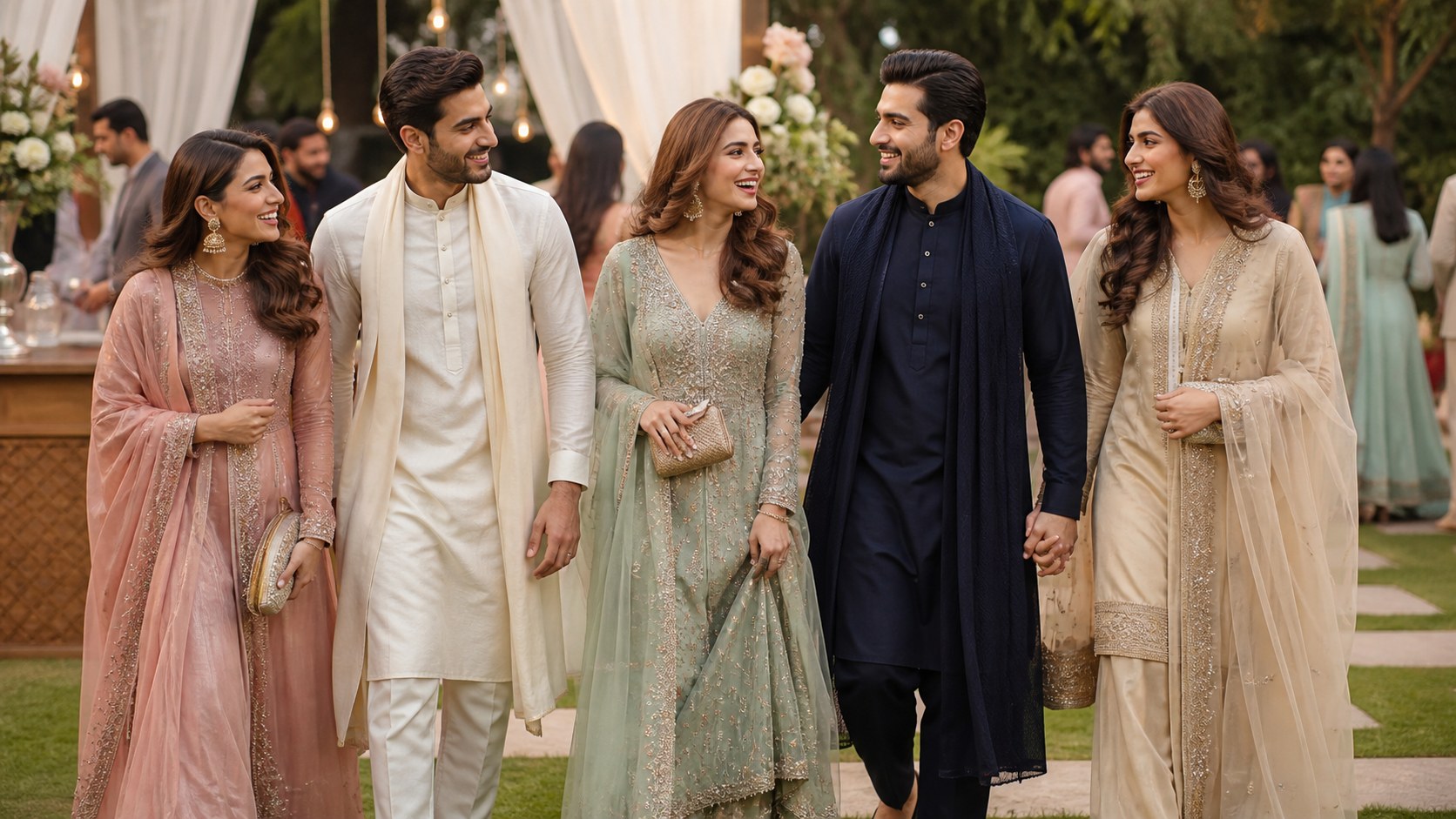
At celebrations, joyful colour remains welcome when engineering stays stable. Avoid bridal silhouette copying. Keep the toolkit large: shalwar volume, tunic proportion, layering, head-covering choice, workwear practicality and occasion planning.
Keep notes on real wear conditions and let those notes guide the next decision faster than another unverified trend claim.
Return to a practical test - sit, walk, climb, carry - before calling any choice finished.
Start from the situations you live through - commute, prayer, heat, celebration - then choose proportions that make those situations easier. Agency is the point of a wardrobe large enough to hold more than one modest strategy.
Filed under
Was this helpful?
Keep reading
Related stories
More from this desk, this beat, and the tags on this piece.
Pakistani plus-size occasionwear: fit questions shops should answer
Ayesha Khan · 31 Jan 2026
Readers
The conversation
0 notes
Anyone can leave a note. Guests add a name and email — no account required, and the email is never published.
No notes yet. Yours would be the first.