Runway
How to buy an original Pakistani designer suit online
A practical authenticity trail for checking the product code, seller, components, price and paperwork before buying Pakistani designer clothes online.
By Ayesha Khan
Editor-in-chief
2 min read
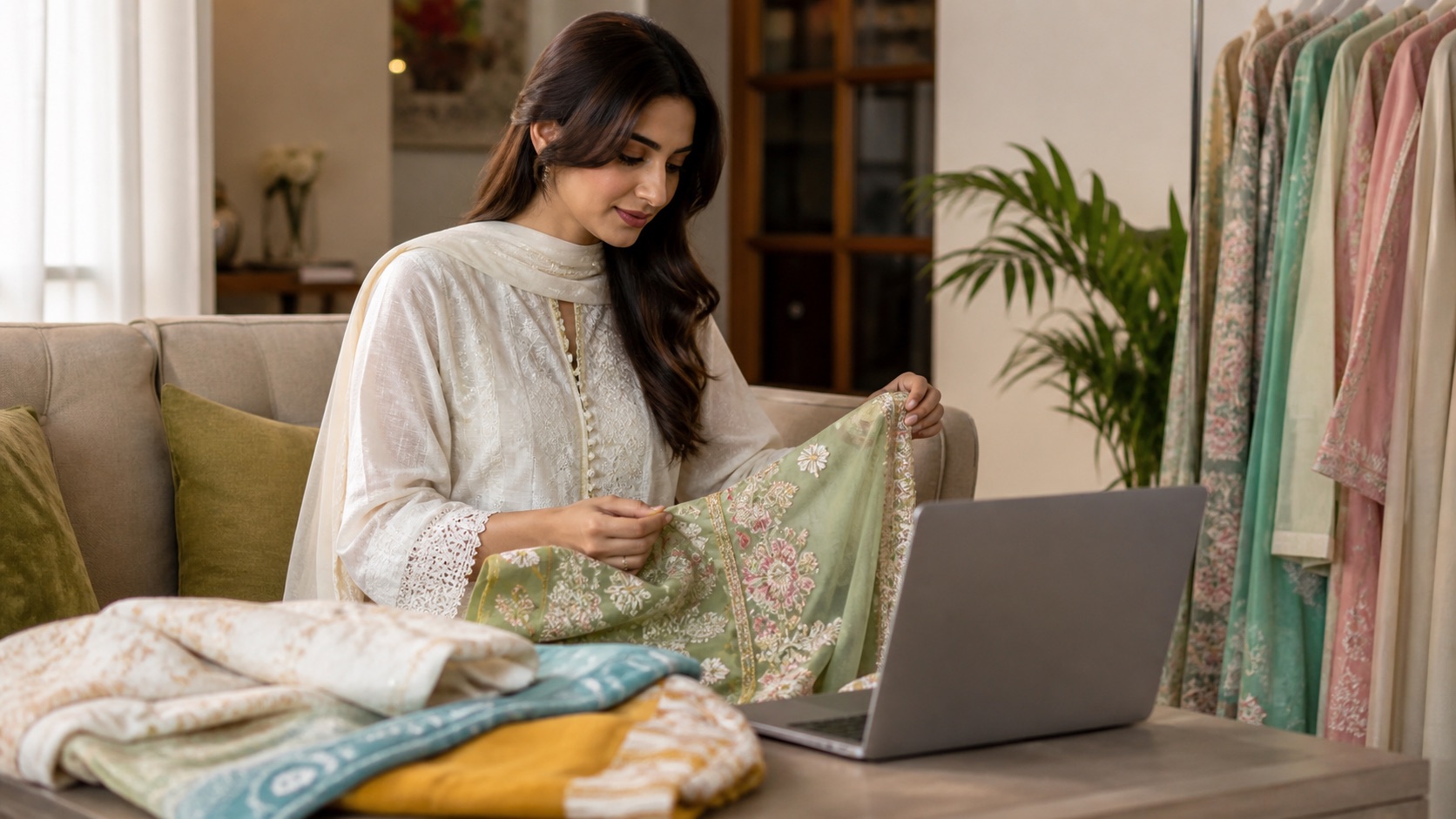
A stitched label is evidence of a stitched label. It is not, by itself, proof that the suit, embroidery, fabric and seller came through the designer's supply chain. Online authenticity is better treated as a trail: the exact product should lead back to an official collection, and the seller should be able to explain how it reached them.
Begin on the designer's own site
Find the collection name, product code, colour, fabric description and included components. Save the official page even if it is sold out. Compare motif placement, borders, neckline finishing and dupatta—not only the campaign image, which counterfeit listings can copy. If the brand publishes authorised retailers, use that directory. Otherwise, ask the brand whether it recognises the seller before making a high-value purchase.
Make the listing identify the actual object
“Inspired”, “replica”, “master copy” and “designer lawn” do not mean original. Nor does an unexplained “100% authentic” badge. Ask for photographs of the item being dispatched, its packaging, care label and product code. For unstitched fabric, confirm every piece and its dimensions; for stitched clothing, request finished-garment measurements and alteration history.
| Signal | What it can establish | What it cannot establish alone |
|---|---|---|
| Product code matches | The listing refers to a real design | That the supplied item is genuine |
| Brand packaging | The seller has packaging | The origin of the garment inside |
| Very low price | A reason to investigate | Proof of a bargain or a fake |
| Traceable invoice | A record of seller and promise | Automatic authenticity |
Preserve the transaction
Pay through a method with an appropriate dispute route, keep the invoice and screenshot the description, dispatch promise and return policy. A social-media account may be a shop window, but direct messages alone are a weak receipt. The UK Intellectual Property Office notes that counterfeit goods online may be poorly made and can expose buyers to financial and personal-data risks; its consumer guidance lists common warning signs.
When the parcel arrives, film or photograph the opening, then compare it with the saved official record before removing tags or tailoring it. Inspect print alignment, embroidery finishing, fabric composition, colour and all promised pieces. If something differs, describe the mismatch precisely. “The dupatta border is missing” gives a seller, payment provider or consumer adviser something concrete to examine; “it feels fake” does not.
Sources and official profiles
Filed under
Keep reading
Related stories
More from this desk, this beat, and the tags on this piece.
How to compare two Pakistani designer outfits without chasing labels
Zainab Noor · 13 Sep 2026 · 15 min
Lawn campaign photography versus the stitched outfit: what to check
Zainab Noor · 13 Sep 2026 · 16 min
Pakistani fashion-week vocabulary: couture, luxury pret, formal and ready-to-wear
Zainab Noor · 13 Sep 2026 · 15 min
How to read a Pakistani designer collection before buying from it
Zainab Noor · 13 Sep 2026 · 16 min
Readers
The conversation
0 notes
Anyone can leave a note. Guests add a name and email — no account required, and the email is never published.
No notes yet. Yours would be the first.