Luxury pret versus formal wear: what Pakistani labels mean
A plain-language explanation of Pakistani luxury pret and formal wear that focuses on production, alteration and occasion value.
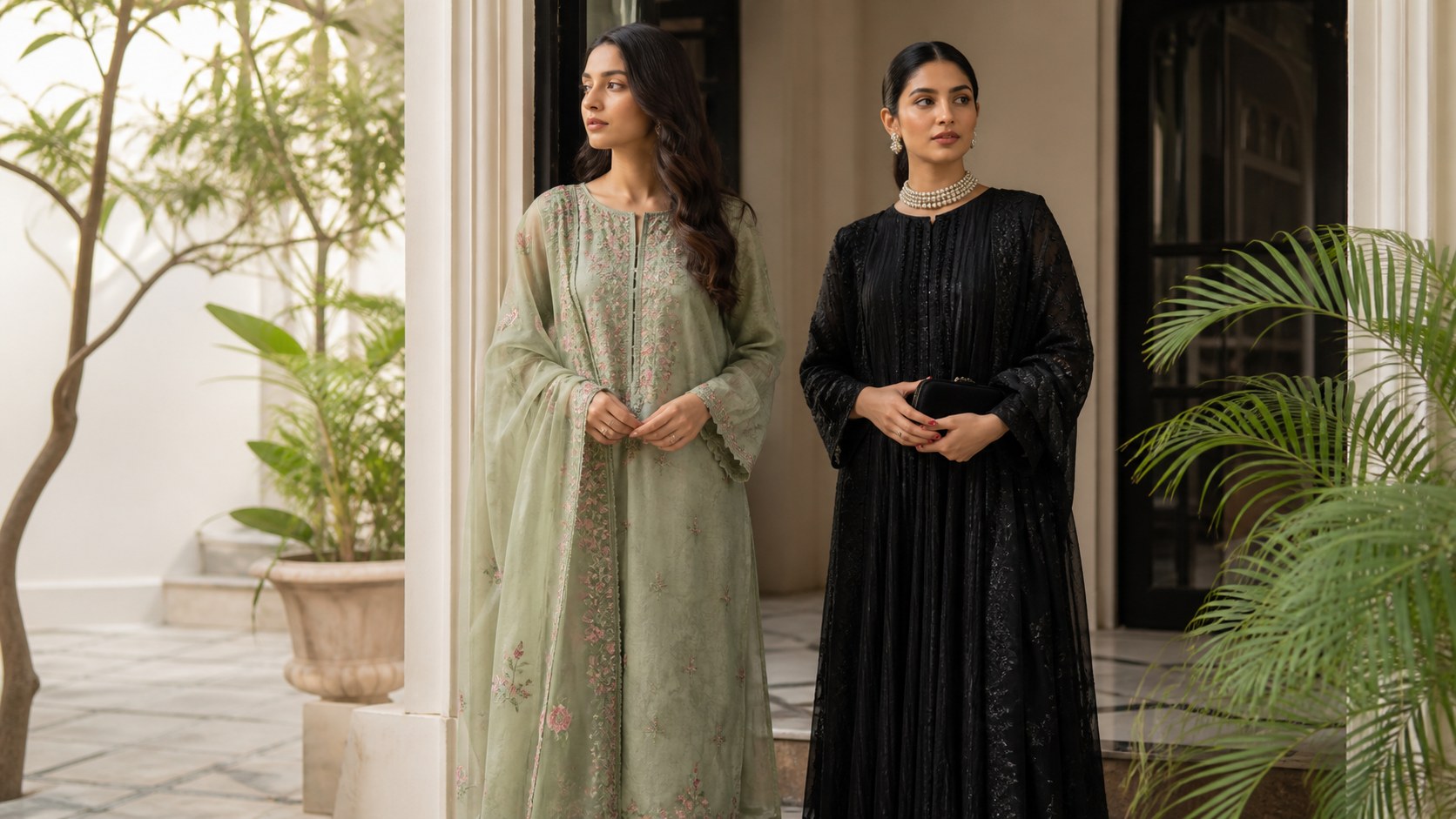
“Luxury pret” and “formal” sound like steps on a single staircase. In practice, Pakistani brands use them as merchandising categories, not regulated grades. One label’s luxury pret may contain more handwork than another label’s formal line. Buy the garment described, not the shelf it sits on.
Understanding the vocabulary helps you compare lead times, alteration risk, price and occasion fit without mistaking marketing hierarchy for quality law.
What the labels usually imply
| Question | Luxury pret often means | Formal often means |
|---|---|---|
| Availability | Standard sizes or limited ready-to-wear runs | Ready-to-wear, made to order or customised |
| Surface work | Elevated fabric, print and controlled embellishment | Denser embroidery, hand-finishing or occasion materials |
| Fit risk | Size-chart and stock consistency matter | Measurements, fittings and written specifications matter |
| Timeline | Usually tied to dispatch and alterations | May include production, fittings and handover stages |
| Care | Often more home-care friendly, but not always | More likely to need specialist cleaning |
Ask what happened to this exact garment
Request fibre content, lining, component list, method of embellishment and finished measurements. “Hand embellished” may describe selected details rather than the whole surface. A campaign photograph cannot show seam finish, weight or whether the trouser and slip are included.
For unstitched or semi-stitched formal sets, confirm every piece and its dimensions. For stitched luxury pret, request garment measurements and alteration history if the piece is a sample or return. Keep screenshots of the product page the day you order; pages change.
Price the route to wearable
Add delivery, duties, local tailoring, specialist cleaning and the chance of repeat use. Luxury pret can be better value when it arrives predictably and separates easily for restyling. Formal wear earns its premium when construction, craft and service matter to your event - not simply because the category name sounds higher.
A lower quoted formal that needs three rounds of motif-aware alteration may exceed a higher quoted pret that fits with a simple hem. Compare totals, not adjectives.
Alteration potential is the hidden grade
Before paying, identify what can be altered without cutting a border or displacing a motif. Shoulders and embroidered armholes are harder to rebuild than plain side seams. Ask about seam allowance. The most useful distinction is not pret versus formal. It is whether the seller’s promise is specific enough for you to inspect when the clothes arrive.
Occasion mapping without snobbery
- Daytime nikah or office party: often luxury pret or refined everyday elevated with jewellery.
- Mehndi: movement-friendly pret or lighter formal.
- Baraat: formal construction may justify itself through weight, structure and photograph density.
- Walima: either category can work; dinner comfort may favour the less rigid option.
Family pressure sometimes treats “formal” as mandatory respect. Respect can also look like arriving on time in well-fitting pret that lets you participate. Decide with the hosts and the venue, not with fear of a word.
Online category traps
Filters labelled formal, luxury pret, bridal and festive overlap. A “formal” filter may return printed pret; a “bridal” filter may return heavily marketed guest wear. Read the product block: fabric, piece count, embellishment placement, size type and return window.
Consumer records matter when categories mislead. Keep invoices and product descriptions. UK buyers can use Citizens Advice consumer guidance for ordinary purchase problems; US buyers can use the FTC’s online shopping guidance for shipping and return literacy.
Boutique versus designer house language
Multi-brand boutiques may use house tags differently from the designer’s own site. Cross-check the garment’s code and description on the designer’s official catalogue when authenticity and category matter for a high-value buy. Category words are sales tools; product codes and construction details are closer to evidence.
If a salesperson cannot explain whether a piece is machine embroidered, hand finished, fully lined or partly lined, slow down. Silence is information.
Building a wardrobe across categories
Many people need both: pret for repetition and one or two formals for peak ceremonies. Let pret carry the year. Let formal carry the moments that justify cleaning bills and fitting appointments. Mixing those jobs creates a cupboard of stressful almost-right clothes.
When you try something on, ignore the shelf sign for sixty seconds. Ask only: does this fabric, weight, finish and fit match the day I claim I will wear it? If yes, the category label can come along for the receipt. If no, no adjective will repair it after the courier leaves.
Bridal adjacent categories and guest risk
Some lines labelled formal are cut and embroidered like bridalwear at a slightly lower density. Guests who buy them without checking silhouette language can accidentally approach bridal signals. Look at volume, red intensity, jewellery pairing suggestions and campaign styling. If the lookbook model is presented as a bride, ask whether the same garment reads as guest wear in your family context.
Luxury pret for guests often succeeds because it is easier to restyle across ceremonies. Formal pieces can still be restyled, but heavy construction may resist casual second outings. If your year includes three weddings and one Eid, pret’s repeatability may matter more than a single formal’s density.
Men’s categories follow similar merchandising logic: waistcoat sets, sherwani, luxury kurta. Shoulder fit and sleeve length still outrank the word on the hanger. A poorly fitted sherwani labelled formal is not more respectful than a well-fitted kurta labelled pret.
Reading quality beyond the category word
Turn the garment inside out. Look at seam finishes, lining attachment, motif backs and whether beads are secured. Weight should feel intentional rather than like glue and short cuts. Smell the cloth; heavy chemical finishes can signal finishing shortcuts that later irritate skin in heat.
Compare two category neighbours in the same shop when possible. The differences you can feel - hand of cloth, drape, closure quality - teach more than a glossary. Take notes on your phone so later online shopping has a bodily reference point.
Category literacy protects budgets and calendars. It will not replace fittings, consumer records or honest occasion mapping. Use it as a decoder, then return to the garment in your hands and the day on your calendar. Those two facts outrank every shelf sign.
Bridal-adjacent formal and guest risk
Some formal lines are cut like bridalwear at slightly lower density. Guests can approach bridal signals accidentally if they ignore silhouette language. Review volume, colour intensity and campaign styling before buying.
Luxury pret often restyles more easily across a year of weddings and Eid. Match category to calendar, not only to aspiration.
Sample sales and unknown alteration histories
Ask what changed on a sample and inspect motif alignment. A discount fails if shoulders cannot be saved. Cross-check product codes on a designer’s official catalogue when authenticity matters.
Men’s category language
Shoulder fit and sleeve length outrank hanger words. A poorly fitted sherwani labelled formal is not more respectful than a well-fitted kurta labelled pret. Ignore the shelf sign for sixty seconds and ask whether fabric, weight, finish and fit match the day you will wear it.
Keep a short written brief before the next purchase: setting, movement, garments already owned, and the single addition that unlocks the most combinations. Test sitting and walking, then stop adjusting at the door.
Share hard-won fit and care lessons with people you dress beside so failures are not rediscovered the night before an event.
Record what worked under real conditions and let that record drive the next choice instead of an unverified trend claim.
Useful questions sound like specifications: embroidery method, lining extent, finished length for a named size, and whether the waist can move without opening a border. Unuseful questions sound like status contests about which shelf is more premium. Premium is not a measurement.
Over a year, notes on garments you walked away from become a personal decoder no lookbook can replace. Category literacy protects budgets only when attached to construction facts and wearable dates.
Compare totals to wearable, including delivery, duties, tailoring and cleaning, before congratulating a campaign price. Category words travel on hangers; construction facts decide whether the clothes survive the day you named when you paid.
Sources and official profiles
Filed under
Was this helpful?
Keep reading
Related stories
More from this desk, this beat, and the tags on this piece.

Readers
The conversation
0 notes
Anyone can leave a note. Guests add a name and email — no account required, and the email is never published.
No notes yet. Yours would be the first.