Farshi shalwar styling guide for modern wardrobes
A proportion and movement guide to wearing the farshi shalwar while respecting the garment’s dramatic floor-length line.
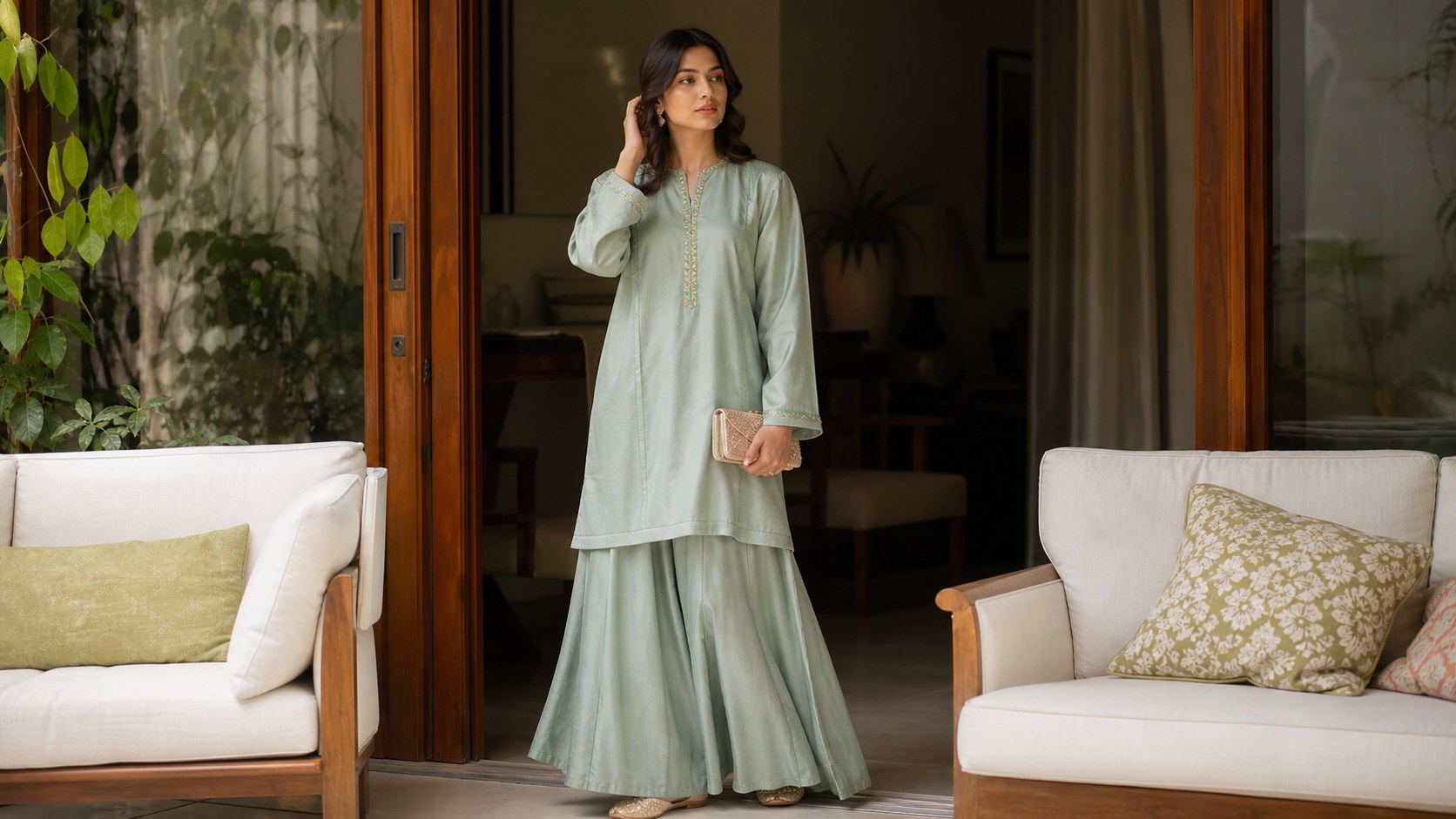
The farshi shalwar is supposed to meet the floor. Removing that fact turns it into another wide trouser; ignoring it turns a doorway into a hazard. The styling challenge is to preserve the trailing line while deciding when and where you can actually manage it.
The word farshi relates to Persian farsh, “floor.” Historical and museum documentation of farshi paijama associate the trailing, abundantly flared trouser with North Indian court dress, especially Lucknow and related centres in the nineteenth century. The Victoria and Albert Museum’s Lucknow farshi paijama ensemble from about 1830–40, in silk muslin with gold and silver braid, shows drama built from cloth quantity, panel logic and finish rather than from a modern flat-lay. Encyclopaedic summaries often mention large historical fabric quantities and the practical habit of lifting and folding excess length while walking. Treat those figures as context for why the garment feels architectural, not as a mandatory yardage quote for a contemporary pret piece.
Pakistani festive fashion has repeatedly revived farshi shalwars in lighter cloths and lighter embroidery so the sweep can survive ordinary floors, cars and rented halls. The revival only works when fittings respect gravity.
Begin at the waist and shoe height
The garment needs enough structure to hold pleats or panels without dragging the waistband downward, but a bulky drawstring under a short kameez can distort the front. Fit the waistband with the underlayer you will wear. Mark intended shoe height before the final hem is set. A farshi cut for flats will flood over a heel; a hem rescued for heels looks cropped and anxious with flats.
Compare both legs for length and flare balance. Borders can make one side swing harder. Practise turns in both directions on the flooring you expect - carpet, stone or temporary dance floor. If you are commissioning the piece, ask for a basted hem walk before final finishing and bring the shoes to that appointment.
Let the kameez reveal the construction
A short kurti exposes pleating or panel work and gives the shalwar visual authority. A knee-length kameez creates a calmer column and may feel easier for a first attempt. Very long tops can work, but they hide the transition and stack two moving hems. Photograph the side view as well as the front.
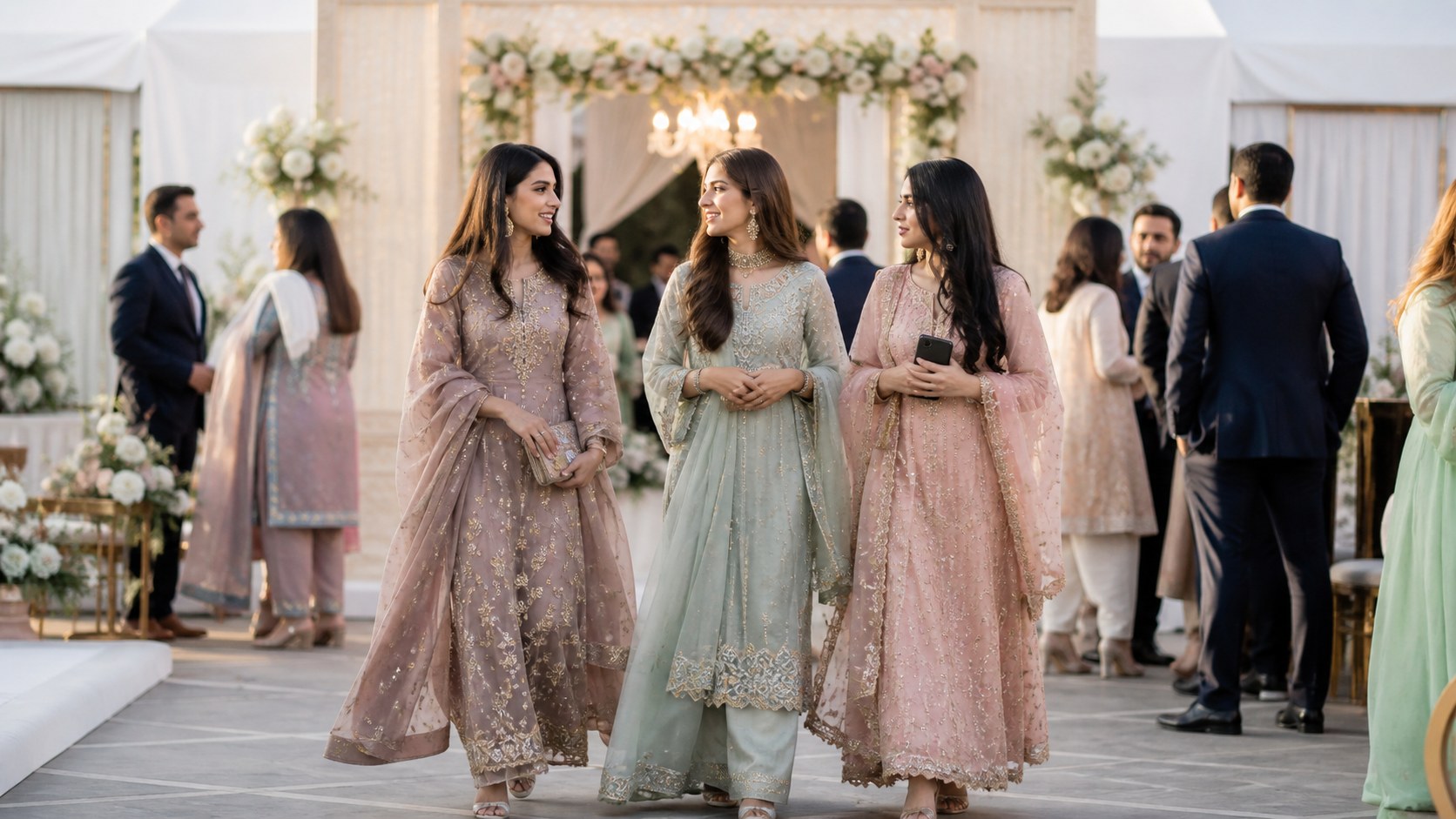
Contemporary restyles pair farshi shalwars with shirts, jackets or simple short kurtas. Those experiments succeed when the trouser remains the point. If the top is also maximally embellished and oversized, the floor line has to fight for attention. Jewellery should usually stay quieter than the hem; let one area lead.
Fabric decides the pace
Soft cotton and silk blends fold close and recover after sitting. Organza and stiff tissue create architecture but demand space. Dense borders increase swing and can strike the opposite ankle. Walk a figure of eight, climb one step and sit without lifting the whole garment. Those movements reveal more than a static boutique mirror.
For a wedding entrance, keep one hand free to guide length and appoint a trusted person for stairs or crowded photographs. For repeat wear, style the same shalwar with a plain short kurta and restrained jewellery. Modernising it does not mean erasing excess; it means choosing settings where excess can be enjoyed.
| Setting | Farshi-friendly? | Adjustment |
|---|---|---|
| Seated dinner, clear floors | Often yes | Practise rising from the chair |
| Garden mehndi, damp grass | Risky | Shorter related wide shalwar or constant lift plan |
| Mosque stairs / narrow aisles | Needs plan | Assigned helper; quiet side gather |
| Office commute | Usually no for true trail | Reserve floor length for evenings |
Hem management without killing the line
Historical wearers often lifted and folded trailing length while walking, keeping one hand free. Practise a quiet side gather before stairs, cars and escalators. Permanent “up” hacks that shorten the garment destroy the point of a farshi; temporary lifts for practical moments are different from rewriting the hem.
Grass, wet British pavements and marble lobbies punish unprotected trails differently. A farshi at a seated dinner can be spectacular; the same hem through a muddy garden may become a cleaning bill. Choose venues consciously. If you must cross wet ground, lift early rather than washing mud through embroidery later.
Footwear, balance and the emergency flat
Flat or low khussas often partner better than high heels because the cloth already supplies drama. If you wear a heel, set the hem to that heel and keep a flat emergency pair that does not make the trail dangerous. Walk, stop and turn before deciding you are ready for a crowded entrance. Blisters under a farshi hem are harder to treat discreetly than blisters under a straight trouser.
Care and storage
Hang or carefully fold with tissue at crease lines. Lift dry mud before wiping. Embellished borders may need professional cleaning; do not assume a delicate cycle is gentle enough for metal thread. Store away from damp walls. The silhouette’s beauty is cloth in motion; storage should preserve the panels that create that motion.
If you need transport practicality every day, wear a related wide shalwar with a cleaner hem for commuting and reserve true floor-farshi length for controlled evenings. Honesty about the cut prevents disappointment and keeps the dramatic version special.
Styling formulas that respect the garment
- Short plain kurti + farshi shalwar + one strong earring.
- Tucked shirt + light farshi shalwar + slim belt only if the waist finish can take it.
- Embellished short kurti + quieter farshi field + minimal neck jewellery.
- Jacket layer for cold lobbies that clears the flare rather than crushing it.
Farshi styling in a modern wardrobe is less about costume drama and more about disciplined proportion: waist stable, shoes decided, hem intentional, top quiet enough to let the floor line speak, and a movement plan for doors and stairs. Meet those conditions and the garment’s historical extravagance becomes wearable rather than theatrical liability.
The final test is ordinary: can you walk to a chair, sit, rise, greet someone and climb three steps without the outfit becoming the only subject of conversation? If yes, you have styled a farshi shalwar. If not, fix engineering before adding more embellishment.
How farshi differs from gharara and sharara in wear
A gharara breaks at the knee; a sharara flares earlier as a wide trouser; a farshi shalwar typically falls with relative control through much of the leg before releasing into floor-pooling volume. In practice, shops sometimes blur names. Ignore the tag long enough to look at where volume begins and whether the cloth is meant to trail. If there is no intentional floor pool, you are simply styling a wide shalwar - still valid, but a different assignment.
That distinction matters for hem appointments. Trailing length needs shoe-height truth and a movement plan. Fashionable wide trousers need clearance and washability. Mixing the two goals in one unfinished hem is how people leave fittings disappointed.
Family heirloom farshi pieces may be heavier than modern pret versions. Before wearing an inherited garment to a rented hall, check weak seams, metal thread breakage and whether the waist finish still matches your body. Heirlooms deserve conservation honesty, not forced revival on a dance floor.
Photographing and documenting a farshi look
Side and rear photographs matter more than front studio poses because drag and pooling show there. If you are buying online, request those angles with the model walking. If you are the wearer, record a short video on your phone after the final fitting. Still images flatter; video tells the truth about steps.
When travelling with a farshi shalwar, pack it so panels are not crushed under denser embroidery from another outfit. A breathable garment bag and tissue at fold lines help. Unpack and hang on arrival before steam. Rushing from suitcase to baraat is how carefully set hems crease into accidental asymmetry.
Styling is complete when the garment can enter a room, cross it and leave it without becoming a hazard or a full-time job. That standard is stricter than looking dramatic in a doorway, and it is the standard that keeps farshi shalwars alive in modern wardrobes.
Buying checklist for a first farshi shalwar
Ask where the flare intensifies, how the waist closes, whether lining is full or partial, and how the seller defines “farshi” in centimetres of trail beyond the shoe. Request walking video. Confirm cleaning method before paying. Price alterations into the purchase. If the piece is online-only, compare return windows using ordinary consumer guidance and keep screenshots of the hem description.
Try the garment with the jewellery and bag you intend to carry. A clutch in one hand and a trail in the other is a choreography problem. Crossbody bags can catch panel edges. Solve those collisions at home.
Finally, decide the first outing carefully. A seated family dinner is a kinder debut than a crowded mehndi. Confidence with the hem is a skill; give it a manageable first stage.
Keep a short written brief before the next purchase: setting, movement, garments already owned, and the single addition that unlocks the most combinations. Test sitting and walking, then stop adjusting at the door.
Share hard-won fit and care lessons with people you dress beside so failures are not rediscovered the night before an event.
Sources and official profiles
Filed under
Was this helpful?
Keep reading
Related stories
More from this desk, this beat, and the tags on this piece.

Readers
The conversation
0 notes
Anyone can leave a note. Guests add a name and email — no account required, and the email is never published.
No notes yet. Yours would be the first.